Every day, someone you know sits in silence with their mental health struggles, unsure if speaking up will bring support or judgment. That silence costs lives. Mental health advocacy breaks through that isolation by creating spaces where people feel safe to share their experiences, where systems change to provide better care, and where communities rally around those who need support.
Right now, in 2026, we’re at a turning point. More people are talking openly about depression, anxiety, trauma, and other challenges than ever before. Yet the gap between awareness and action remains wide. Millions still can’t access affordable therapy. Stigma keeps professionals from seeking help for fear of career consequences. Emergency services remain underfunded and overwhelmed.
This is where advocacy comes in. It’s not just for professionals or activists with platforms. Advocacy happens when a parent speaks up at a school board meeting about counseling resources. When a colleague shares their recovery story at work. When someone calls their representative about mental health legislation. When you challenge a harmful comment about suicide or addiction in your family group chat.
The power of advocacy lies in its multiplying effect. One person speaking up gives permission for ten others to do the same. One policy change can improve thousands of lives. One conversation can literally save someone who’s struggling right now.
This guide will show you what mental health advocacy truly means, why your voice matters more than you think, and how you can start making a difference today, whether you have five minutes or five hours to give. You don’t need special credentials or a large following. You just need to care and be willing to act.
What Mental Health Advocacy Really Means
Mental health advocacy isn’t reserved for experts with clipboards and policy degrees. It’s what happens when you speak up about your own struggles at a family dinner. It’s what a teacher does when she notices a student withdrawing and connects them to support. It’s what a group of parents accomplish when they demand better crisis services in their community.
At its core, advocacy means using your voice and influence to create change. That change might look like helping one person understand they’re not alone, or it might mean shifting laws that affect thousands. Both matter equally.
Advocacy shows up in three interconnected ways. Individual advocacy happens when you learn about your rights as someone accessing mental health care, or when you support a friend navigating the system. Community advocacy brings people together around shared needs, like a neighbourhood group fundraising for youth counselling programs or organizing peer support circles. Systemic advocacy tackles the bigger structures: campaigning for mental health parity in insurance coverage, pushing for school-based services, or working to increase public funding.
Each level feeds the others. Your conversation with a coworker about therapy might inspire them to advocate for mental health benefits at their workplace. That workplace policy shift can influence industry standards. Industry changes catch lawmakers’ attention.
Advocacy also means actively working to challenge stigma correcting harmful language when you hear it, sharing accurate information, and refusing to treat mental health as something shameful. When a colleague makes a dismissive comment about someone “just needing to toughen up,” your gentle correction is advocacy. When you openly discuss your therapy journey on social media, that’s advocacy too.
The beauty of this work is that it doesn’t require perfection or credentials. It requires honesty, consistency, and a willingness to push back against the silence that’s surrounded mental health for too long.
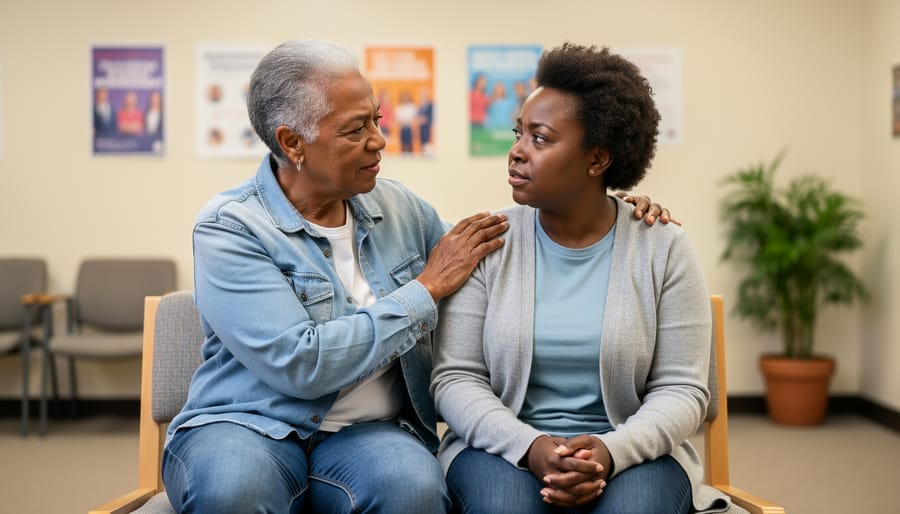 A close, respectful moment between people underscores how advocacy begins with connection and support.
The Growing Movement: Mental Health Advocacy in 2026
Major Advocacy Gatherings Shaping the Conversation
This spring and summer, three landmark gatherings are bringing mental health advocates together in Canada to share strategies, challenge systems, and build momentum for change.
The CMHO conference April 2026 runs April 20-21 and marks North America’s largest gathering focused specifically on child and youth mental health. Organized by Children’s Mental Health Ontario, it draws over 700 leaders, practitioners, caregivers, researchers, youth advocates, and policymakers from across the province. What makes this conference particularly powerful is its explicit commitment to centering young voices alongside professional expertise. When the people directly affected by policies have a seat at the table, the conversation shifts from theory to lived reality.
Moving into summer, the 13th World Summit July 2026 on Mental Health, Psychiatry and Wellbeing lands in Toronto on July 29-30. This international summit brings a global lens to advocacy work, connecting Canadian efforts with movements worldwide. The cross-pollination of ideas matters: what’s working in one country’s mental health system can inform advocacy strategies elsewhere.
Come fall, the CFMHN National Conference takes place October 4-6 at MacEwan Conference Centre, University of Calgary. This gathering represents the forensic mental health nursing community, highlighting how advocacy extends into specialized areas often overlooked in broader conversations.
These aren’t just networking events. They’re spaces where advocates refine messaging, forge partnerships, and return home with concrete tools to push for change in their own communities. When hundreds of voices align around shared priorities, decision-makers take notice.
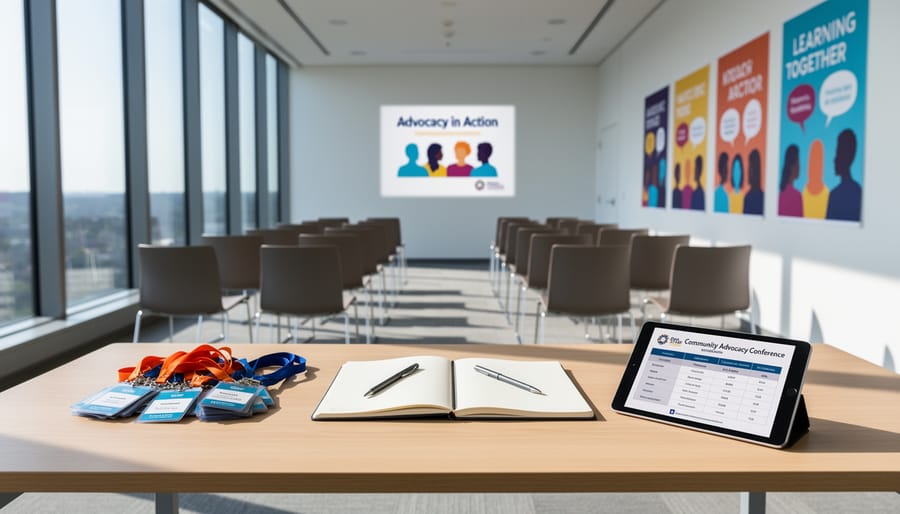 A quiet space hints at the gathering power of conferences and community, where advocacy and shared learning take shape.
Who’s Leading the Charge
Mental health advocacy thrives because of the varied perspectives people bring to the table. Youth advocates offer fresh insights into what today’s generation needs and aren’t afraid to challenge outdated systems. Caregivers, parents, siblings, partners, ground the conversation in daily realities and fight fiercely for the people they love. Those with lived experience of mental health challenges bring authenticity that no textbook can match, showing others they’re not alone while pushing for changes that truly serve people in crisis.
Practitioners and researchers contribute evidence-based approaches and clinical wisdom, translating complex data into actionable recommendations. Policymakers hold the power to implement systemic change, turning advocacy into legislation and funding. When these groups come together, advocacy becomes unstoppable. A teenager speaking truth to a room of decision-makers can shift perspectives. A researcher collaborating with someone who’s navigated the mental health system can design better interventions. The gatherings happening across 2026 bring these diverse voices into the same spaces, creating opportunities for genuine partnership rather than isolated efforts.
How Advocacy Changes Lives: Real Stories from the Field
When Maria first shared her teenage son’s struggle with anxiety at a local school board meeting, her hands trembled and her voice cracked. She just wanted shorter wait times for counseling services. What happened next surprised her: three other parents approached her afterward with similar stories, and together they formed a parent advocacy group. Within eight months, their district had hired two additional mental health counselors and implemented a peer support program. “I thought I was just one person complaining,” Maria says now. “I didn’t realize my story would open the door for others to speak up too.”
That ripple effect repeats itself across the country when people find the courage to advocate. For James, a university student, advocacy started smaller. After his own hospitalization for depression, he began posting honestly about his recovery journey on social media. He didn’t aim to change policy or reach thousands. But when classmates started messaging him privately, sharing their own struggles and asking where to find help, he realized his openness was creating permission for others to seek support. One message stands out: a friend wrote that James’s posts made him feel less alone during his darkest week, and gave him the courage to reach out to campus counseling services.
Not all advocacy wins happen quickly or dramatically. Dr. Patel, a family physician, spent three years pushing her regional health authority to fund mental health training for primary care providers. She faced budget rejections, bureaucratic delays, and frustrating meetings where decision-makers nodded politely but did nothing. She kept showing up anyway, armed with patient stories and evidence about wait times. In 2025, the funding finally came through. Now dozens of doctors in her area can provide better initial mental health support, reducing the burden on overwhelmed psychiatric services.
These stories share a common thread: someone decided their experience mattered enough to speak up, even when outcomes felt uncertain. Advocacy doesn’t always bring immediate transformation, and the work can feel exhausting. But every conversation shifts the landscape slightly, creating openings for the next person to walk through.
Becoming an Advocate: You Don’t Need a Degree
Start Where You Are
You don’t need a platform or perfect credentials to start advocating. The most powerful advocacy often begins in everyday moments, at your kitchen table, in a text to a friend, or during a conversation with a colleague who casually uses “crazy” to describe their day.
Start by sharing your own experience, but only when it feels safe. You choose how much to reveal and who gets to hear it. Even a simple “I’ve struggled with this too” can crack open space for honest conversation. Your story doesn’t need polish or a happy ending to matter.
Educate the people closest to you. When your aunt forwards a stigmatizing meme, respond with kindness and facts. When your neighbor mentions their teen is struggling, share a resource or just listen without trying to fix anything. These micro-moments shift culture more than we realize.
Challenge stigmatizing language gently but consistently. Instead of calling someone out, try “I know you didn’t mean harm, but that phrase actually hurts people dealing with mental illness.” Most people genuinely want to do better once they understand the impact.
Support others in small, concrete ways. Check in on someone who’s been quiet lately. Offer to sit with a friend during their first therapy appointment. Amplify voices of people with lived experience when they share their truth. Advocacy isn’t always loud, sometimes it’s just showing up and bearing witness.
 The image symbolizes personal advocacy, using your voice and care to help others feel less alone.
Join the Larger Movement
Connecting with established organizations multiplies your impact and provides community support. Mental Health Commission of Canada, Canadian Mental Health Association, and Children’s Mental Health Ontario all welcome advocates at various levels of involvement.
This year offers exceptional opportunities to learn and network. The Children’s Mental Health Ontario conference (April 20-21) brings together over 700 practitioners, caregivers, youth advocates, and policymakers. The 13th World Summit on Mental Health runs July 29-30 in Toronto, while the CFMHN National Conference happens October 4-6 in Calgary. These gatherings let you connect with people who understand the work.
Peer support networks offer particularly powerful spaces for both receiving and offering support. Organizations like Power of Peer Support connect people with shared experiences, creating communities where advocacy feels less isolating.
Mark World Mental Health Day 2026 on your calendar for coordinated awareness activities. Many campaigns need volunteers for social media, event planning, and outreach. You can also help others access support by sharing resource information within your networks.
Amplify Your Voice
Social media gives you reach, but authenticity matters more than follower counts. Share your story when you’re ready, use hashtags like #MentalHealthAdvocacy to connect with the broader movement, and engage genuinely with others’ posts rather than just broadcasting. When contacting your MP or local representative, keep messages brief and specific, mention the issue, explain why it matters to you personally, and make one clear ask. Many mental health organizations run public consultations on policy changes; your input shapes decisions even if you’re not an expert. Consider partnering with established groups rather than going solo, training opportunities like mental health first aid equip you with skills while connecting you to networks of advocates. Your voice carries weight precisely because it’s yours, grounded in real experience rather than theory.
Why Advocacy Work Can Feel Hard (And How to Protect Yourself)
Advocacy work asks you to carry not only your own story but the weight of countless others. You bear witness to injustice, hear painful experiences, and push against systems that resist change. That emotional labour accumulates, and many advocates find themselves burned out, emotionally depleted, or experiencing vicarious trauma from repeatedly engaging with distressing stories and situations.
The symptoms creep in gradually. You might notice yourself feeling emotionally numb, struggling to sleep, or finding it harder to separate advocacy work from your personal life. Some advocates report heightened anxiety, irritability, or a sense of hopelessness about creating change. These aren’t signs of weakness; they’re normal human responses to sustained exposure to others’ suffering and systemic frustration.
Note: Taking care of yourself isn’t selfish, you can’t pour from an empty cup, and burning out serves no one.
Set clear boundaries around your advocacy time. Decide when you check social media, when you respond to messages, and when you step away completely. It’s okay to decline speaking opportunities, limit your exposure to distressing content, and take breaks from advocacy spaces when needed. Your worth isn’t measured by constant availability.
Build a support network of fellow advocates who understand the unique challenges. Debrief difficult experiences with trusted friends, consider professional counseling, and maintain interests outside advocacy work. Regular exercise, adequate sleep, and creative outlets aren’t luxuries; they’re necessary tools for sustainable advocacy.
Check in with yourself honestly. Ask whether you’re advocating from a place of strength or depletion, whether your boundaries are holding, and whether you need to pull back temporarily. Stepping away to recharge doesn’t diminish your commitment. It ensures you’ll be there for the long fight ahead.
Remember Maya from the beginning of this article? Her decision to speak up at that school board meeting didn’t just change policy. It sparked conversations in living rooms across her community, gave other students permission to share their struggles, and reminded everyone in that auditorium that mental health advocacy starts with one honest voice.
Your voice matters just as much.
Whether you share your story with a friend, challenge stigmatizing language at work, attend one of the 2026 conferences bringing advocates together, or simply check in on someone struggling, you’re participating in something transformative. Advocacy isn’t reserved for experts or people with titles. It lives in every conversation that normalizes mental health, every boundary you set to protect your wellbeing, every time you refuse to let stigma go unchallenged.
If you’re struggling today, you don’t have to wait to start advocating. Reaching out for support is advocacy too. Our organization offers real-time support options connecting you with trained peers who understand what you’re going through. You’re not alone in this fight, and you don’t have to figure it out by yourself.
Take one small step today. Your advocacy journey starts exactly where you are right now.