Chronic anxiety is persistent, excessive worry and fear that lasts for six months or longer and interferes with your ability to function in daily life. Unlike the temporary nervousness you might feel before a presentation or important event, chronic anxiety doesn’t ease once the stressor passes. It’s a constant companion that colors how you experience your days, your relationships, and even your sense of self.
If you’ve found yourself here, you’re probably wondering whether what you’re experiencing goes beyond normal stress. Maybe your heart races for no clear reason, or you’ve started avoiding situations that never bothered you before. Perhaps you’re exhausted from the mental loop of worst-case scenarios that plays in your mind, or friends have noticed you seem on edge. These are real, valid experiences, and recognizing them is the first step toward feeling better.
About 31% of adults will experience an anxiety disorder at some point in their lives, and chronic anxiety affects millions of people right now in 2026. You’re not alone, and what you’re feeling isn’t a personal failing or weakness. Chronic anxiety is a medical condition with identifiable symptoms and effective treatments.
This article will help you understand the specific symptoms that distinguish chronic anxiety from everyday worry, recognize patterns in your own experience, and determine when it’s time to seek professional support. You’ll find clear definitions, comprehensive symptom lists across physical, emotional, and behavioral categories, and practical guidance on next steps. Whether you’re seeking answers for yourself or trying to understand what someone you care about is experiencing, you’ll leave with the knowledge you need to move forward.
What Is Chronic Anxiety?
Chronic anxiety is more than just worrying about tomorrow’s presentation or feeling butterflies before a big event. It’s a persistent state of worry and tension that shows up day after day, often without a clear trigger, and doesn’t ease up even when there’s no immediate threat. While everyone experiences anxiety from time to time, chronic anxiety becomes a constant companion rather than a temporary visitor.
The key difference lies in duration and intensity. Temporary anxiety comes and goes with specific situations. You might feel anxious before a job interview, but the feeling fades once it’s over. Chronic anxiety lingers for weeks or months, creating a background hum of unease that colours your daily life. It can take a toll on both your mind and body, showing up as persistent worry, restlessness, and ongoing fatigue that doesn’t improve with rest.
Key Takeaway: Chronic anxiety is persistent and ongoing, lasting weeks or months without clear resolution, while temporary anxiety is situation-specific and fades when the stressor passes. Understanding this distinction helps you recognize when worry has crossed into territory that needs attention.
What makes anxiety “chronic” isn’t just how long it lasts. It’s when the worry becomes disproportionate to actual circumstances and starts interfering with how you function. You might find yourself avoiding situations, struggling to concentrate, or feeling exhausted from the constant mental vigilance. This distinction between normal vs. abnormal anxiety matters because it helps you understand when your experience needs professional support.
In most cases, anxiety is considered a disability when your condition is severe or chronic enough to significantly impact daily activities, relationships, or work. The DSM generalized anxiety threshold provides clinical guidance, but you don’t need to meet formal criteria to recognize that what you’re experiencing deserves attention and care.
Common Signs of Chronic Anxiety
Chronic anxiety doesn’t announce itself with a single dramatic moment. Instead, it builds quietly over time, weaving itself into your daily experience until worry becomes your constant companion. While everyone feels anxious occasionally, chronic anxiety is different in both intensity and persistence.
The symptoms of chronic anxiety affect your entire system. Your mind races with persistent worry that feels impossible to control or shut off. You might find yourself catastrophizing about situations that others brush off easily, or spinning worst-case scenarios for events that haven’t happened yet. This mental loop exhausts you, leaving your brain feeling perpetually foggy and your concentration scattered.
Your body responds too. Chronic anxiety triggers your stress response repeatedly, keeping you in a state of heightened alert even when there’s no real danger. Common physical and emotional signs include:
- Persistent restlessness or feeling on edge throughout the day
- Ongoing fatigue that doesn’t improve with rest
- Muscle tension, particularly in the neck, shoulders, and jaw
- Sleep disturbances including trouble falling asleep or staying asleep
- Irritability that seems disproportionate to the situation
- Difficulty concentrating or mind going blank
- Physical symptoms like headaches, stomach problems, or rapid heartbeat
These symptoms persist for months rather than days or weeks. They don’t necessarily connect to specific stressful events, and they interfere with your ability to function at work, in relationships, or during everyday activities. You might also experience more acute episodes of anxiety attack symptoms on top of your baseline worry.
The GAD symptom requirements specify that several of these symptoms must be present more days than not, but even if your experience doesn’t perfectly match clinical criteria, your distress is valid. What matters is that chronic anxiety takes a toll on both your mind and body, disrupting your quality of life in ways that everyday worry simply doesn’t.
 A quiet nighttime scene captures what persistent worry can feel like, heavy, isolating, and hard to shake.
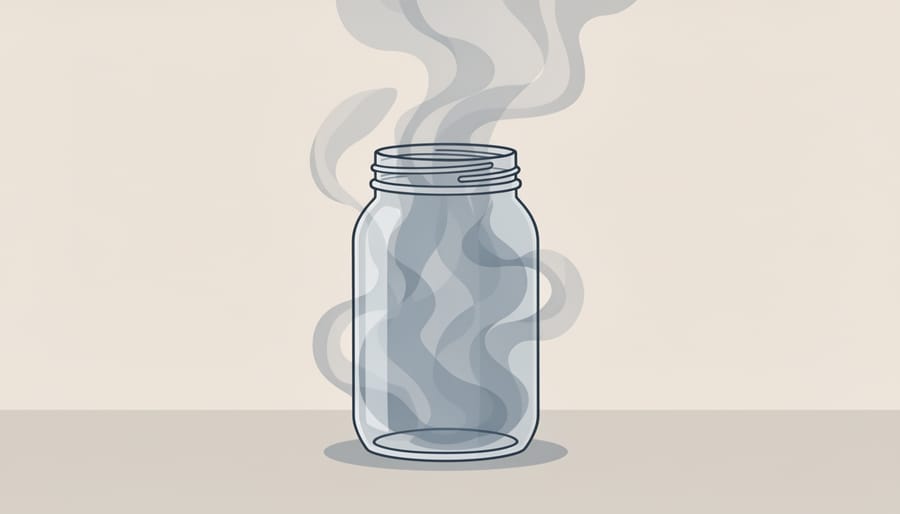 An anxious “mist” swirling around a jar symbolizes persistent thoughts that feel hard to contain.
How Chronic Anxiety Works in Your Mind and Body
Chronic anxiety doesn’t just appear overnight. It builds gradually, often starting with a stressful period or challenging life event. Your brain’s alarm system, designed to protect you from danger, begins firing more frequently than necessary. Over time, this heightened state becomes your new normal, even when there’s no immediate threat.
The cycle feeds itself in a predictable pattern. Worry triggers physical symptoms like a racing heart or tight chest. These sensations feel uncomfortable, sometimes frightening. Your mind interprets these body signals as proof that something’s wrong, which creates more worry. The loop continues, day after day, until anxiety feels like a constant companion rather than an occasional visitor.
Your body pays a real price for sustained anxiety. The stress response floods your system with cortisol and adrenaline repeatedly. While these hormones help in true emergencies, chronic release exhausts your resources. You might notice persistent muscle tension, especially in your neck and shoulders. Sleep becomes harder to achieve or maintain. Digestion often suffers, leading to nausea or stomach problems. Some people develop headaches or experience a weakened immune system, getting sick more frequently than before.
Mentally, chronic anxiety changes how your brain processes information. You become hypervigilant, scanning for potential problems constantly. Decision-making feels overwhelming because your mind generates worst-case scenarios automatically. Concentration suffers when part of your attention is always diverted to worry. Memory can become spotty, particularly for everyday details, because anxiety occupies mental space you’d normally use for encoding new information.
The exhaustion is comprehensive. Physical fatigue from poor sleep combines with emotional depletion from constant worry. This isn’t laziness or weakness. Your system is genuinely overworked, running on high alert when it desperately needs rest.
Understanding this mechanism matters because it reveals why chronic anxiety isn’t something you can simply push through or ignore. Your mind and body need support to break the cycle.
Types and Presentations of Chronic Anxiety
Chronic anxiety doesn’t show up the same way for everyone. Some people experience mild, background worry that never quite goes away, while others face severe symptoms that make daily life feel impossible. Understanding these different presentations helps you recognize where you might fall on the spectrum and what kind of support could help.
- Mild Persistent Anxiety
- Low-level worry that lingers in the background most days, causing occasional tension and restlessness but not preventing you from functioning in work, school, or relationships.
- Moderate Chronic Anxiety
- Regular worry that interferes with concentration and sleep, often accompanied by physical symptoms like fatigue and muscle tension that affect your quality of life.
- Severe Anxiety Presentations
- Intense, overwhelming worry that significantly disrupts daily functioning, often requiring comprehensive treatment including therapy and medication to manage symptoms effectively.
- Generalized Anxiety
- Excessive worry about multiple areas of life that persists for months, making it hard to control anxious thoughts even when there’s no immediate threat.
The way chronic anxiety appears also shifts across different life stages. Anxiety is often a normal part of childhood and adolescence, but there’s a clear difference between everyday worry and chronic anxiety in young people. A child might show their anxiety through stomachaches before school, while a teenager might withdraw from friends or struggle with perfectionism that goes beyond typical academic stress.
Some youths with severe and chronic anxiety presentations may require lengthier medication treatment, according to the youth anxiety guideline particularly when symptoms are intense enough to interfere with development and daily life. Adults, meanwhile, often experience chronic anxiety tangled up with work stress, relationship concerns, and health worries that feed into each other.
The severity of your anxiety matters more than the specific label. Whether you’re dealing with generalized anxiety or another presentation, what counts is how much it’s affecting your life and whether you’re getting the support you need to feel better.
When Chronic Anxiety Becomes a Disability
Chronic anxiety reaches the threshold of a mental health disability when it becomes severe or chronic enough to substantially limit one or more major life activities. This isn’t about occasional tough days. It’s about anxiety that consistently prevents you from working, maintaining relationships, managing household tasks, or caring for yourself.
You might be dealing with disability-level anxiety if you regularly miss work or school, avoid social situations that once felt manageable, struggle to complete basic daily routines, or find yourself unable to leave home on many days. When anxiety creates barriers this significant, it’s not weakness or failure. It’s a legitimate health condition that deserves proper support.
Recognizing your anxiety as a disability can actually be empowering. It validates your experience and opens doors to accommodations at work or school, disability benefits if needed, and specialized treatment approaches. Many people find relief in naming what they’re experiencing rather than pushing through alone.
If your anxiety persistently interferes with daily functioning despite your best efforts to manage it, reaching out for professional support isn’t giving up. It’s taking the next logical step. Treatment can reduce distressing symptoms, improve self-esteem, and support your recovery process. You don’t have to meet a certain severity threshold before your struggle matters or before seeking help is justified.
What Chronic Anxiety Is Used to Diagnose and Treat
Recognizing chronic anxiety symptoms serves as the foundation for accurate diagnosis and effective treatment planning. When you describe your experiences to a healthcare provider, whether it’s persistent worry that won’t quiet, restlessness that disrupts your days, or ongoing fatigue that doesn’t improve with rest, you’re providing essential information that helps them understand what you’re facing.
Mental health professionals use your symptom descriptions to distinguish between normal stress responses and clinical anxiety disorders. They’ll ask about how long symptoms have persisted, how intensely they affect you, and whether they interfere with work, relationships, or daily activities. This assessment process isn’t about judgment; it’s about matching your specific presentation with appropriate support.
Your symptom profile guides treatment decisions. Some people benefit primarily from therapy and lifestyle adjustments, while others with severe and chronic anxiety presentations may require lengthier medication treatment alongside counseling. Understanding your particular symptoms helps clinicians recommend evidence-based techniques tailored to your needs rather than applying a one-size-fits-all approach.
Accurate symptom recognition also opens doors to resources and accommodations. When chronic anxiety significantly impacts your functioning, proper diagnosis can connect you with workplace support, educational accommodations, or disability services if needed. Treatment can help reduce distressing symptoms, improve self-esteem, and enable you to move forward in your recovery process, but it starts with clearly identifying what you’re experiencing.
 A peaceful outdoor moment suggests relief and steadier coping, part of how support and treatment can help chronic anxiety lessen its grip.
Treatment Options That Can Help
Treatment can help to reduce distressing symptoms, improve self-esteem and enable you to move forward in your recovery process. The path to feeling better isn’t one-size-fits-all, and what works varies from person to person. Many people find relief through a combination of approaches tailored to their specific situation.
Therapy stands as one of the most effective treatments for chronic anxiety. Cognitive-behavioral therapy helps you identify and change thought patterns that fuel worry, while other approaches like exposure therapy gradually reduce anxiety triggers. Working with a trained therapist gives you practical tools to manage symptoms and break the cycle of persistent anxiety.
For some people with severe and chronic anxiety presentations, medication may be necessary. Antidepressants and anti-anxiety medications can help stabilize brain chemistry when symptoms are overwhelming. These aren’t quick fixes, and some presentations may require lengthier medication treatment, but they can make other coping strategies more accessible when anxiety feels unmanageable.
Support resources play a crucial role in recovery:
- Professional counseling services through mental health clinics and private practitioners
- Support groups where you can connect with others facing similar challenges
- Crisis hotlines and real-time support for immediate help during difficult moments
- Self-help materials including books, apps, and online programs designed for anxiety management
- Referral information through resources like for specialized anxiety care
Recovery rarely follows a straight line. You might try several approaches before finding what works, and that’s completely normal. The important thing is reaching out and starting somewhere. Even small steps toward treatment can shift how chronic anxiety affects your daily life, opening up possibilities you might not see right now.
Frequently Asked Questions
What is the difference between everyday worry and chronic anxiety?
Everyday worry comes and goes based on specific situations and resolves once the stressor passes. Chronic anxiety persists over time, often without a clear trigger, and interferes with daily functioning even when there’s no immediate threat.
What are common signs of chronic anxiety?
Common signs include persistent worry that feels difficult to control, ongoing physical restlessness, chronic fatigue even with adequate rest, muscle tension, and difficulty concentrating. These symptoms typically last for weeks or months rather than days.
When is it time to seek help for anxiety?
Consider reaching out for support when anxiety interferes with your relationships, work, school, or daily activities, or when you find yourself avoiding situations because of worry. Professional help is especially important when anxiety feels overwhelming or impacts your ability to function.
Can chronic anxiety affect children and teens?
Yes. Anxiety is often a normal part of childhood and adolescence, but chronic anxiety in young people looks different from everyday worry and may require professional support, particularly when presentations are severe or persistent.
These questions reflect what many people wonder when they’re trying to understand their own experiences. If you’re still uncertain about whether what you’re experiencing qualifies as chronic anxiety, that uncertainty itself can be a sign that a conversation with a mental health professional would help. There’s no shame in asking for clarification or support.
The process of assessing your symptoms isn’t about self-diagnosis. It’s about gathering information so you can communicate clearly with a doctor or therapist about what you’re experiencing. Notice patterns: how long symptoms have lasted, what triggers them, how they affect your daily life. This information becomes valuable context when you’re ready to seek help, and it can speed up the process of finding effective treatment that addresses your specific needs.
Types or components
Chronic anxiety isn’t one single experience. It shows up differently depending on which anxiety disorder you’re living with and how your mind and body respond to ongoing stress.
Generalized Anxiety Disorder (GAD) involves persistent worry about multiple everyday concerns, work, health, relationships, that feels impossible to control. Your mind cycles through worst-case scenarios even when there’s no immediate threat.
Social Anxiety Disorder centers on intense fear of judgment in social situations. You might avoid gatherings, struggle with public speaking, or feel panic at the thought of eating in front of others.
Panic Disorder brings unexpected panic attacks, sudden waves of terror with physical symptoms like racing heart, chest pain, and feeling like you can’t breathe. The fear of another attack often becomes its own source of chronic anxiety.
Specific Phobias trigger overwhelming anxiety around particular objects or situations, from flying to needles to enclosed spaces. The anxiety feels disproportionate to actual danger but incredibly real to you.
Separation Anxiety isn’t just for children. Adults can experience persistent fear about being away from loved ones or safe places, constantly worrying something terrible will happen.
Each type shares core features, persistent worry, physical tension, avoidance, but the triggers and patterns vary. Understanding your specific presentation helps guide effective treatment.
Understanding chronic anxiety symptoms is the first step toward reclaiming your life. If you recognize yourself in these descriptions, know that you’re not alone and what you’re experiencing is real. Chronic anxiety isn’t a character flaw or something you should just push through, it’s a treatable condition that responds well to proper care and support.
Treatment can help to reduce distressing symptoms, improve self-esteem and enable you to proceed in your recovery process. Whether through therapy, medication, lifestyle changes, or a combination of approaches, relief is possible. The persistent worry, restlessness, and ongoing fatigue that have been weighing you down don’t have to define your future.
You don’t have to wait until anxiety becomes completely disabling to reach out. If your symptoms are interfering with work, relationships, or daily activities, that’s reason enough to seek help. Real-time support options are available when you need someone to talk to right now, and organizations like Mental Health Support offer resources specifically designed to connect you with the care you deserve. Taking that first step toward support is an act of courage, and it’s one that can change everything.