Transcranial Magnetic Stimulation (TMS) is an FDA-approved, non-invasive brain stimulation treatment that may offer relief when standard anxiety treatments haven’t worked. While TMS has stronger evidence for treating depression, emerging research and clinical experience suggest it can help reduce anxiety symptoms, particularly for people whose anxiety overlaps with depression or hasn’t responded to medication and therapy alone.
If you’ve been living with persistent anxiety despite trying multiple medications, working with therapists, and making lifestyle changes, you’re not alone. Many people reach a point where their anxiety remains overwhelming even with conventional treatment. TMS represents a different approach entirely. Instead of relying on medications that circulate through your whole body, TMS uses magnetic pulses to directly stimulate specific brain regions involved in mood and anxiety regulation.
Here’s what makes this treatment distinct: you remain awake and alert during sessions, there’s no anesthesia, no surgery, and you can drive yourself home afterward. A typical course involves daily 20-40 minute sessions over several weeks. Unlike medications, TMS doesn’t cause systemic side effects like weight gain, sexual dysfunction, or sedation. The most common complaint is temporary scalp discomfort where the magnetic coil rests against your head.
But understanding TMS requires honest clarity. This isn’t a first-line treatment for anxiety, and not everyone responds. The evidence base for anxiety is smaller and less established than for depression. Health Canada has approved TMS for major depressive disorder, and many providers are now treating anxiety off-label based on promising results. Insurance coverage varies, costs can be significant, and availability is still limited compared to traditional treatments.
If you’re trying to decide whether TMS might be worth exploring for your anxiety, you need accurate information about what the research actually shows, what the treatment experience involves, who typically qualifies, and what it costs in Canada. Let’s start with the basics in Anxiety 101 then move into how TMS works and whether it might fit your situation.
What Is TMS and How Does It Work for Anxiety?
Transcranial Magnetic Stimulation, commonly called TMS, is a noninvasive brain treatment that uses magnetic pulses to influence specific areas of your brain involved in mood regulation. Instead of medication that travels through your entire body or invasive procedures that require surgery, TMS works from outside your head, targeting precise brain regions with focused magnetic energy, much like an MRI uses magnetic fields, but in shorter, repeated pulses designed to stimulate nerve cells.
Note: Noninvasive means no incisions, no anesthesia, and no sedation, you remain awake and alert throughout each session, which typically lasts 20 to 40 minutes.
Health Canada first approved TMS in 2002 for treatment-resistant depression, recognizing it as an option when other treatments have not worked. Since then, researchers and clinicians have explored whether this same technology might help with conditions that often accompany or resemble depression, including anxiety disorders. The magnetic pulses generated during TMS create small electrical currents in targeted brain areas, potentially helping to “reset” or rebalance neural circuits that have become dysregulated in anxiety and depression.
The physical process is straightforward. During a session, a treatment coil is positioned against your scalp, usually near your forehead. When activated, the device delivers rapid magnetic pulses that pass through your skull and reach the outer layer of your brain. You’ll feel a tapping sensation and hear clicking sounds as the pulses are delivered, but the treatment itself is painless for most people. Some describe a feeling similar to light tapping on the head.
While TMS has an established track record for depression, its use for anxiety is still evolving. Recent research, including a multicenter, double-blind controlled study, has shown that Deep TMS demonstrated significant reductions in anxiety symptoms through the acute course of treatments. This growing body of evidence has led more clinicians to consider TMS for patients whose anxiety hasn’t responded to traditional approaches like therapy and medication. The treatment appears to work by targeting the same brain networks involved in both depression and anxiety, which often overlap and interact in complex ways.
It’s important to understand that TMS for anxiety is still being studied and refined. Not every clinic offers it specifically for anxiety, and the treatment protocols may vary depending on your location and provider. However, for people who have tried multiple treatments without finding relief, TMS represents an emerging option worth discussing with your healthcare team.
When TMS Becomes an Option: Is This Treatment Right for You?
 A person pauses in a quiet moment at home, reflecting relief and steadier breathing after struggling with anxiety.
You might be reading this because you’ve already tried medication, therapy, or both, and you’re still struggling. Perhaps you’ve cycled through multiple medications with limited relief or side effects that became unbearable. Maybe you’ve put in the hard work of therapy only to find your anxiety remains overwhelming. If that sounds familiar, you’re not alone in this experience, and your frustration is completely valid.
TMS becomes an option when other treatments have not worked. It wasn’t originally developed for anxiety, Health Canada approved it in 2002 for treatment-resistant depression, but researchers and clinicians have increasingly turned their attention to its potential for anxiety disorders. This makes sense when you consider how often depression and anxiety overlap, and how the brain circuits involved in both conditions share common pathways.
The distinction between normal vs abnormal anxiety matters here. Everyone experiences worry or nervousness at times, but when anxiety becomes persistent, interferes with daily functioning, and doesn’t respond to standard treatments, it crosses into territory where alternative approaches like TMS may be worth exploring.
Who might consider TMS? Generally, healthcare providers look at it as an option when someone has tried multiple treatments without adequate relief. This doesn’t mean you need to have exhausted every possible medication or therapy approach, that standard varies, but it typically means you’ve given conventional treatments a genuine try and they haven’t brought the relief you need.
That said, TMS isn’t right for everyone. It’s not a first-line treatment, and it’s not guaranteed to work for any individual person. Certain medical conditions, particularly those involving metal implants near the head or a history of seizures, may make TMS unsuitable. Your specific anxiety symptoms, overall health, and treatment history all factor into whether this approach makes sense for you.
The most important step is having an honest conversation with a healthcare provider who understands both your history and the current evidence around TMS for anxiety. They can help you weigh whether this treatment aligns with your situation, what realistic expectations look like, and whether it’s worth pursuing given your specific circumstances. You deserve a treatment plan that acknowledges your experience with treatment resistance and explores all reasonable options.
What the Research Shows: Understanding the Evidence
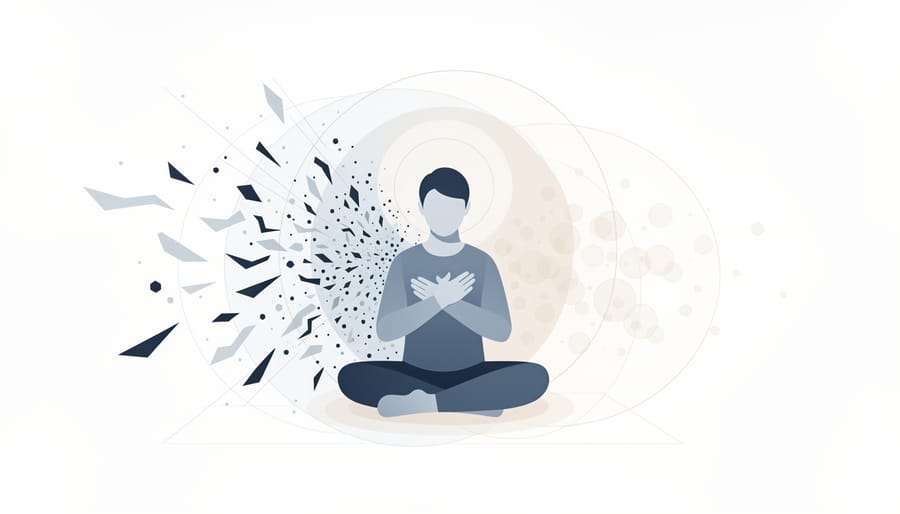 A calm moment of self-checking suggests how anxiety may feel less intense and more manageable as treatment begins to help.
When you’re exploring TMS for anxiety, you deserve to understand what the science actually tells us, without hype or inflated promises.
The most significant evidence comes from a multicenter, double-blind controlled study that examined Deep TMS for anxiety. This type of study design is considered rigorous: participants and researchers didn’t know who received active treatment versus a sham procedure, which helps ensure the results reflect genuine effects rather than expectation or bias. The findings showed that Deep TMS produced significant reductions in anxiety symptoms throughout the acute treatment course.
What does “significant” mean in practical terms? It means the improvements weren’t small or negligible, they were measurable, consistent changes that researchers could observe across different treatment centers. The study tracked anxiety levels through the full course of sessions, documenting that relief built over time rather than happening overnight.
TMS originally received Health Canada approval back in 2002 for treatment-resistant depression. Since then, researchers have been investigating its effects on other conditions, including anxiety. Depression and anxiety often occur together, which is partly why scientists began exploring whether the same brain stimulation that helps with depression might also ease anxious thoughts and physical tension.
The evidence base for anxiety specifically is still growing. We’re not yet at the point where TMS has formal approval for anxiety alone in Canada, which means it remains an emerging option rather than a first-line treatment. That said, the controlled study results suggest real promise for people who haven’t found relief elsewhere.
What this research doesn’t tell us is which specific individuals will respond best, or how long improvements typically last. Those are questions you’ll want to explore directly with a provider who can consider your particular situation and treatment history.
What to Expect: The TMS Treatment Experience
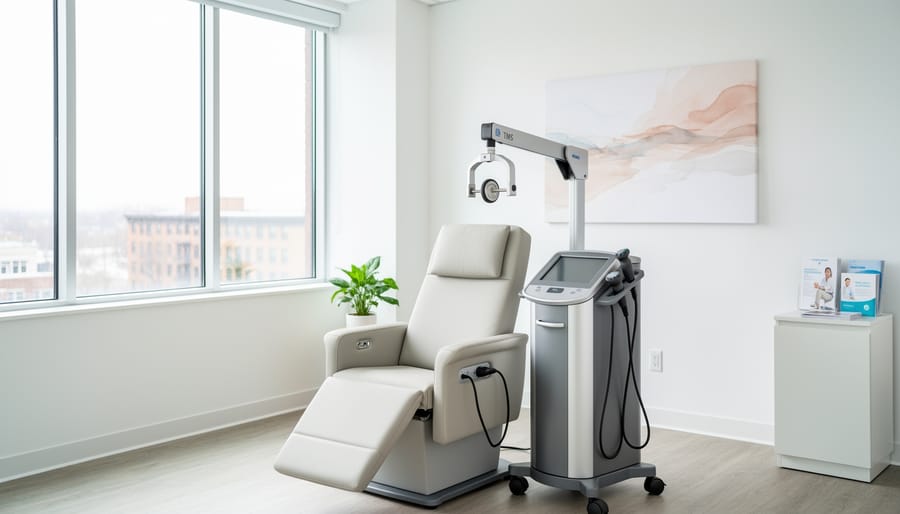 A clean clinic setting helps readers picture what a TMS appointment environment may feel like, organized, calm, and clinical but not intimidating.
Walking into your first TMS appointment can feel daunting, especially when you’ve already tried so many treatments that didn’t work. It’s completely normal to feel nervous about what will happen. Understanding what to expect can help ease some of that anxiety.
A typical TMS session is shorter than you might think. Most treatments last between 20 and 40 minutes, making it possible to fit into a lunch break or between other commitments. You’ll remain fully awake and alert throughout the session, sitting comfortably in a specialized chair.
Here’s what happens during a typical appointment:
- You arrive at the clinic and check in, just like any medical appointment.
- A technician or clinician positions the TMS device against your head, using measurements to target the specific brain region involved in mood regulation.
- The device delivers magnetic pulses in a rhythmic pattern. You’ll hear clicking sounds and feel a tapping sensation on your scalp where the coil sits.
- You can read, listen to music, or simply relax during the treatment. Some people find the rhythmic pattern almost meditative.
- When the session ends, you can immediately return to your regular activities. There’s no recovery time needed.
The physical sensations vary from person to person. Most describe the feeling as a light tapping or knocking on the scalp. Some experience mild discomfort or headache during early sessions, but this typically lessens as your body adjusts. If the sensation feels too intense, the clinician can adjust the settings to improve comfort.
A full course of treatment typically involves sessions five days a week for several weeks. This commitment can feel overwhelming when you’re already struggling, but many people find the routine provides structure and hope during a difficult time. You won’t need someone to drive you home, and you can work or study on treatment days.
During the first week or two, you might not notice changes. This doesn’t mean the treatment isn’t working. Some people begin to feel shifts in their anxiety levels gradually over the course of treatment, while others notice changes more suddenly. Everyone’s timeline looks different.
TMS requires commitment and patience. Missing sessions can affect outcomes, so having reliable transportation and the ability to attend regularly matters. If this feels like too much right now, that’s okay. There’s no judgment in deciding this isn’t the right time or approach for you.
Accessing TMS in Canada: What You Need to Know
Accessing TMS in Canada depends largely on where you are and which healthcare pathway you choose. The reality is that availability isn’t uniform across the country, and understanding your options can help you have more productive conversations with your healthcare providers.
If you’re working within the public healthcare system, access to TMS typically requires a referral from your family doctor or psychiatrist. Availability through public channels varies significantly by province and even by region within provinces. Some areas have dedicated TMS programs through hospitals or mental health centres, while others have limited or no public access. Waitlists, where programs exist, can be lengthy. Your healthcare provider can help you determine what’s available in your area and whether you meet the criteria for a referral.
Private clinics offer another route and are more widely distributed across Canada. These facilities often have shorter wait times and may offer more flexible scheduling. However, private treatment typically requires payment, which brings up important coverage considerations.
Coverage is complex and changing. As of October 2023, rTMS at BrainWave is covered, representing one example of how coverage can vary by provider and timing. Many extended health insurance plans now include some coverage for TMS, particularly when it’s deemed medically necessary for treatment-resistant conditions. If you’re receiving support for a mental health disability exploring coverage through those channels may be worthwhile.
The key is to ask specific questions. Contact clinics directly to understand their referral process, whether they accept insurance, and what documentation they require. Check with your insurance provider about what they cover under mental health benefits. Some plans require pre-authorization, while others reimburse after treatment.
This homework takes time, but gathering this information puts you in a stronger position to make informed decisions about whether TMS is accessible to you right now.
Understanding the Cost of TMS Treatment
The financial investment for TMS treatment is significant, and you deserve to know what you’re facing. In Canada, a full course of treatment typically ranges from $5,000 to $10,000, though costs across Canada and the US can vary more broadly from $3,000 to $12,000 where coverage is not available. These figures represent the complete treatment protocol, not a single session.
| Cost Component |
Typical Range |
Key Variables |
| Full Course (Canada) |
$5,000, $10,000 |
Clinic location, equipment type |
| Session Count |
20-36 sessions |
Individual response, protocol |
| Per-Session Cost |
$150, $400 |
Provider, region, package deals |
Coverage varies considerably depending on your province and insurance situation. As of October 2023, some providers like BrainWave offer covered rTMS, but this isn’t universal across Canada. If you’re accessing TMS through public healthcare, wait times can be lengthy, which is why some people explore private options despite the cost.
When treatment resistance has already cost you months or years of your life, these numbers feel overwhelming. Start by checking what your provincial health plan covers, then contact your private insurer if you have one. Some clinics offer payment plans or sliding scale options, and it’s worth asking directly about financial assistance programs. You might also explore whether combining TMS with other evidence-based techniques could reduce the total treatment duration you’ll need.
The cost is real, but so is the impact of untreated anxiety on your work, relationships, and daily functioning. When you speak with providers, ask for a detailed cost breakdown and explore every coverage avenue available to you.
Questions to Ask Your Healthcare Provider
 A supportive conversation illustrates the importance of asking questions and planning next steps with healthcare professionals.
Walking into your healthcare provider’s office prepared with thoughtful questions helps you become an active partner in your care decisions. This conversation is your opportunity to understand whether TMS might be right for your specific situation and what pursuing this treatment would actually involve.
Start by asking about your suitability: “Based on my treatment history and current symptoms, am I a candidate for TMS?” Follow up with questions about your provider’s experience: “Have you worked with patients who’ve tried TMS for anxiety? What were their experiences?” Understanding their familiarity with the treatment helps you gauge whether you might need a referral to a specialist.
Ask practical questions about access in your area: “Where is the nearest clinic offering TMS, and what’s the typical wait time?” If you’re in the public healthcare system, ask, “What’s the referral process, and how long might it take?” For those considering private clinics, inquire about costs upfront: “What’s the total cost for a full course of treatment, and are there payment plans available?”
Coverage questions matter significantly. Ask your provider, “Is TMS covered under my provincial health plan or private insurance?” Since coverage varies considerably across Canada, getting specific information about your situation prevents financial surprises later. Some people hesitate to ask direct questions about costs due to mental health stigma, but talking openly about practical barriers is essential to finding workable solutions.
Finally, ask about the treatment timeline and what success looks like: “How many sessions would I need, and how will we know if it’s working?” Understanding the commitment and evaluation process helps you make an informed decision about whether TMS fits into your life right now.
Living with treatment-resistant anxiety is exhausting. When medication after medication hasn’t worked, when therapy feels like it’s hit a wall, when well-meaning friends suggest yet another coping strategy you’ve already tried, the weight of that experience is real, and it matters.
If you’re reading this, you’ve likely tried everything your healthcare providers have suggested. You’ve shown up, you’ve put in the work, and yet the anxiety persists. That doesn’t mean you’ve failed. It means your brain chemistry might need a different approach.
TMS represents one emerging option that’s worth discussing with your healthcare provider. It won’t be right for everyone, and it’s not a magic solution. But for some people who haven’t found relief through traditional treatments, it’s opened a door that seemed closed. The research shows promise, with studies demonstrating significant reductions in anxiety symptoms during treatment courses. Access is expanding in Canada, though availability and coverage vary depending on where you live and whether you’re accessing care through public healthcare or private clinics.
The most important thing? You don’t have to make this decision alone or right now. Bring your questions to your next appointment. Explore what’s available in your area. And remember that seeking alternative treatment options isn’t giving up on other approaches, it’s expanding your toolkit.
While you’re researching and making decisions, you don’t have to go through this alone. Mental Health Support offers real-time connection with trained listeners who understand what it’s like to navigate treatment challenges. Sometimes just talking through your options with someone who gets it can help clarify your next steps. You deserve support, and you deserve hope.