You can lower anxiety in minutes by slowing your breathing, grounding yourself in what’s around you, and giving your body a small, steady signal that it’s safe. Over weeks, a handful of daily habits can turn down the baseline so the spikes come less often and fade faster. The whole routine takes about five to ten minutes to start, and none of it requires special skill. You just need a place to sit and a willingness to try.
Here’s why this works. Anxiety is your body’s alarm system firing when it doesn’t need to. Your heart speeds up, your breath goes shallow, your thoughts race. Slow, deliberate breathing and sensory grounding speak directly to that alarm and tell it to stand down. It’s not a trick or willpower. It’s physiology, and it’s available to you right now.
If you’ve ever felt your chest tighten before a meeting or lain awake replaying a conversation, you’re in good company. Many people describe feeling embarrassed by anxiety or frustrated that they can’t simply “stop worrying.” Nothing is wrong with you. Anxiety is common, it’s manageable, and asking how to lower it is already a step forward.
Below, you’ll find what you need before you begin, safety guidance and real-time support options if things feel overwhelming, a step-by-step routine, daily habits for lasting change, and answers to the questions people ask most. Take what helps. Leave what doesn’t.
Key Takeaway: Start small, practice regularly, and track your progress gently, looking for shorter, milder anxious moments rather than perfection. Reach out for more support whenever you need it, since asking for help is part of the process.
What You’ll Need Before You Begin: Simple Tools and Materials
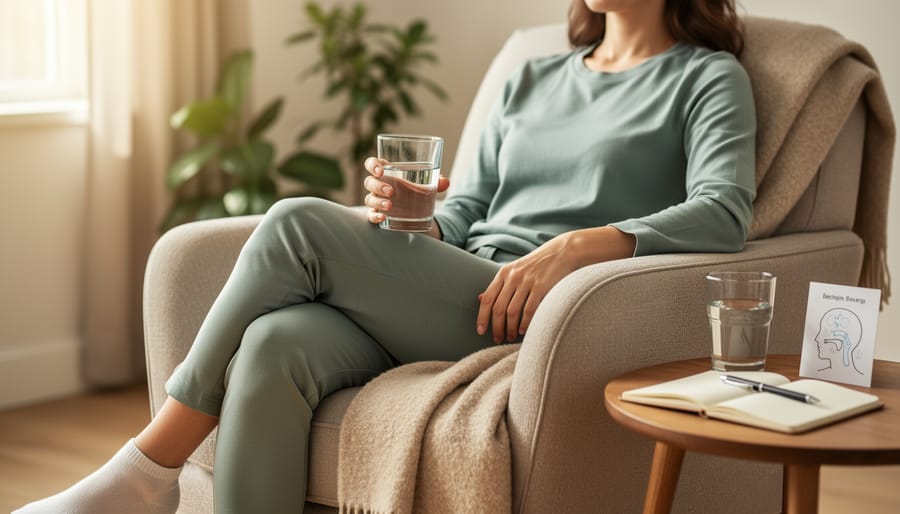 A calm, quiet space suggests simple tools people can use to start lowering anxiety right away. The relaxed posture and water-in-hand feeling reinforce gentle, grounding support.
Good news: lowering anxiety takes very little. You don’t need special equipment, a big budget, or any experience. If you have yourself and a couple of minutes, you can begin right now. A few small things just make the practice feel smoother and more comfortable.
Here’s a simple checklist to gather, and why each item helps:
- A quiet corner: Even a chair by a window gives your mind a signal that it’s okay to slow down.
- A timer or your phone: Setting a few minutes aside means you don’t have to watch the clock.
- A notebook or notes app: Writing a worry down gets it out of your head and onto the page.
- Comfortable clothing: Loose, soft layers help your body soften instead of staying braced.
- A glass of water: Sipping slowly gives you something steady to focus on and keeps you hydrated.
- Optional extras: Calming music, a weighted blanket, or a guided-practice app can add comfort if they appeal to you.
None of the optional items are required. Some people love a weighted blanket, while others find a short walk and a few deep breaths is all they ever need. Think of this list as a menu, not a rulebook. Pick what feels easy and leave the rest.
If you’re in a crowded space, like at work or on a bus, your breath and your senses travel with you. Nothing about these skills depends on having the perfect setup, and that’s part of what makes them so reachable on a hard day. Start with just what you have, and let the rest come later, if it ever does.
Before You Start: Safety Notes and When to Reach Out for Support
Self-help skills are a good fit for everyday stress, racing thoughts, and those tense moments that come and go. They’re a gentler starting point, not a replacement for care when you need more. Learning when to pause is part of the skill.
Go easy with your body. Breathing exercises should never be forced. If you feel dizzy or lightheaded, stop, breathe normally, and rest. Slower and softer almost always works better than deeper and harder.
Anxiety can also feel a lot like a medical problem, and sometimes it is one. Unexplained chest pain, trouble breathing, or symptoms that feel different from what you usually experience deserve prompt attention, so please seek immediate medical care rather than assuming it’s “just anxiety.” Substances matter too. Research shows caffeine can induce anxiety and alcohol and some other substances can stir up symptoms as well. If you take medication, please don’t change or stop it without talking to your prescriber first.
Warning: Stop any exercise that makes you feel worse, and see a health professional for chest pain, breathing difficulty, or symptoms that feel unfamiliar. If you ever have thoughts of harming yourself, contact a crisis line or text/chat service right away, or reach out to Mental Health Support’s help options for real-time support.
If anxiety keeps showing up or interferes with sleep, work, or relationships, a mental health evaluation can offer clarity and a plan that fits you. Mental Health Support offers digital and face-to-face support, and you never have to wait until things feel unbearable to use it.
Reaching out isn’t a sign that you’ve failed. It’s a strength, and it’s one of the kindest things you can do for yourself.
Step-by-Step: A Calming Routine to Lower Anxiety in the Moment
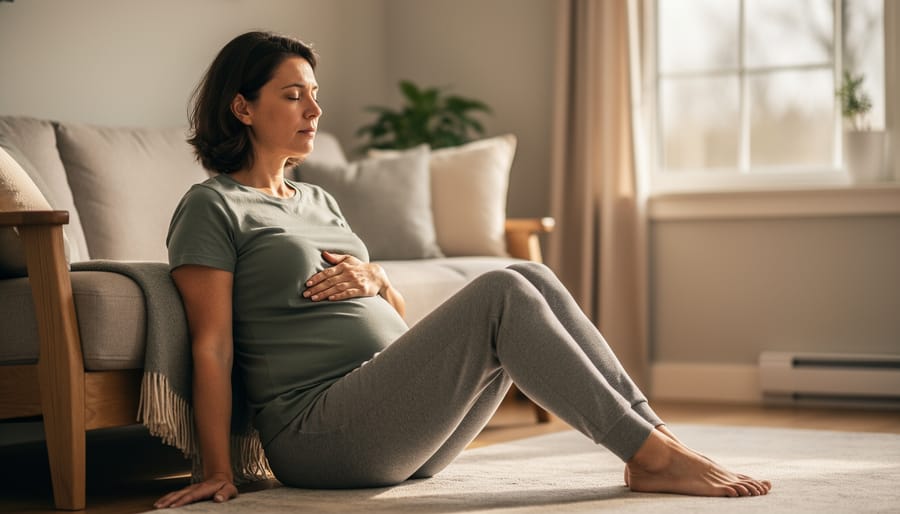 A grounding breathing moment is shown through a relaxed seated posture and a hand-on-belly cue. The scene communicates safety and comfort, practicing gently rather than forcing anything.
Calm Your Body First: Breathing, Grounding, and Muscle Release
 Smooth stones suggest tactile grounding, one simple way to anchor attention when anxiety spikes. The natural colors and close focus create a calming, sensory feel.
Start with your breath, because it’s the quickest way to tell your body it’s safe. Breathe in gently through your nose for a count of four, then let it out slowly through your mouth for a count of six. The longer exhale is what settles your nervous system. Try this for a minute or two, and stop if you feel dizzy or lightheaded. Go back to normal breathing and let it be easy.
Next, bring your attention outward. Many of the best grounding techniques work by pulling you back into the room around you. Try 5-4-3-2-1: name five things you can see, four you can feel (your feet on the floor, the chair beneath you), three you can hear, two you can smell, and one you can taste. Go at your own pace. If you’d like something shorter, the 3-3-3 rule asks you to name three things you see, three sounds, and three body movements.
Finally, let your muscles join in. Starting at your feet, tense one group for about five seconds, as if you’re squeezing gently, then let go and notice the difference. Move up through your calves, thighs, stomach, hands, shoulders, and face. Never tense so hard that it hurts, and skip any area that feels sore or injured.
You don’t need to do all three at once. Pick whichever feels most doable, and stop whenever you feel steadier. These are all well-studied evidence-based techniques and they tend to get easier the more you practice them.
Quiet the Worry Loop: Gentle Ways to Work With Anxious Thoughts
When your mind keeps replaying the same worry, it can feel like there’s no way out. You don’t have to argue yourself out of it. You can simply loosen its grip, one gentle step at a time.
Start by getting the thought out of your head and onto paper. Writing it down gives it edges, and a worry with edges is easier to look at. Then try naming what’s happening: “I’m having the thought that I’ll mess this up.” That small shift reminds you that a thought is something your mind produces, not a fact you have to obey.
Next, ask yourself what else might be true. This isn’t about pretending everything is fine. Your worry makes sense, and reframing simply makes room for a fuller picture.
Here’s what that can look like:
– The spiraling worry: “I made a mistake in that meeting, and everyone thinks I’m incompetent.”
– A calmer, balanced version: “I’m really worried about that mistake, and that’s understandable because I care about my work. One slip doesn’t define me, and I can follow up with a quick clarification.”
Notice the second version still honors the feeling. It just adds some steadiness. Go at your own pace, and be kind to yourself if it feels awkward at first.
 A gentle walk outdoors illustrates releasing tension and moving the body to help anxiety ease. The serene path and golden light convey steady progress without urgency.
Lowering Anxiety Over Time: Daily Habits That Make a Difference
In-the-moment tools help when anxiety spikes. Daily habits do something quieter: they lower the baseline, so spikes come less often and feel less sharp. Think of it as building a steadier floor to stand on.
Start with sleep. A fairly consistent bedtime and wake time helps your nervous system settle, and tired brains tend to read ordinary stress as danger. Next comes movement. A brisk twenty-minute walk most days can ease tension, and it doesn’t have to look like a workout. Eating regular meals and drinking enough water matters too, because skipped meals and dehydration can mimic or magnify anxious feelings like shakiness and a racing heart.
Caffeine and alcohol deserve a gentle look. Both can intensify anxiety, even when alcohol feels calming in the moment. You don’t have to quit anything overnight. Try swapping your afternoon coffee for decaf or tea and notice what changes.
Your information diet counts as well. Doom-scrolling the news or social media can keep your body in a low-grade alarm state. Consider setting a daily window for checking headlines, or muting accounts that leave you feeling worse. Then protect some downtime on purpose. Put a pause in your calendar the way you would any appointment, even if it’s just ten minutes with a book or a cup of tea.
Connection might be the most underrated habit of all. Texting a friend, sharing a meal, or joining a support group reminds you that you’re not carrying this alone. If you’d like more guidance, our Mental Health Support articles on [sleep](), [stress](), and [building a support network]() can help you go deeper.
And if your habits aren’t enough on their own, that’s not a failure. Many people find therapy for anxiety a helpful partner alongside daily routines.
Here’s the most important part: you don’t need to overhaul your life. Pick one small habit, maybe a ten-minute walk after lunch or a consistent bedtime, and practice it for a couple of weeks. Once it feels natural, add another. Small, steady changes tend to last longer than dramatic ones.
How to Tell It’s Working and What to Try Next
Progress with anxiety rarely arrives as one big moment. It shows up in small shifts: an anxious wave that peaks lower than it used to, a spiral that fades in ten minutes instead of an hour, or a night when sleep comes a little easier. You might also notice you bounce back faster after a stressful day, or catch a worry before it snowballs.
A simple journal makes these shifts easier to see. Each day, jot down what triggered anxiety, how strong it felt from 1 to 10, what you tried, and how long it took to settle. After a couple of weeks, patterns tend to appear. Maybe poor sleep or a third coffee reliably raises your numbers, or a short walk reliably lowers them.
If progress feels slow, that’s okay. Setbacks are a normal part of the process, not a sign you’re failing or doing it wrong. Anxiety naturally rises and falls, and one hard week doesn’t erase the skills you’ve built.
When you want more support, there are good next steps. Talking with a doctor or therapist can rule out medical causes and open up options, and our guide to professional treatment options for anxiety explains what to expect. Many people find cognitive behavioral therapy (CBT) especially helpful, since it teaches practical ways to work with anxious thoughts. Joining a support group can also remind you that others understand, and our article on finding mental health support can help you take that first step. You can also draw on our educational resources, advocacy work, and psychological services, all designed to walk alongside you.
Common Questions About Lowering Anxiety
How long does it take for these strategies to work?
Breathing and grounding can ease the intensity of an anxious moment within a few minutes. Lasting change usually builds over several weeks of gentle, regular practice, and everyone moves at their own pace.
Can I lower anxiety without medication?
Many people find real relief through skills, daily habits, therapy, and support alone, while others benefit from medication too. Neither path is better or worse, and any decision about medication is best made with a doctor.
What if breathing exercises make me feel worse?
That’s more common than you’d think, and it’s okay to stop. Try breathing more naturally, shortening the exercise, or leaning on grounding or movement instead, and mention it to a professional if it keeps happening.
When is anxiety a sign I should see a professional?
Reach out if anxiety stays with you most days, disrupts sleep, work, or relationships, or feels too big to carry alone. If you ever have thoughts of harming yourself, contact a crisis line or emergency services right away.
If someone you love is anxious, you don’t need to fix it for them. Listening without judgment, asking how you can help, and gently offering to sit with them through a breathing or grounding exercise can mean more than any advice. Try not to say “just relax” or “there’s nothing to worry about,” since that can leave a person feeling unseen. Looking after your own wellbeing matters too, and you’re allowed to seek support for yourself as a caregiver.
For health professionals reading this, these strategies are meant as general, supportive education. They can sit alongside clinical care but are not a substitute for assessment or treatment tailored to the individual.
Lowering anxiety is a skill, and like any skill, it grows a little at a time. Some days the breathing will feel easy and the grounding will click. Other days anxiety will show up louder than you expected. That doesn’t erase the progress you’ve made. Setbacks are part of learning, not proof that you’re failing, and each time you pause and try again, you’re strengthening something real.
Please remember that you don’t have to manage this alone. Reaching out is a strength, whether you talk with a friend, a family member, or a professional who can walk beside you.
Mental Health Support is here whenever you need it. Explore our programs, join the conversation in our social media community, and use our real-time support options when a moment feels heavy. You can also keep building your toolkit with more Anxiety Management Strategies on our site. Start small, be kind to yourself, and keep going. You’ve already taken a meaningful step by being here.