Severe anxiety isn’t just feeling worried or stressed. It’s when anxiety takes over your life, making it hard to work, sleep, eat, or connect with the people you care about. If you’re reading this right now because your chest feels tight every morning, because you’ve cancelled plans three times this week, or because someone you love seems trapped in fear they can’t shake, you need to know this: what you’re experiencing is real, it’s treatable, and help is available in Canada right now.
About one in three Canadians will experience an anxiety disorder at some point in their lives, making it one of the most common mental health challenges we face. But severe anxiety crosses a threshold. It’s persistent, overwhelming, and interferes with daily functioning in ways that feel impossible to manage alone.
“I thought everyone felt this way,” says Maya, a 34-year-old teacher from Vancouver who spent two years avoiding social situations before seeking help. “I didn’t realize that waking up with panic attacks five days a week wasn’t normal until a friend gently told me she was worried.”
The difference between everyday anxiety and severe anxiety often comes down to intensity, duration, and impact. When anxiety stops you from doing things that matter to you, when it shows up with physical symptoms that feel alarming, or when you start organizing your entire life around avoiding triggers, it’s time to reach out for professional support.
If you’re in immediate crisis, call 911 or dial 988 to reach trained crisis counselors 24/7. For non-emergency support, HelpStartsHere provides access to more than 2,600 mental health and substance use services across BC, while Anxiety Canada offers accessible online resources designed specifically for anxiety and related disorders.
You don’t have to figure this out alone, and you don’t have to wait until things get worse.
Key Takeaway: Severe anxiety isn’t just intense worry, it’s when anxiety stops you from functioning in daily life, interfering with work, relationships, and physical health consistently, not just during stressful moments.
Understanding Severe Anxiety: More Than Just Everyday Worry
 A realistic scene captures the physical strain and overwhelm that can come with severe anxiety, even when the person tries to stay still.
Everyone experiences worry sometimes. You stress about a deadline, lose sleep before a big presentation, or feel your heart race when you’re running late. That’s normal anxiety doing its job, alerting you to potential challenges so you can respond. But severe anxiety operates on an entirely different level. It doesn’t just visit during stressful moments; it moves in and takes over.
Severe anxiety crosses the threshold from uncomfortable to debilitating when it consistently interferes with your ability to function. You might find yourself unable to leave your house, skipping work repeatedly because the thought of going makes you physically ill, or avoiding relationships because the fear of judgment feels unbearable. Your body might be stuck in constant alarm mode, heart pounding, chest tight, hands shaking, even when there’s no immediate threat. Sleep becomes elusive. Concentration fractures. Simple tasks that once felt automatic now require enormous effort, and sometimes they just don’t happen at all.
The physical toll matters too. Chronic severe anxiety can trigger persistent headaches, digestive problems, exhaustion that rest doesn’t fix, and a nervous system that never downshifts. It affects your relationships when you cancel plans repeatedly, snap at loved ones, or withdraw completely. It impacts work performance, financial stability, and your sense of who you are.
“I thought I was just a worrier,” says Marcus, a 34-year-old teacher from Toronto. “But when I started having panic attacks in the grocery store and couldn’t drive to work without pulling over three times, I realized this wasn’t normal stress. I was surviving, not living.”
If you recognize yourself in this description, you’re far from alone. Anxiety disorders affect a significant portion of the population, with lifetime prevalence up to 31%. Experiencing severe anxiety doesn’t make you weak or broken. It means your nervous system needs support, and that support exists.
What You Need Before Seeking Help
 Support from a trusted person can make it easier to take the next step toward getting help for severe anxiety.
Getting ready to reach out for help can make the process feel less overwhelming. Think of this as preparing for an important conversation, one where you want to be understood and get the support you deserve. You don’t need much, and you don’t need everything to be perfect before you make that call.
Start by saving these numbers in your phone right now: 9-1-1 for emergencies, 9-8-8 for suicide crisis support, and 1-800-784-2433 as an alternative crisis line. Having them ready means you won’t have to search when you’re struggling most.
Before you reach out, it helps to jot down a few notes. When did your anxiety start feeling unmanageable? What specific symptoms are you experiencing? You don’t need a polished medical history, just a rough timeline and description. Something like “panic attacks three times a week for the past month” or “can’t leave the house without intense fear for two weeks” gives providers helpful context.
Consider these items to have ready:
- Crisis contact numbers saved in your phone
- BC Services Card or health card
- Brief notes about when symptoms started and what they feel like
- Name of a trusted person who could accompany you or speak for you if needed
- List of any current medications or health conditions
- Questions you want to ask the provider
Think about who in your life could support you through this. A friend who could sit with you while you make a call, a family member who could drive you to an appointment, or someone who knows you well enough to help explain what you’ve been going through. You don’t have to do this alone.
If you’re in BC, bookmark HelpStartsHere, which searches more than 2,600 mental health service listings. Anxiety Canada offers accessible online resources you can explore before or after reaching out for direct help.
When to Seek Immediate Emergency Help
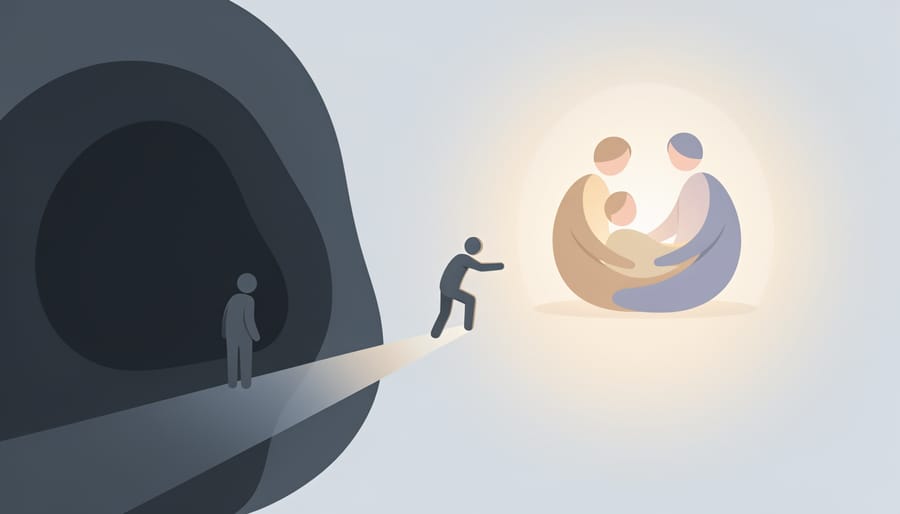 The image symbolizes choosing help, moving from darkness toward safety and support when anxiety becomes severe.
Some anxiety symptoms require immediate professional intervention, not because your experience isn’t valid at lower levels, but because certain states put you at immediate risk. Knowing when to call for emergency help can be life-saving, and there’s no such thing as overreacting when you’re genuinely afraid for your safety or someone else’s.
Warning: If you are in danger or need urgent medical help, call 9-1-1. If you or someone you know is thinking about suicide,
call or text 9-8-8 or call 1-800-784-2433.
Call 9-1-1 if you are having chest pain, difficulty breathing that feels like you can’t get air, severe dizziness or fainting, or any physical symptom that makes you fear for your life. Even if you suspect it might be anxiety, severe panic attacks can mimic heart attacks and other medical emergencies. Let the professionals assess you. Call 9-1-1 if you have hurt yourself, are about to hurt yourself, or are in immediate danger from another person.
Call or text 9-8-8 if you are experiencing thoughts of suicide, have a plan to harm yourself, or are in severe emotional distress where you feel like you can’t keep yourself safe. This line connects you to trained crisis responders who understand mental health emergencies. You can also reach the same support by calling 1-800-784-2433. These services are free, confidential, and available 24/7.
A mental health emergency means you cannot wait for a scheduled appointment. It includes active suicidal thoughts, plans or intent to harm yourself or others, severe panic that doesn’t subside and leaves you unable to function, or a break from reality where you’re seeing or hearing things that aren’t there. Trust your instincts. If you feel like you’re losing control or can’t stay safe, that’s enough reason to reach out right now.
Step-by-Step: How to Get Help for Severe Anxiety in Canada
Step 1: Assess Your Immediate Safety
Start by asking yourself three questions: Are you thinking about harming yourself or ending your life? Are you experiencing chest pain, difficulty breathing, or physical symptoms you can’t explain? Are you unable to function right now, can’t get out of bed, can’t stop shaking, or feel completely paralyzed by fear?
If you answered yes to any of these, you need emergency help now. This isn’t about whether your anxiety is severe enough or whether you’re overreacting. If you are in danger or need urgent medical help, call 9-1-1. If you or someone you know is thinking about suicide, call or text 9-8-8. You can also call 1-800-784-2433 for immediate crisis support.
These numbers exist for exactly this moment. Use them. The assessment can wait, your safety cannot.
Step 2: Call for Emergency Help If Needed
If you’re experiencing thoughts of suicide, severe distress, or you’re in immediate danger, call for help right now. For medical emergencies or if you’re in danger, call 9-1-1. If you’re thinking about suicide or experiencing overwhelming distress, call or text 9-8-8, Canada’s suicide crisis helpline. You can also reach the crisis line at 1-800-784-2433.
When you call, you don’t need to have a perfect explanation ready. Simply describe what’s happening: “I’m having thoughts of hurting myself” or “I’m experiencing severe anxiety and I don’t feel safe.” The person answering is trained to help and won’t judge you.
With 9-8-8, you’ll speak with a trained crisis responder who will listen, provide support, and help you create a safety plan. They won’t automatically send police or an ambulance unless you’re in immediate physical danger. The conversation is confidential, and they’ll work with you to determine the best next steps.
If you call 9-1-1, emergency services will respond. Be honest about your mental health crisis, paramedics and police are increasingly trained in mental health response. They’ll assess your safety and may transport you to a hospital for evaluation and stabilization.
Step 3: Use Assessment Resources to Understand Your Severity
Once you’re not in immediate crisis, assessment tools can help you put words to what you’re experiencing. Many mental health websites and organizations offer brief questionnaires that ask about your symptoms, how long you’ve had them, and how much they’re affecting your daily life. These aren’t diagnoses, only a healthcare provider can diagnose anxiety disorders, but they give you a clearer picture of your severity level and concrete language to use when you do reach out for help.
Think of these tools as preparation for your first conversation with a doctor, counselor, or support line. When you can say “I’ve been experiencing panic attacks three times a week for two months and I can’t leave my house anymore,” you’re giving providers the specific information they need to connect you with appropriate care quickly. If you’re unsure where to find these resources, platforms like Anxiety Canada offer accessible tools designed specifically for anxiety assessment and management.
Step 4: Connect with Mental Health Support Services
Once you’ve determined you’re not in immediate crisis, connecting with mental health support services gives you structured pathways to assessment and treatment. For BC residents, HelpStartsHere searches more than 2,600 listings for mental health and substance use services across the province. Visit their website and enter your location, the type of help you need, and any preferences like language or age group. The platform shows you clinics, counselling services, support groups, and crisis resources near you, with contact details and what each service offers.
Anxiety Canada provides accessible online resources specifically designed to help people manage and cope with anxiety and related disorders, including OCD and PTSD. Their website includes self-help tools, educational materials explaining different anxiety disorders, and guided programs you can work through at your own pace. These resources help whether you’re waiting for professional appointments or looking for immediate coping strategies.
When you contact a service, be ready to briefly describe what you’re experiencing and how long it’s been happening. Ask about wait times, whether they accept your insurance or health card, and what their intake process looks like. Many services offer initial phone assessments to determine the right level of care. If the first service you contact has a long wait or isn’t the right fit, ask them to recommend alternatives. Persistence matters here, the right support exists, and these platforms help you find it without navigating the system alone.
What Happens After You Reach Out: Next Steps and Ongoing Support
After you reach out for help with severe anxiety, the process unfolds in stages, and knowing what to expect can ease some of the uncertainty you might feel.
Your first contact, whether through 9-8-8, a crisis line, or a mental health service, typically leads to an initial screening conversation. A trained professional will ask about your symptoms, how long you’ve been experiencing them, and how they’re affecting your daily life. This conversation helps determine the level of care you need and connects you to appropriate resources. If you contacted HelpStartsHere or Anxiety Canada, you’ll receive information about services in your area and may be guided through next steps based on your situation.
For many people, the next phase involves a comprehensive mental health evaluation with a healthcare provider. This assessment digs deeper into your symptoms, medical history, and life circumstances to create an accurate picture of what you’re experiencing. Waiting for appointments can feel frustrating when you’re struggling, but many services now offer both digital support, like online therapy or app-based resources, and traditional face-to-face appointments to bridge the gap.
“The hardest part was making that first call,” says Maria, who reached out during a period of severe anxiety last year. “Once I did, I felt this weight lift. Someone finally understood, and I had a plan. It wasn’t instant relief, but knowing I wasn’t alone anymore changed everything.”
Your treatment plan will likely include evidence-based techniques tailored to your specific needs, which might combine therapy, medication, lifestyle changes, and ongoing support. Progress doesn’t follow a straight line. Some days will feel harder than others, but recognizing small improvements, like sleeping better or managing a situation that previously triggered panic, shows the help is working.
Common Questions About Seeking Help for Severe Anxiety
What if I’m not sure my anxiety is ‘severe enough’ to get help?
If anxiety is interfering with your daily life, relationships, work, or physical health, it warrants professional support. You don’t need to wait until you’re in crisis to reach out, early intervention often leads to better outcomes and prevents symptoms from worsening.
Will calling a crisis line force me into the hospital?
No. Crisis lines like 9-8-8 are designed to provide immediate support and connect you with resources that match your needs. Hospitalization happens only in rare cases where someone is at immediate risk of harm, and the goal is always to support you in the least restrictive way possible.
What if I can’t afford treatment?
Many Canadians worry about cost, but options exist. Publicly funded mental health services are available through your provincial health system, community health centers offer sliding-scale fees, and resources like Anxiety Canada provide free online tools and information to help you manage symptoms while you explore treatment options.
Can I get help even if I’m not in crisis right now?
Absolutely. You don’t have to be in crisis to seek support. Platforms like HelpStartsHere can help you find therapy and mental health services in BC when you’re ready to address ongoing anxiety, and Anxiety Canada offers self-help resources you can access anytime.
These questions come up frequently because seeking help can feel intimidating. Maybe you’ve been living with anxiety for so long that you’re not sure where the line is between “managing” and “struggling.” Or perhaps you’re worried about being dismissed, judged, or pushed into treatment you’re not ready for.
Here’s the truth: recognizing the warning signs that your anxiety has become severe is itself an act of self-awareness and courage. Anxiety disorders are among the most common mental disorders, with lifetime prevalence reportedly as high as 31%. You’re not alone in this, and asking for help doesn’t mean you’ve failed.
If talking to family feels overwhelming, you might start by sharing one specific way anxiety is affecting you rather than trying to explain everything at once. Sometimes saying “I’ve been having a really hard time with anxiety, and I’m looking into getting some support” opens the door without requiring a full disclosure. You can also reach out for help first and involve family later when you feel more grounded.
The barriers you’re experiencing, doubt, fear, cost concerns, uncertainty about how to start the conversation, are real, but they don’t have to stop you from taking the first step.
Recognizing when your anxiety has become severe and reaching out for help isn’t a sign of weakness, it’s an act of courage. Too often, mental health stigma convinces people they should handle everything alone or wait until things get worse. But you deserve support now, not later.
The resources you need are already here. Save the crisis numbers in your phone today: 9-1-1 for emergencies, 9-8-8 if you’re thinking about suicide, and 1-800-784-2433 for immediate support. Visit Anxiety Canada for tools you can use right away, or explore HelpStartsHere if you’re in BC and ready to connect with local services.
Taking the first step, whether that’s bookmarking a resource, sending a text, or making a call, can feel overwhelming. But that step changes everything. Recovery from severe anxiety is possible with the right support, and thousands of Canadians have found their way forward by reaching out when they needed help most. You can too.