Cycle anxiety is the self-reinforcing loop where anxious thoughts trigger physical symptoms, which in turn intensify those thoughts, creating a pattern that feels impossible to escape. If you’ve ever noticed your heart racing because you’re worried, then become more worried because your heart is racing, you’ve experienced this cycle firsthand.
This pattern affects millions. Research shows that at least 25% of Canadians will experience an anxiety disorder at some point in their lifetime, and many describe feeling trapped in exactly this kind of repeating spiral. You start worrying about an upcoming presentation, your chest tightens, you interpret that tightness as evidence that something is seriously wrong, and suddenly you’re not just anxious about the presentation anymore. You’re anxious about your anxiety.
“I thought I was losing my mind,” shares Maria, 34. “Every time I felt my anxiety rising, I’d panic about the panic. It was exhausting, and I couldn’t see a way out.”
The good news? Understanding how this cycle works is the first step toward breaking it. When you can recognize the pattern, you gain power over it. You’re not broken, and you’re not alone in this experience.
This article breaks down what the anxiety cycle actually is, how it operates in your brain and body, the different forms it takes, and how to spot it in your own life. You’ll find practical insight rooted in current research, without the clinical jargon that often makes these experiences feel more isolating. If you’re in crisis right now, the Suicide Crisis Helpline is available 24/7 at 988, or call 911 or go to your nearest emergency room.
Let’s look at how this cycle works and what you can do about it.
Key Takeaway: Cycle anxiety affects at least one in four Canadians during their lifetime. Experiencing these patterns is common, not a personal weakness or failure, it’s a recognized mental health challenge that many people face and can overcome with proper support.
What Cycle Anxiety Means
Cycle anxiety describes the experience of being caught in a self-perpetuating loop where anxious thoughts trigger physical symptoms, which intensify worry, leading to behaviors that provide temporary relief but ultimately strengthen the pattern. It’s not simply feeling anxious occasionally, it’s the sense that your anxiety has its own momentum, feeding on itself and growing stronger each time you try to escape it.
The cycle feels impossible to break because each component reinforces the others. When you notice your heart racing or your thoughts spiraling, your brain interprets these sensations as proof that something is genuinely wrong. This interpretation triggers more anxiety, creating stronger physical responses, which then validate the original fear. Before you know it, you’re stuck in a pattern where anxiety about feeling anxious becomes its own problem, a phenomenon known as anticipatory anxiety.
Understanding the key concepts within cycle anxiety helps clarify why these patterns feel so entrenched:
- Anticipatory anxiety
- Anxiety about future anxiety, worrying that you’ll feel anxious in an upcoming situation, which often triggers the very symptoms you fear.
- Safety behaviors
- Actions taken to prevent feared outcomes or reduce immediate discomfort, like avoiding eye contact or always sitting near exits, which reinforce the belief that danger exists.
- Hypervigilance
- A state of heightened alertness where you constantly scan for threats or monitor your body for signs of anxiety, which paradoxically increases anxious arousal.
- Avoidance patterns
- Systematic steering away from situations, people, or sensations that trigger anxiety, which prevents you from learning that the feared outcome rarely occurs.
- Physiological arousal
- The body’s physical response to perceived threat, racing heart, shallow breathing, muscle tension, that feels dangerous but is actually your nervous system doing what it’s designed to do.
What makes cycle anxiety particularly frustrating is that the relief you feel after avoiding a trigger or using a safety behavior is real, but short-lived. Your brain learns that anxiety equals danger and that avoidance equals safety. Each time you step away from something that scares you, you reinforce the neural pathway that says the threat was real, making the pattern harder to interrupt next time.
How the Cycle of Anxiety Works
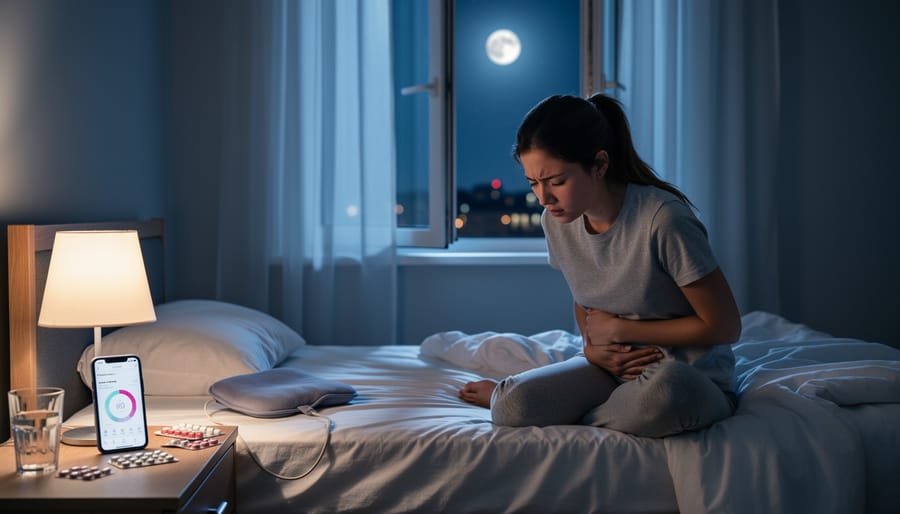 A quiet night moment captures how cycle anxiety can feel isolating and physically overwhelming.
The Role of the Nervous System
Your body’s nervous system acts as an alarm system designed to protect you from danger. When you encounter a perceived threat, whether it’s a physical hazard or an anxious thought, your sympathetic nervous system triggers the fight-or-flight response. Your heart races. Your breathing quickens. Your muscles tense. Blood rushes to your limbs. These changes happen automatically, preparing you to either face the threat or escape it.
Here’s the catch: your nervous system can’t distinguish between a real threat and an imagined one. When you’re caught in cycle anxiety, your brain interprets worried thoughts as genuine danger. A racing heart feels like a heart attack. Shallow breathing feels like suffocation. Tension feels like something’s seriously wrong. These sensations aren’t dangerous, they’re your body doing exactly what it’s designed to do. But when you misinterpret them as evidence that something terrible is happening, your anxiety spikes higher, triggering even stronger physical symptoms.
This creates a feedback loop. The physical sensations convince you the danger is real, which amplifies your anxiety, which intensifies the physical response. Your nervous system stays stuck in alarm mode, unable to switch back to its calm state because it keeps receiving signals that you’re still in danger.
Why the Cycle Reinforces Itself
The cycle persists because our natural attempts to feel better actually make things worse. When you avoid a situation that triggers anxiety, your discomfort drops immediately. That instant relief feels like proof that you made the right choice. Your brain records this: avoid the trigger, escape the fear.
The problem is that avoidance offers short-term relief while blocking the long-term solution. Each time you sidestep what scares you, you deny your brain the chance to discover that the feared outcome rarely happens, or that you could handle it if it did. The anxiety never gets challenged. Instead, it grows.
Safety behaviors work the same way. Checking your phone obsessively, bringing someone with you everywhere, or rehearsing conversations endlessly all provide temporary comfort. But they also send a message to your brain: this situation really is dangerous, and you need these protective measures to survive it. The cycle tightens because you’re inadvertently teaching yourself that the fear is valid and permanent, when exposure and experience would prove otherwise.
Types of Anxiety Cycles
Anxiety cycles manifest in distinct patterns depending on the underlying anxiety disorder or situation, though all share the same self-reinforcing mechanism. Recognizing which pattern you’re experiencing can help you understand your specific triggers and responses.
Panic Attack Cycles
The panic attack cycle often begins with physical sensations, a racing heart or shortness of breath, that the person interprets as dangerous, triggering intense fear and a full panic attack. After the attack subsides, the person becomes hyperaware of any similar bodily sensations, scanning constantly for signs of another attack. This vigilance creates the very sensations they fear, launching another cycle. Learning how to stop a panic attack early can interrupt this pattern before it fully escalates.
Social Anxiety Cycles
Social anxiety cycles revolve around the fear of judgment or embarrassment. The cycle starts when anticipating a social situation triggers anxious thoughts about being negatively evaluated. These thoughts produce physical symptoms like blushing or trembling, which the person fears others will notice. They avoid eye contact, speak less, or leave early, behaviors that provide temporary relief but reinforce the belief that social situations are threatening. Each avoided interaction makes the next one feel more daunting.
Health Anxiety Cycles
Health anxiety creates cycles where normal bodily sensations become evidence of serious illness. A headache triggers thoughts of brain tumors, leading to symptom monitoring and reassurance-seeking through internet searches or doctor visits. The temporary relief from reassurance fades quickly, and the next sensation restarts the cycle. The constant focus on the body actually amplifies normal sensations, creating more anxiety fuel.
Common Anxiety Cycle Patterns
- Social anxiety cycle: fear of judgment → avoidance of interaction → isolation → increased fear
- Health anxiety cycle: bodily sensation → catastrophic interpretation → checking behavior → temporary relief → heightened awareness
- Generalized worry cycle: “what if” thoughts → mental rehearsal of disasters → tension and exhaustion → inability to concentrate → more worries
- Panic attack cycle: physical sensation → fear of another attack → hypervigilance → increased symptoms → panic
- Performance anxiety cycle: upcoming task → self-doubt → procrastination or over-preparation → poor performance or exhaustion → reinforced self-doubt
- OCD-related cycles: intrusive thought → anxiety spike → compulsive ritual → brief relief → stronger intrusive thoughts
While these cycles look different on the surface, they all operate through the same reinforcement pattern: anxiety creates a perceived threat, the response provides short-term relief, and that relief teaches the brain that the threat was real and the response was necessary.
Recognizing Cycle Anxiety in Your Life
 A small grounding object and quiet outdoor setting symbolize how people try to regain control during anxious moments.
Spotting an anxiety cycle while you’re in it can feel nearly impossible. Your mind is racing, your body is tense, and everything feels urgent and real. But learning to recognize the pattern is the first step toward interrupting it.
Start by noticing the physical signs your body sends when anxiety kicks in. Maybe your chest tightens before a work meeting. Perhaps your stomach churns when you check your phone. Some people notice their jaw clenching, hands sweating, or breathing becoming shallow. These sensations often appear before you’ve even consciously registered feeling anxious.
Pay attention to your thought patterns too. Anxiety cycles typically involve repetitive “what if” questions that spiral into worst-case scenarios. You might catch yourself thinking “What if I mess this up?” followed immediately by “Everyone will think I’m incompetent” and then “I’ll lose everything.” Notice how quickly one anxious thought generates the next.
Watch for avoidance behaviors. Sarah, who shared her story with our support line, realized she was caught in a cycle when she started declining social invitations, ordering groceries online to avoid the store, and eventually calling in sick to work. “I didn’t see it happening,” she said. “Each avoidance felt like self-care in the moment, but I was actually feeding the cycle.”
Common triggers include social situations, health concerns, work deadlines, relationship conversations, or even checking news and social media. Your triggers might be obvious or surprisingly subtle. Keeping a simple log for a few days can reveal patterns you hadn’t noticed before.
The cycle often follows predictable timing too. Some people experience morning anxiety that builds throughout the day. Others feel fine until evening when worries flood in. Recognizing your personal rhythm helps you prepare and intervene earlier.
How Cycle Anxiety Affects Daily Life
Living with cycle anxiety means more than just feeling worried. When anxiety cycles take hold, they seep into nearly every part of your day, often in ways that feel impossible to explain to others.
Your relationships bear a quiet weight. You might cancel plans at the last minute because the thought of leaving home triggers a wave of physical symptoms. Or you find yourself snapping at loved ones, not because you’re angry, but because you’re exhausted from fighting the constant mental chatter. Partners and friends may struggle to understand why you can’t “just relax,” and you might pull away rather than try to explain something you don’t fully understand yourself. The isolation deepens the cycle.
At work, maintaining focus becomes an uphill battle. You second-guess decisions, replay conversations searching for mistakes, or avoid tasks that might expose you to judgment. Deadlines that once felt manageable now loom like threats. Some people find themselves calling in sick frequently, not from physical illness but from the overwhelming dread that makes getting out of bed feel impossible.
The physical toll is real and measurable. Chronic muscle tension leads to headaches and back pain. Your stomach might rebel before meetings or social events. Sleep becomes elusive as your mind races through worst-case scenarios at 2 a.m., then you drag through the next day in a fog of exhaustion that makes the anxiety worse.
Simple pleasures fade. The hobbies you loved feel like obligations. Social gatherings you once enjoyed now require days of mental preparation. You’re not living your life so much as managing it, constantly calculating risk and bracing for the next wave of anxiety to hit.
Understanding the Statistics: How Common Is Cycle Anxiety?
If you’ve been caught in a cycle of anxiety, you’re far from alone. At least 25% of Canadians will experience an anxiety disorder in their lifetime, and 1 in 5 will face a mental illness at some point. These numbers tell us that cycle anxiety isn’t rare or unusual, it’s a widespread experience affecting millions of people across the country.
Understanding these statistics helps put your experience in perspective. When anxiety feels isolating, remembering that countless others know exactly what you’re going through can reduce the shame and self-blame that often accompany these cycles. Mental health awareness continues to grow in Canada, with initiatives like Mental Health Week (May 4-10, 2026) helping reduce stigma and encourage people to seek support.
These numbers also highlight why accessible mental health resources matter so much. The high prevalence of anxiety disorders means that effective, available support isn’t a luxury, it’s essential infrastructure for community wellbeing. Whether you’re experiencing your first anxiety cycle or have been caught in patterns for years, you deserve support and the opportunity to break free.
Common Questions About Cycle Anxiety
Can you break the cycle on your own? Sometimes, yes. Many people successfully interrupt anxiety cycles using anxiety relief techniques like controlled breathing, gradual exposure to feared situations, and challenging anxious thoughts. Self-help strategies work best when the cycle is relatively new or mild, and when you have the energy and mental space to practice consistently. However, there’s no shame in needing professional support. If you’ve tried managing it alone without improvement, or if the cycle is affecting your ability to function day-to-day, reaching out for help is the right move. Think of it as getting expert guidance rather than admitting defeat.
How long does an anxiety cycle typically last?
An individual cycle can last minutes to hours, from initial trigger through temporary relief. However, the broader pattern of recurring cycles can persist for weeks, months, or years without intervention.
Is medication necessary to break the cycle?
Not always. Many people manage anxiety cycles through therapy, lifestyle changes, and coping strategies alone. Medication can be helpful when symptoms are severe or when you need support while building other skills, but it’s one tool among many, not an automatic requirement.
What’s the difference between normal worry and cycle anxiety?
Normal worry is proportionate to the situation, resolves when the issue is addressed, and doesn’t significantly disrupt your life. Cycle anxiety feels disproportionate, feeds on itself even after reassurance, and creates patterns of avoidance that limit your daily functioning.
Can anxiety cycles get worse over time if left untreated?
Yes, they often do. Each time you avoid a feared situation or rely on a safety behavior, the cycle strengthens. The brain learns that the anxiety is dangerous and needs to be escaped, making future triggers feel more threatening and the cycle harder to resist.
The good news? Anxiety cycles respond well to treatment precisely because they’re learned patterns. Your brain created these pathways through repetition, and it can create new, healthier ones the same way. Breaking the cycle doesn’t mean you’ll never feel anxious again. It means anxiety won’t control your choices anymore.
Finding Support and Taking Next Steps
 A calm, welcoming space suggests support and next steps, therapy and practical help for breaking the anxiety cycle.
Breaking the cycle of anxiety is possible, and you don’t have to do it alone. If you’re in crisis right now, help is immediately available through the Suicide Crisis Helpline at 988. 988 is available 24/7 with trained support responders who understand what you’re going through.
For many people, professional support makes the difference between staying stuck and moving forward. Therapy approaches like cognitive-behavioral therapy (CBT) and exposure therapy specifically target the mechanisms that keep anxiety cycles running. These aren’t quick fixes, but they teach you how to interrupt the pattern at multiple points, changing your relationship with anxious thoughts, reducing avoidance behaviors, and building tolerance for uncomfortable feelings.
You can find the right therapy match by exploring what approaches align with your specific cycle patterns. Some people benefit from medication alongside therapy, while others work through the cycle with therapeutic support alone. Your family doctor can assess your situation and connect you with appropriate resources.
Mental Health Support offers real-time support options designed to meet you where you are. Whether you’re just starting to recognize your anxiety patterns or actively working to change them, reaching out is the first step toward breaking free.