Finding the right therapy for anxiety in Canada starts with understanding your coverage options, gathering a list of qualified providers in your area, and booking an initial consultation to match treatment style with your needs. Most Canadians can access anxiety therapy through provincial health plans, workplace benefits, community clinics, or the Ontario Structured Psychotherapy Program, which offers cognitive-behavioural therapy for adults dealing with anxiety and depression. The process typically takes two to four weeks from your first call to sitting down with a therapist, though wait times vary by region and service type.
If you’re reading this, you’ve likely felt the weight of anxiety long enough to know something needs to change. Maybe it’s the racing thoughts that won’t quiet at 2 a.m., the tightness in your chest before a meeting, or the growing list of situations you’ve started avoiding. You’re not alone in this, and seeking help isn’t admitting defeat. It’s recognizing that anxiety responds well to structured support and evidence-based techniques that work best when guided by a trained professional.
The challenge many Canadians face isn’t deciding whether to seek therapy but figuring out how to actually start. The system can feel confusing, with different access points depending on where you live and what coverage you have. Recent data from the Canadian Institute for Health Information shows that wait times for community mental health counselling have fluctuated between 2020 and 2024, and while lower wait times are the goal, the reality is that demand continues to grow. That’s why knowing exactly what steps to take, what questions to ask, and how to prepare can make the difference between getting stuck in limbo and getting the support you need.
Key Takeaway: Cognitive-behavioural therapy is a structured, evidence-based treatment for anxiety that typically runs 6 to 20 sessions and teaches practical skills to manage thoughts and behaviours. It’s goal-oriented and focuses on current problems, making it a time-limited option with measurable progress.
What You Need Before You Start
 A calm waiting-room scene conveys the courage of taking the first step toward anxiety support.
You don’t need a thick folder of documents or a perfect narrative before you call for help. Reaching out is the hardest part, and you can do it right now, exactly as you are. That said, gathering a few pieces of information beforehand can make your first appointment smoother and help your provider understand what you’re going through.
Start with your provincial health card. You’ll need it to access publicly funded services, so locate it now and check that it’s current. If you’ve lost it or it’s expired, contact your provincial health ministry to request a replacement, most provinces offer temporary coverage numbers while you wait for a new card.
Next, spend a few minutes jotting down what you’ve been experiencing. You don’t need formal medical language. Note how often anxiety shows up, what seems to trigger it, and how it’s affecting your daily life, work, sleep, relationships, things you used to enjoy. If you’ve tried any coping strategies or treatments before, write those down too, even if they didn’t help. This context gives your doctor a clearer picture and saves you from scrambling to remember details when you’re already nervous.
Consider bringing:
- Your provincial health card (or temporary coverage number)
- Notes on symptom frequency, triggers, and impact on daily activities
- A list of previous treatments or medications, if any
- Questions you want to ask your provider
- The name and contact of a trusted person who can support you, if you’d like them involved
Think about what you want to know. Common questions include: What are my treatment options? How long might this take? What if the first approach doesn’t work? Writing these down means you won’t forget them in the moment.
If the idea of preparing feels overwhelming, skip it. Seriously. Walk into the appointment with just your health card and your honest experience. Providers are trained to help you articulate what’s happening, you don’t have to arrive polished or rehearsed. Taking the step matters infinitely more than having everything organized.
Understanding Your Options: Types of Therapy That Help with Anxiety
When you’re looking for treatment, knowing which therapy approaches work best for anxiety helps you advocate for effective care. Several evidence-based options exist in Canada, and understanding what each involves lets you make an informed choice.
Cognitive-behavioural therapy stands out as the most researched and widely available treatment for anxiety. It’s a structured, short-term approach that zeroes in on the thoughts and behaviours keeping your anxiety going right now, rather than exploring past experiences. CBT is usually 6 to 20 sessions making it a time-limited commitment with a clear endpoint. In each session, you’ll work with your therapist on specific problems, maybe it’s racing thoughts before presentations, avoidance of social situations, or physical symptoms that spiral into panic. The focus is practical: you’ll learn concrete skills like identifying distorted thinking patterns, challenging catastrophic predictions, and gradually facing feared situations in a controlled way.
Programs like Ontario’s Structured Psychotherapy Program provide access to CBT and related services specifically for adults dealing with depression and anxiety-related concerns, offering a publicly funded pathway to this type of care.
Beyond CBT, you might encounter other approaches your provider recommends based on your specific anxiety pattern. Exposure therapy involves gradually and safely confronting feared situations or objects, which can be particularly helpful for phobias and panic disorder. Acceptance and commitment therapy teaches you to accept anxious thoughts and feelings rather than fighting them, while focusing your energy on actions aligned with your values. Some therapists integrate elements from multiple approaches.
A friend who’d been stuck in worry loops for years described her first CBT session as surprisingly practical. “I expected to lie on a couch and talk about my childhood,” she said. “Instead, we mapped out my worry patterns on paper and I left with homework, actually tracking my anxious thoughts during the week. It felt like having a toolkit instead of just venting.” She noticed shifts in her response to triggers within the first month, though the deeper changes took the full course of sessions.
The therapy that works best is the one that fits your anxiety type, your learning style, and the skills you need to build. Your provider can help match you to the right approach.
Important Things to Know Before Seeking Treatment
 This scene reflects the supportive conversation where goals and symptom details are discussed for starting anxiety treatment.
Seeking therapy is a positive, proactive step, but there are moments when anxiety signals an immediate medical need rather than scheduled treatment. If you’re experiencing suicidal thoughts, chest pain or shortness of breath during panic, or your anxiety has made it impossible to care for yourself or leave your home for extended periods, go to an emergency department or call 911. These situations require urgent medical attention, not a future therapy appointment. A mental health evaluation in an emergency setting can connect you to immediate support and stabilization.
Warning: If you’re in crisis, call the 988 Suicide Crisis Helpline (available 24/7) or text CONNECT to 686868 for immediate support.
Therapy works best as part of broader care, not in isolation. Physical symptoms like heart palpitations, dizziness, or digestive issues often accompany anxiety, and they need medical evaluation to rule out other causes. Your family doctor or nurse practitioner can address both the physical and mental health sides, therapy handles the thought patterns and coping skills while medical care manages any physical concerns. Don’t wait for therapy to address symptoms that feel physically alarming.
Wait times for publicly funded therapy exist across Canada, and the reality is they vary by region and service. Rather than delaying all care, use the interim period to gather information, track your symptoms in a journal, and try grounding techniques that can stop a panic attack when it starts. Many communities offer drop-in groups, crisis lines, and peer support while you’re waiting for ongoing therapy. Starting somewhere, even if it’s not the ideal service yet, keeps you moving forward.
Step-by-Step: How to Access Anxiety Therapy in Canada
 A quiet, late-evening moment symbolizes reaching out for urgent support when anxiety feels overwhelming.
Step 1: Start with Your Family Doctor or Nurse Practitioner
Your family doctor or nurse practitioner is usually the first person to see when you’re ready to start therapy for anxiety in Canada. Most publicly funded mental health services require a referral from primary care, and your doctor can assess your symptoms, discuss treatment options, and connect you to the right resources.
During the appointment, expect your doctor to ask about your anxiety symptoms, how often they occur, what triggers them, and how they affect your daily life. Many doctors use brief screening tools, simple questionnaires that help measure the severity of your anxiety. This isn’t a test you can fail; it’s just a way to understand what you’re experiencing and determine the best next steps. Your doctor might also check for physical health issues that can mimic or worsen anxiety, like thyroid problems or vitamin deficiencies.
To make the most of the visit, be as specific as possible. Instead of saying “I feel anxious,” try sharing concrete examples: “I’ve had three panic attacks this month” or “I avoid social situations because my heart races and I can’t breathe.” Mention how anxiety is affecting your work, relationships, or sleep. If you’ve tracked your symptoms beforehand, bring those notes.
If you don’t have a family doctor, you still have options. Walk-in clinics can provide initial assessments and referrals, though you may need to return for follow-up. Many provinces now offer virtual care platforms where nurse practitioners or doctors can assess you remotely and start the referral process. Starting somewhere is better than waiting for the perfect entry point.
Step 2: Get Assessed and Receive a Referral if Needed
Your doctor will use the first visit to assess how anxiety affects your daily life. Expect questions about sleep, work, relationships, and how long you’ve been struggling. Many doctors use brief screening tools, short questionnaires that measure symptom severity, to guide their recommendations. This isn’t a test you can fail; it’s a snapshot to help match you with the right support.
Not all anxiety requires specialist care. Your family doctor can manage mild-to-moderate symptoms directly, often through counselling referrals, lifestyle adjustments, or medication if appropriate. They might connect you with community programs or nurse-led mental health services available in your area.
If your anxiety is severe, persistent despite initial treatment, or complicated by other conditions, your doctor may refer you for psychologist or psychiatrist involvement. Psychologists provide therapy but don’t prescribe medication. Psychiatrists are medical doctors who can diagnose, prescribe, and offer specialized treatment for complex cases.
Ask your doctor to explain their recommendation and what happens next. Understanding the path forward reduces uncertainty and helps you feel more in control as you move toward treatment.
Step 3: Access Psychiatrist Care or Structured Psychotherapy Programs
Once your family doctor or nurse practitioner determines you need specialist support, two publicly funded pathways become available: seeing a psychiatrist or accessing a structured psychotherapy program.
Psychiatrists are medical doctors who specialize in mental health conditions. Visits are covered under provincial health plans, meaning you won’t pay out of pocket. Your referral will go into a queue, and you’ll be contacted when an appointment becomes available. Because psychiatrists can prescribe medication and manage complex anxiety disorders, they’re often reserved for cases where symptoms are severe or haven’t responded to initial treatment.
In some provinces, you can also access structured therapy programs directly through the public system. Ontario, for example, runs the Structured Psychotherapy Program which offers cognitive-behavioural therapy and related services specifically for adults dealing with depression and anxiety-related concerns. These programs provide evidence-based treatment without requiring you to see a psychiatrist first.
Wait times vary by region and service type. The Canadian Institute for Health Information tracks the CIHI wait time median days for community mental health counselling, data updated in October 2025 covering fiscal years 2020 through 2024. Lower numbers indicate faster access, which is what we all want, but the reality is that demand often outpaces capacity.
If you’re facing a lengthy wait, ask your doctor about interim supports: therapy groups, crisis lines, or even starting with self-guided CBT workbooks while you’re on the list.
Step 4: Consider Private Therapy Options
If public wait times feel too long or you want a specific therapy approach right away, private practice can get you started faster. Private psychologists, registered psychotherapists, and counsellors offer the same evidence-based treatments, including CBT, without referrals or waitlists.
Cost varies widely. Expect $150 to $250 per session in most Canadian cities, though rates depend on the provider’s credentials and location. Many employer health plans cover a portion of psychotherapy costs, typically $500 to $3,000 per year. Check your benefits before booking. Some therapists offer sliding-scale fees based on income, so ask if cost is a barrier.
Credentials matter. In most provinces, psychologists must be registered with their provincial college. Psychotherapists and counsellors have varying regulation depending on where you live. Look for designations like Registered Psychotherapist (RP) or Canadian Certified Counsellor (CCC). Don’t hesitate to ask about training, experience with anxiety, and therapeutic approach during an initial phone consultation.
Fit is just as important as qualifications. If you don’t feel heard or comfortable after a few sessions, it’s okay to try someone else. You’re investing time and money, find a therapist who feels right.
Step 5: Attend Your First Session and Establish Treatment Goals
Your first therapy session is a chance to share your story and figure out what you want to work toward. Most therapists start by asking about your anxiety symptoms, what brings you in, and what you hope to change. They’ll explain how they work and answer questions about the process. Together, you’ll set goals that matter to you, maybe managing panic attacks before they spiral, sleeping through the night, or feeling calm enough to go to social events again.
Sarah, who started CBT for social anxiety, said her first session felt less scary than expected: “My therapist asked what I wanted my life to look like without anxiety holding me back. We made a plan to tackle smaller situations first, and that made it feel doable.”
It’s normal to feel nervous. If something doesn’t feel right after a few sessions, maybe the approach doesn’t click or you don’t feel heard, it’s okay to try a different therapist. Finding the right fit matters.
How to Know Your Therapy Is Working
Recognizing whether therapy is helping can be tricky, especially when you’re in the middle of treatment. Progress often shows up in small, daily ways before you notice big changes in how you feel. You might find yourself handling a stressful work meeting without spiralling, or noticing that the racing thoughts that used to keep you up at night are quieter now. These shifts matter just as much as scoring lower on a self-reported anxiety scale at your next session.
Signs that therapy is working typically include:
- Experiencing fewer panic attacks or less intense anxiety episodes
- Using coping skills on your own without needing prompts from your therapist
- Returning to activities or places you’d been avoiding
- Sleeping better or having more energy during the day
Some people also notice they’re better at identifying triggers before anxiety takes over, or that recovery time after a difficult day is shorter than it used to be. Progress isn’t a straight line. You’ll have setbacks, and that’s normal. A rough week doesn’t mean therapy isn’t working or that you’re failing. If you’ve been in treatment for several weeks and aren’t seeing any improvement, or if symptoms are getting worse, that’s a sign to talk openly with your provider about adjusting your approach. Maybe the therapy type isn’t the right fit, or perhaps another issue like mental health disability considerations or mental health stigma is affecting your engagement.
Once active treatment wraps up, your therapist will work with you on maintenance strategies to prevent relapse. This might include scheduled check-ins, a plan for handling future stressors, or practicing skills regularly even when you’re feeling stable. Knowing what progress looks like helps you stay grounded through the ups and downs.
Common Questions About Starting Therapy for Anxiety
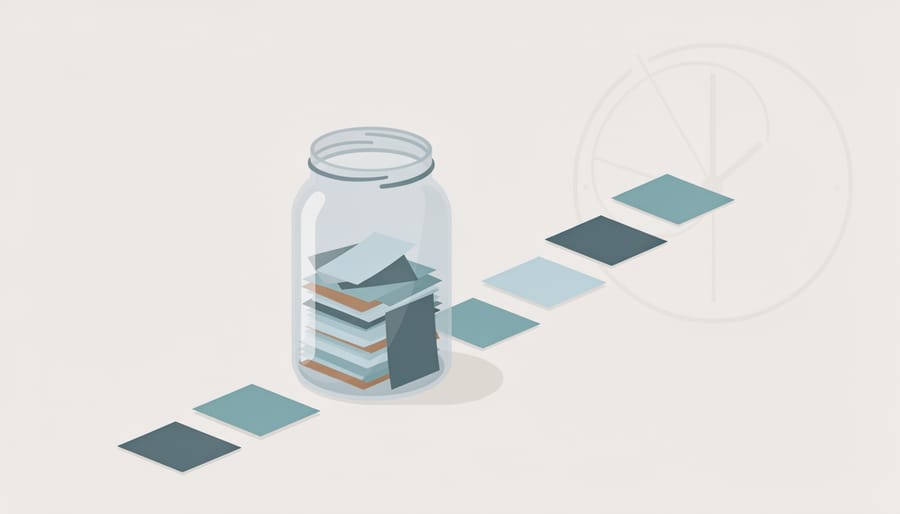 The jar-and-notes symbolism represents tracking triggers and building coping steps over time with therapy.
Common Questions About Starting Therapy for Anxiety
Starting therapy brings up practical questions. Here are answers to the concerns most people have when they’re ready to take that first step.
How long does it take to see results from therapy?
Most people notice some improvement within the first few sessions, though meaningful change typically unfolds over several weeks. Cognitive-behavioural therapy, for example, usually runs 6 to 20 sessions, with many people reporting reduced anxiety symptoms by the midpoint of treatment.
Can I do therapy online instead of in person?
Yes, many therapists in Canada now offer virtual sessions through secure video platforms. Online therapy has proven just as effective as in-person treatment for anxiety, and it removes barriers like travel time and geographic distance.
What if I can’t afford private therapy?
Start with your family doctor, who can connect you to publicly funded options like psychiatrist appointments or structured programs. Some therapists offer sliding-scale fees based on income, and community mental health centres often provide free or low-cost counselling.
What’s the difference between a psychologist and a psychiatrist?
Psychiatrists are medical doctors who can prescribe medication and are covered under provincial health plans. Psychologists provide therapy and psychological testing but can’t prescribe medication, and their services are typically private unless accessed through publicly funded programs.
You don’t need a formal diagnosis to start exploring treatment. Many people begin by describing their symptoms to a family doctor, who then helps determine the right path forward. The assessment process itself often brings clarity about what you’re experiencing and what support makes sense.
If you’re wondering whether your anxiety is severe enough to warrant professional help, trust your instinct. When worry, panic, or avoidance starts interfering with work, relationships, or daily activities, that’s reason enough to reach out. Therapy works best when you start before things become unmanageable, not after you’ve pushed through alone for months.
You’ve spent time reading this guide, maybe bookmarked it, perhaps reread certain sections, and that effort already counts. Researching your options, thinking about what you need, considering the steps ahead: these aren’t distractions from getting help. They’re part of the process, and they matter.
Starting therapy for anxiety in Canada might mean booking an appointment with your family doctor tomorrow, or it might mean saving this page and coming back when you’re ready. Both are valid. The pathways we’ve outlined, publicly funded psychiatry, structured psychotherapy programs, private options, crisis support, exist because anxiety is common, treatable, and worth addressing. You’re not asking for too much by seeking care.
If you’re feeling stuck or need someone to talk to right now, our organization offers real-time support options and community resources designed for moments exactly like this. You can access them anytime, without referral or waitlists.
Therapy works. People get better. You don’t have to carry this alone, and you don’t have to have it all figured out before you reach out. Just start where you are.