Your heart is racing. Your chest feels tight. You can’t catch your breath, and you’re certain something terrible is happening to your body. If you’ve experienced these moments of overwhelming fear, you’re not alone. Panic attacks affect millions of people each year, and here’s what matters most right now: they are highly treatable, and you can learn to manage them.
A panic attack is your body’s alarm system misfiring. It triggers the same physical response you’d have facing real danger, except there’s no actual threat. The symptoms peak within minutes and include rapid heartbeat, sweating, trembling, shortness of breath, and intense fear of losing control or dying. These episodes can feel absolutely terrifying, but they cannot physically harm you, even though your body insists otherwise.
“I thought I was having a heart attack the first time it happened,” says Maya, a 32-year-old teacher who’s been managing panic disorder for three years. “Learning that what I felt was anxiety, not a medical emergency, was the first step toward getting better. Now I have tools that actually work.”
Treatment for panic attacks falls into two categories: immediate techniques you can use during an episode, and longer-term approaches that reduce their frequency and intensity. Both matter. You need strategies to get through the attack happening right now, and you need professional support to address the underlying patterns.
The good news? Cognitive behavioral therapy shows remarkable success rates, often helping people significantly reduce or eliminate panic attacks within 12 to 16 weeks. Medication can provide relief while you develop coping skills. And simple breathing techniques can short-circuit the panic response when you catch it early.
Let’s explore what actually works, backed by current research and real experiences from people who’ve found their way through.
What’s Actually Happening During a Panic Attack
Your heart pounds so hard it might burst through your chest. Your hands tremble. You can’t catch your breath, and a wave of dizziness makes you certain something catastrophic is happening. Your mind races with terrifying thoughts: heart attack, stroke, complete loss of control.
Here’s what’s actually going on: your body has activated an ancient survival system that’s working exactly as designed, just at the wrong time.
A panic attack is your nervous system’s alarm response firing when there’s no actual danger. Think of it as a false alarm, not a malfunction. Your amygdala, the brain’s threat-detection center, perceives danger and triggers the fight-or-flight response. This floods your body with adrenaline and cortisol, preparing you to face a predator or run from a fire. Your heart rate spikes to pump blood to your muscles. You breathe faster to take in more oxygen. Blood flow redirects away from your digestive system, causing nausea. Your pupils dilate. You sweat.
These are the exact same reactions that would save your life in genuine danger. The problem isn’t that your body is broken, it’s that the alarm system is oversensitive, responding to internal sensations or stressors as if they were mortal threats.
Understanding normal vs abnormal anxiety responses helps here. The physical symptoms of panic feel extreme because they are extreme, your body is preparing for maximum exertion. But panic attacks are not dangerous even when they feel life-threatening. Your racing heart won’t give out. You won’t stop breathing. You won’t lose your mind or lose control, though the fear tells you otherwise.
The symptoms typically peak within ten minutes, then gradually subside. Your body can’t maintain that level of arousal indefinitely, the adrenaline burns off, and your system returns to baseline.
This isn’t weakness or imagination. For a deeper dive into how anxiety manifests, check out Anxiety 101. Panic attacks are a recognized medical condition with clear biological mechanisms, and understanding what’s happening can be the first step toward treatment that works.
 A quiet moment of self-care shows how grounding during a panic attack can feel safer and more manageable.
Immediate Strategies: What to Do When Panic Strikes
The 5-4-3-2-1 Grounding Technique
When panic floods your body, your mind races ahead to catastrophe while your senses shut down. The 5-4-3-2-1 technique reverses this by anchoring you firmly in the present moment through your five senses.
Here’s how it works: Start by looking around and naming five things you can see. Be specific. Not just “a chair,” but “the scratched wooden arm of the brown chair” or “the dust floating in the sunlight near the window.” Then identify four things you can physically touch, the coolness of the wall, the texture of your jeans, your phone’s smooth screen, the ridges on your water bottle. Next, notice three things you can hear. Maybe it’s traffic outside, the hum of the refrigerator, or your own breathing. Then two things you can smell, even if it’s just the faint scent of laundry detergent on your shirt or the air itself. Finally, one thing you can taste, whether it’s mint from earlier or just the inside of your mouth.
Sarah, who’s used this technique for three years, describes it like this: “The first time, I barely got through naming three things I could see before my heart rate started dropping. Now it’s automatic. The moment I feel panic building, I start counting what’s around me, and it stops the spiral before it takes over.”
Breathing Methods That Actually Work
When panic hijacks your breathing, it’s not just in your head, hyperventilation floods your body with oxygen while reducing carbon dioxide, which intensifies the physical symptoms. Controlled breathing reverses this pattern and signals your nervous system to stand down.
Box breathing gives you something concrete to focus on: breathe in for four counts, hold for four, exhale for four, hold for four. Repeat. The equal intervals create a rhythm that steadies your heart rate. I’ve used this in grocery store aisles and during work presentations, it works because the counting occupies your mind while the pattern rebalances your blood gases.
Diaphragmatic breathing (belly breathing) engages your parasympathetic nervous system, the body’s natural brake system. Place one hand on your chest, one on your belly. Breathe in slowly through your nose, letting only your belly rise while your chest stays relatively still. Exhale slowly through pursed lips. This deep, slow breathing contradicts the shallow, rapid pattern of panic and tells your brain the emergency is over.
These aren’t just calming tricks. They’re recognized components of effective panic attack treatment, supported by clinical panic disorder treatment guidelines because they directly address the physiological cascade of panic.
 Close-up comfort cues illustrate how breathing and body awareness can help steady the nervous system during a panic surge.
Quick Cognitive Reframes
When panic hijacks your thoughts, it convinces you that the worst-case scenario is happening right now. Cognitive reframes are simple mental shifts that challenge that catastrophic thinking without requiring you to believe everything is fine. They create just enough distance from the panic to let your rational mind back in.
Try these reframes that real people use in the moment:
“This is uncomfortable, but it’s not dangerous.” Sarah, who’s managed panic attacks for three years, repeats this when her heart races. It acknowledges what she’s feeling without feeding the fear that something terrible is about to happen.
“I’ve survived every panic attack I’ve ever had.” This factual statement reminds you of your track record. Your body knows how to come down from panic, even when your mind forgets.
“This feeling has a peak, and I’m already riding it.” Panic attacks typically peak within 10 minutes. Reminding yourself that the intensity won’t last forever helps you tolerate the discomfort rather than fighting it.
“My body is protecting me from a threat that isn’t really there.” This reframe transforms panic from an enemy into a misguided protector. Marcus finds this especially helpful because it removes self-blame while explaining why his symptoms feel so real.
You don’t need to master these perfectly. Even one reframe, repeated like a mantra, can interrupt the spiral long enough for other coping strategies to work.
 A steady walk through nature symbolizes moving through panic symptoms and building resilience over time.
Evidence-Based Treatment Approaches for Lasting Relief
Cognitive Behavioral Therapy (CBT) and Exposure Therapy
Cognitive Behavioral Therapy stands out as the gold standard treatment for panic attacks because it tackles the problem at its root, the patterns of thinking and behavior that fuel the panic cycle. Instead of just managing symptoms, CBT teaches you to recognize the catastrophic thoughts that turn physical sensations into full-blown panic. You learn that racing heart doesn’t mean you’re dying, and that the terrifying feelings will pass.
Exposure therapy, a key component of CBT, works by gradually and safely exposing you to the physical sensations of panic in a controlled setting. Your therapist might have you deliberately trigger mild symptoms, spinning in a chair to create dizziness, breathing through a straw to feel breathless, so you can practice staying calm when these sensations arise. It sounds counterintuitive, but this approach teaches your brain that these sensations aren’t dangerous. Canadian guidelines for panic disorder rate CBT and exposure techniques highly based on decades of clinical evidence.
“My therapist had me confront the grocery store I’d been avoiding for months,” shares Maya, who completed a 12-week CBT program. “We started with just sitting in the parking lot. Eventually, I could shop during peak hours without panic. It felt impossible at first, but facing my fear in small steps actually worked.”
The growing emphasis on exposure therapy training, including professional workshops offered throughout 2026, reflects how central this approach has become to effective panic treatment.
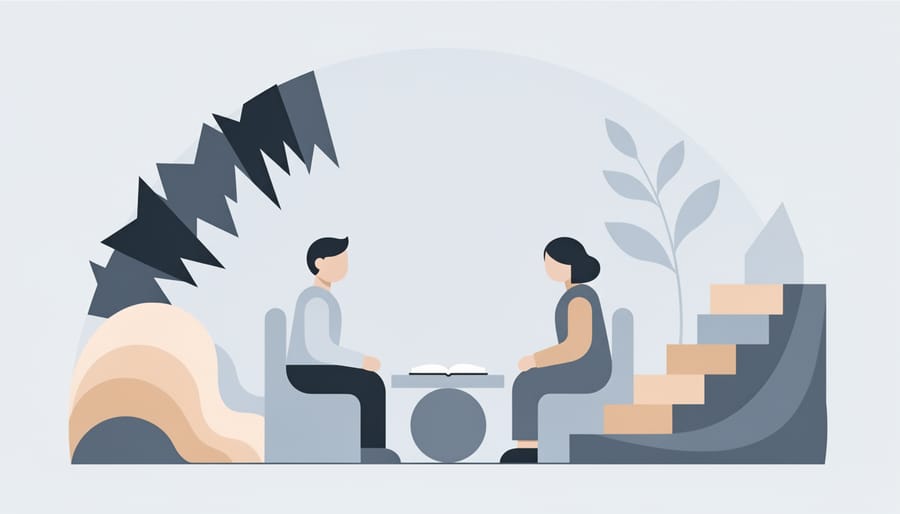 A calm, supportive therapy space visually represents treatment planning and collaboration for lasting relief from panic.
When Medication Makes Sense
Medication isn’t for everyone, and that’s okay. But for some people dealing with frequent panic attacks, it becomes a valuable part of their recovery toolkit, especially when panic is severe enough to interfere with daily life or when therapy alone hasn’t provided sufficient relief.
Anti-anxiety medications and certain antidepressants can reduce the frequency and intensity of panic attacks, creating enough breathing room for therapy to take hold. Your doctor might suggest medication if you’re experiencing multiple panic attacks weekly, avoiding important activities due to fear, or struggling with co-occurring depression. SSRIs and SNRIs typically take several weeks to show their full effect, while benzodiazepines work quickly but are usually recommended for short-term use due to dependency concerns.
Here’s what matters most: medication works best alongside therapy, not as a replacement. Think of it as creating a foundation stable enough to practice the coping skills you’re learning. Some people use medication temporarily while building their anxiety management toolkit through CBT. Others find longer-term medication helpful for sustained management.
Finding the right medication often involves some trial and adjustment. What works brilliantly for one person might not suit another, and dosages need individualizing. Be honest with your healthcare provider about side effects, concerns, and how you’re actually feeling, not how you think you should feel. They can adjust your treatment plan based on your real experience.
Your treatment decisions belong to you and your care team. There’s no one-size-fits-all answer, only what works for your specific situation.
Newer and Complementary Approaches
While CBT and medication form the core of evidence-based panic attack treatment, several complementary approaches can enhance your recovery toolkit. Mindfulness-based interventions, for example, teach you to observe panic sensations without judgment, which can reduce the fear-of-fear cycle that fuels future attacks. Some people find that yoga, progressive muscle relaxation, or acupuncture help manage the overall anxiety that makes panic attacks more likely.
These strategies work best alongside, not instead of, professional treatment. Think of them as supporting players rather than solo acts. For instance, someone dealing with dentist anxiety that triggers panic might use mindfulness techniques before appointments while also working with a therapist on exposure exercises.
The key is finding what genuinely helps you feel grounded. One person I spoke with swears by her morning meditation practice, while another finds structured breathing exercises more effective. Your mental health provider can help you identify which complementary approaches might strengthen your treatment plan without distracting from the interventions with the strongest research backing.
Finding the Right Treatment Path for You
Starting therapy for panic attacks doesn’t have to feel overwhelming, even though it might seem that way right now. Your first step is simpler than you think: talk to your family doctor or a walk-in clinic physician. They can assess whether your symptoms align with panic disorder, rule out other causes, and refer you to appropriate treatment. Many family doctors now provide initial treatment themselves or connect you with mental health specialists.
When looking for a therapist, prioritize someone with specific experience treating panic disorder or anxiety conditions. Psychologists, clinical social workers, and registered psychotherapists can all provide evidence-based treatment. Ask potential providers directly: “What’s your experience treating panic attacks?” and “What approach do you use?” You want to hear about cognitive behavioral therapy or exposure-based methods, not vague promises about “talking things through.”
Here are questions that cut through the uncertainty:
How many sessions do you typically recommend before seeing improvement? (Most evidence-based treatments show progress within 8-12 sessions, though everyone’s timeline differs.)
Do you assign practice between sessions? (Effective panic treatment involves applying skills in real life, not just talking once a week.)
What happens if this approach isn’t working for me? (A good provider has backup plans and will adjust.)
Cost creates real barriers. If you have employee benefits, check your coverage limits and whether you need a referral. Many therapists offer sliding scale fees. Community mental health centers provide free or low-cost services, though waitlists exist. University training clinics often charge reduced rates. Don’t let finances stop you from asking about options.
Treatment works differently for everyone. You might need to try more than one provider or adjust your approach. That’s normal, not failure. Some people manage panic attacks through therapy alone, while others benefit from combining therapy with medication, particularly if they also experience generalized anxiety or depression. Your path is yours.
Give treatment a fair chance, typically at least six sessions, before deciding it’s not working. Recovery isn’t linear. You’ll have setbacks, and that doesn’t mean you’re doing it wrong.
Building Your Personal Prevention Toolkit
You’ve learned the immediate techniques and treatment options. Now it’s time to build habits that support your nervous system before panic strikes.
Think of prevention as strengthening your mental scaffolding. Regular sleep patterns matter more than most people realize, when you’re chronically under-rested, your stress response becomes hypervigilant, mistaking ordinary stressors for emergencies. Aim for consistent sleep and wake times, even on weekends. Your brain thrives on predictability.
Movement changes your body’s relationship with adrenaline. When you exercise regularly, you’re teaching your system that elevated heart rate and rapid breathing aren’t dangerous, they’re normal. You don’t need intense workouts. A 20-minute walk, gentle yoga, or swimming can shift your baseline anxiety levels. Pick something you’ll actually do, not something that adds another layer of stress to your day.
Identifying your triggers gives you a roadmap. Keep a simple log for a few weeks: when did panic show up, what happened beforehand, what were you thinking about? Patterns emerge. Maybe it’s crowded spaces, conflict with specific people, or late-afternoon blood sugar crashes. You can’t avoid every trigger, but knowing them helps you prepare.
Tip: Create a one-page panic action plan listing three grounding techniques that work for you, two trusted people to text, and your therapist’s contact information, keep it in your phone and share it with someone close to you.
Daily stress management isn’t about being calm all the time. It’s about processing stress as it comes rather than letting it accumulate. That might be five minutes of breathing exercises before bed, journaling when something bothers you, or setting boundaries that protect your energy. Small, consistent practices prevent the pressure buildup that fuels panic.
Here’s what matters: these prevention strategies support your recovery, but they’re not a substitute for professional treatment if you’re experiencing frequent panic attacks. Think of lifestyle changes as working alongside therapy and medication, not replacing them. You’re building resilience while getting the specialized help that addresses panic at its roots.
You Don’t Have to Face This Alone
I know how heavy everything can feel when you’re in the thick of panic attacks. Some days, just reading this article might have taken courage. But here’s what I want you to hold onto: treatment works, and you don’t have to figure this out alone.
Sarah, who struggled with panic attacks for three years before seeking help, told me: “I thought I’d just have to live with this forever. Finding the right therapist and learning I wasn’t broken changed everything. I still get anxious sometimes, but panic attacks don’t control my life anymore.”
Her story isn’t unique. Thousands of people recover or find significant relief through treatment each year. Whether you start with your family doctor, connect with a therapist, or explore mental health programs in your community, taking that first step matters more than taking the perfect step.
If you’re in crisis right now, please reach out. Call 988 for the Suicide Crisis Helpline, text CONNECT to 686868 for Kids Help Phone, or go to your nearest emergency department. These resources exist because you matter, and because help is available when you need it most.
You’ve already shown strength by seeking information. The next part of your journey, whatever treatment path makes sense for you, is waiting when you’re ready.