You check every item off your to-do list, meet every deadline, and maintain a smile that convinces everyone you’re thriving. Inside, though, your mind races with worst-case scenarios, your chest tightens before meetings, and you lie awake replaying conversations from three days ago. This is high functioning anxiety, and if you’re reading this, you probably recognize yourself in those words.
Unlike the anxiety that keeps people home in bed, high functioning anxiety drives you forward. You’re the colleague who always volunteers for extra projects, the friend who never cancels plans, the person others describe as “having it all together.” But that external success comes at a cost: constant mental exhaustion, perfectionism that feels more like a prison than a strength, and a nagging fear that if you slow down even slightly, everything will fall apart.
Here’s what makes high functioning anxiety so difficult to recognize and address: it’s praised. Your boss calls you reliable. Your family sees you as the responsible one. Society rewards your overachievement while the anxiety fueling it remains invisible. You’ve likely questioned whether your experience even counts as anxiety because you’re still functioning, still succeeding, still showing up.
But functioning doesn’t mean flourishing. The fact that you can push through doesn’t mean you should have to live this way.
If you’re exhausted from maintaining the perfect facade, if the gap between how you appear and how you feel keeps widening, you’re not imagining it. Your experience is real, valid, and surprisingly common among high achievers in 2026. More importantly, there are concrete strategies that can help you find genuine calm without sacrificing your ambition or success. You deserve support that recognizes both your strengths and your struggles.
What High Functioning Anxiety Actually Looks Like
 A professional looks composed on the outside while their reflection and posture suggest inner tension they may not share with others.
The Three Telltale Signs You Can’t Ignore
Recognizing high functioning anxiety isn’t always straightforward. Unlike more visible forms of distress, these patterns often hide behind impressive résumés and packed calendars. Understanding the distinction between normal vs abnormal anxiety helps, but high functioning anxiety occupies a particularly deceptive middle ground where external success masks internal struggle.
**Perfectionism That Drives Overwork**
This isn’t the healthy pursuit of excellence. It’s checking emails at 11 PM because you’re convinced you missed something critical. It’s rewriting a presentation five times when the first version was already strong. You set impossibly high standards, then beat yourself up for not exceeding them. Your colleagues see someone who consistently delivers exceptional work. You experience every project as a tightrope walk where one misstep means catastrophe. The overwork isn’t about ambition; it’s about quieting the voice insisting nothing you do is good enough.
**Constant Fear of Failure Despite Success**
Your performance reviews are excellent. You’ve been promoted. People seek your expertise. Yet you’re convinced you’re moments away from being exposed as incompetent. This fear doesn’t respond to evidence. Each accomplishment feels like you’ve fooled everyone again rather than earned recognition. You attribute success to luck, timing, or other people’s generosity, never your own competence. The anxiety doesn’t decrease with achievement; it escalates. More responsibility means more ways to fail, more people to disappoint.
**Inability to Rest or Disconnect**
Your body forgot how to relax. Vacations feel stressful because work piles up. Weekends mean catching up on tasks you couldn’t finish during the week. Even during downtime, your mind races through tomorrow’s to-do list. You might fall asleep easily from exhaustion but wake at 3 AM mentally solving problems. Rest feels irresponsible when there’s always something more you could be doing. You’ve built an identity around productivity, and stillness triggers guilt rather than restoration.
These three patterns often appear together, creating a cycle where perfectionism fuels overwork, fear of failure prevents rest, and exhaustion intensifies anxiety.
High Functioning Anxiety in the Canadian Workplace
When Your Achievements Become Your Prison
Success doesn’t cure anxiety, it often feeds it. Each promotion, each achievement, each milestone you hit just raises the bar higher in your own mind. Instead of celebrating, you’re already worried about the next performance review, the next project, the next way you might fall short. What looks like ambition from the outside feels like a treadmill you can’t step off.
This is the paradox at the heart of high functioning anxiety: your accomplishments become evidence of how much you have to lose. The better you perform, the more pressure you feel to maintain that standard. One colleague describes it as “building a reputation I’m terrified I can’t live up to.” The achievements that should prove your competence instead become proof of how far you could fall.
For leaders and high-achievers, this creates a sustainability crisis. Recent work addressing the intersection of high functioning anxiety and leadership sustainability highlights how professionals who appear most successful often struggle most with internal pressure. They overwork to maintain their image, say yes to everything, and drive themselves toward burnout while their teams see only confidence and capability.
The workplace anxiety that comes with success-driven pressure compounds over time. You can’t delegate because no one else will do it “right.” You can’t take vacation because things might fall apart without you. You can’t admit struggle because that would contradict the competent persona you’ve built. Your achievements become a prison with invisible bars, ones you’ve constructed yourself, one successful project at a time.
Breaking this cycle requires recognizing that sustainable success doesn’t mean never struggling. It means building systems that allow you to perform well without destroying yourself in the process.
 The desk scene captures the push-pull of high functioning anxiety, staying productive while the body holds tension and can’t fully detach.
The Remote Work Factor
Remote work has transformed the Canadian workplace landscape, but for those managing high functioning anxiety, the flexibility that promised freedom has often created new forms of pressure. Without physical boundaries between office and home, work expands to fill every available hour. You find yourself checking email at 9 p.m. because your laptop is always within reach. Morning meetings start earlier when there’s no commute. That “quick task” after dinner becomes two hours of work you can’t stop thinking about.
The visibility paradox compounds this pressure. When your team can’t see you physically present, you overcompensate by being hyper-responsive on Slack, joining every optional meeting, and producing more deliverables than necessary to prove you’re working. The fear that colleagues might doubt your productivity drives you to maintain constant availability, even when you’re exhausted. Video calls add another layer, turning each interaction into a performance where you manage not just your work but your environment, appearance, and perceived engagement level.
Isolation from workplace support systems that once offered natural breaks and perspective makes everything harder. The colleague who would notice you seemed stressed isn’t there. The casual hallway conversation that helped you reality-check a worry doesn’t happen. You’re left alone with spiraling thoughts, no external cues to stop working, and the nagging sense that everyone else handles remote work better than you do.
Recognizing High Functioning Anxiety in Daily Life
High functioning anxiety doesn’t clock out when you leave work. It follows you home, shapes how you parent, strains your closest relationships, and makes basic self-care feel impossible. You might excel at meeting everyone else’s needs while your own go ignored, or find yourself unable to enjoy social events because you’re mentally running through tomorrow’s to-do list.
In relationships, high functioning anxiety often shows up as people-pleasing that breeds resentment. You say yes when you mean no, overcommit to avoid disappointing others, and struggle to communicate your actual needs because you fear being seen as difficult or demanding. Partners might describe you as distant or preoccupied even when you’re physically present, because part of your mind is always planning, worrying, or rehearsing conversations that haven’t happened yet. Anxiety at home creates a constant low-grade tension that affects everyone around you, even when you think you’re hiding it well.
For parents, the pressure doubles. You want to model healthy habits while internally spiraling about whether you’re doing enough, doing it right, or permanently damaging your kids through your imperfections. You might over-schedule your children’s activities, micromanage their homework, or lose sleep catastrophizing about their futures. The irony is that while you appear to be the organized, involved parent everyone admires, you’re exhausted and convinced you’re failing.
Social situations become performances. You attend events because you should, then spend the entire time monitoring how others perceive you rather than actually connecting. Canceling plans triggers guilt, but attending drains you completely. You might notice you can’t remember the last time you did something purely for enjoyment without turning it into another task to optimize or accomplish.
Self-care falls to the bottom of an endless list. Exercise becomes another obligation you berate yourself for missing. Relaxation feels wasteful when there’s always something productive you could be doing instead. You tell yourself you’ll rest after this project, this deadline, this milestone, but the finish line keeps moving, and the rest never comes.
 A calm home setting at night highlights how high functioning anxiety can keep someone alert and unable to truly rest, even when life slows down.
Coping Strategies That Actually Work
Redefining Productivity and Rest
For years, you’ve heard that constant hustle equals success. But that framework ignores a fundamental truth: your brain needs downtime to function optimally. Rest isn’t the opposite of productivity; it’s what makes sustainable productivity possible.
Start by tracking your actual energy levels rather than hours worked. Notice when you’re genuinely focused versus when you’re spinning your wheels out of anxiety. That distinction matters more than any productivity hack.
Set boundaries that protect your capacity, not just your calendar. This means turning off Slack after 7 PM, taking real lunch breaks away from your screen, and scheduling non-negotiable recovery time the same way you schedule meetings. High achievers often resist this, viewing boundaries as weakness. They’re actually what prevent burnout.
Reframe rest as active maintenance, not passive laziness. Elite athletes understand that recovery days build strength. Your mind works the same way. A Sunday afternoon reading or a weeknight without your laptop isn’t lost productivity; it’s necessary for Monday’s performance.
Practice saying no to good opportunities that don’t serve your priorities. This feels impossible when anxiety tells you every request is urgent and every opportunity is your last. It’s not. Protecting your bandwidth lets you excel at what truly matters instead of burning out across twenty mediocre commitments.
The goal isn’t perfect balance. It’s building rhythms where achievement and recovery coexist, where you can succeed without sacrificing your wellbeing on the altar of perpetual motion.
Professional Support Options
Reaching out for professional support isn’t admitting defeat, it’s recognizing that managing high functioning anxiety effectively often requires expert guidance. Therapy offers several evidence-based approaches that work particularly well for high achievers. Cognitive Behavioral Therapy (CBT) helps identify and reframe the perfectionistic thought patterns driving your anxiety, while Acceptance and Commitment Therapy (ACT) teaches you to pursue meaningful goals without being controlled by anxiety. Many Canadians also find success with specialized coaching that addresses workplace performance anxiety and boundary-setting.
Knowing when self-help strategies aren’t enough is crucial. If your anxiety interferes with sleep, relationships, or physical health despite your coping efforts, professional support becomes essential. The same applies if you’re experiencing burnout, relying on substances to manage stress, or finding that achievement no longer brings satisfaction.
Accessing support in Canada has become more straightforward in 2026, with many therapists offering virtual sessions covered by employee assistance programs or extended health benefits. Mental health stigma continues to decrease as more professionals openly discuss their own experiences with therapy and coaching. You can start by asking your family doctor for referrals, checking your workplace benefits for covered services, or exploring directories of registered psychologists and therapists in your province. Many practitioners now specialize in high functioning anxiety and understand the unique challenges facing ambitious, successful individuals who struggle internally.
Resources and Support for Canadians
Finding support for high functioning anxiety doesn’t mean you’ve failed at managing it alone. It means you’re ready to build a sustainable path forward. Canada offers a growing network of resources designed for people who’ve mastered appearing capable while struggling internally.
Several national organizations provide tailored support for high functioning anxiety. The Anxiety Disorders Association of Canada offers virtual peer support groups where high achievers discuss the unique pressures of maintaining external success while managing internal distress. Many provincial health services now include online cognitive behavioral therapy programs specifically addressing perfectionism and overwork patterns common in high functioning anxiety.
Local community resources are expanding across Canada to meet this need:
- Free English-language workshops on high functioning anxiety and hustle culture, accessible to all Canadians
- In-person and virtual therapy options through provincial mental health programs
- Workplace Employee Assistance Programs (EAPs) offering confidential counseling for career-related anxiety
- Digital mental health platforms providing 24/7 access to guided exercises and self-assessment tools
- Community mental health centers in major cities offering sliding-scale therapy fees
For those in the Greater Toronto Area, in-person workshops scheduled for September 2026 will address the intersection of high functioning anxiety and professional sustainability. Virtual attendance options ensure Canadians nationwide can participate regardless of location.
Professional development resources are also recognizing this issue. A recent April 2026 publication explores how leaders can sustain their careers while managing high functioning anxiety, offering frameworks for balancing achievement with mental wellness.
Crisis support remains available any time through Canada’s Crisis Services network at 1-833-456-4566, offering immediate text or phone support when anxiety becomes overwhelming. Remember that reaching out for help demonstrates the same problem-solving skills you apply elsewhere in your life.
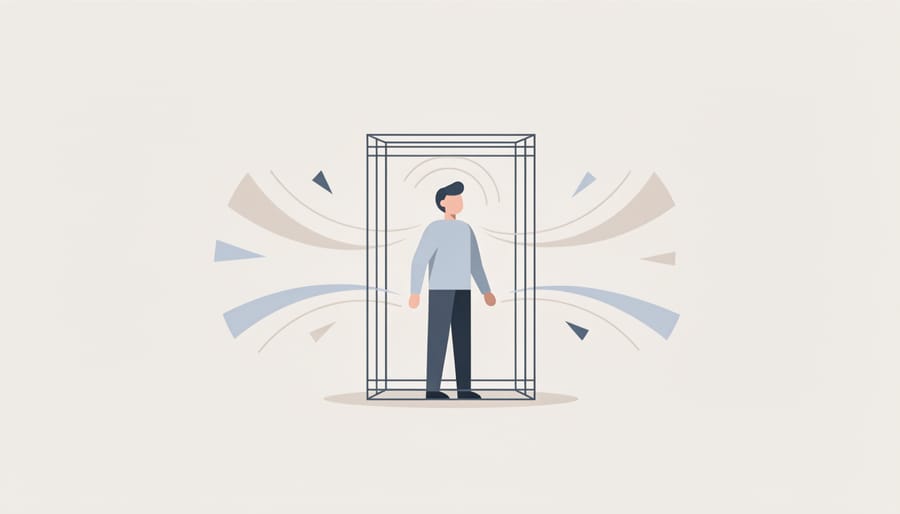 A symbolic “release” moment shows how easing pressure and boundaries can create room to breathe, even for high achievers.
Your achievements are real. Your struggles are real too. They can both be true at the same time.
If you’ve recognized yourself in these pages, you’re not alone. Thousands of Canadians are navigating the same tension between outward success and internal overwhelm. The fact that you’re high-performing doesn’t mean your anxiety is less valid, and seeking support isn’t a sign that you’re failing. It’s actually the opposite: choosing to address what’s happening beneath the surface takes courage and self-awareness.
High functioning anxiety doesn’t have to be a life sentence. With the right strategies, professional guidance when needed, and a community that understands, you can maintain your drive without burning out. You can achieve your goals while also taking care of yourself. The two aren’t mutually exclusive.
You don’t have to figure this out alone. Mental Health Support offers resources specifically designed for people like you who are managing anxiety while staying engaged with work and life. Whether you need immediate support during a difficult moment or want to explore longer-term strategies, help is available.
If you’re struggling right now, our real-time support options connect you with someone who can listen without judgment. You’ve spent enough time looking fine on the outside. It’s time to feel better on the inside too.