Your racing heart and sweaty palms could signal either anxiety or fear, and knowing which one you’re experiencing matters because the strategies that calm fear often don’t work for anxiety. The difference comes down to timing and focus: fear is your body’s alarm system responding to danger happening right now, something you can see or touch, while anxiety lives in the future, spinning worry about threats that might never arrive.
If you’re searching for this distinction, you’re probably caught in that uncomfortable space where your body feels activated but you can’t quite name why, or you’re wondering if what you’re feeling is normal. Maybe you’ve noticed your mind racing about tomorrow’s presentation for days, or perhaps you froze when you nearly missed a collision on the highway. Both experiences can feel overwhelming, but they’re fundamentally different responses serving different purposes.
Understanding this difference isn’t just academic. When you can identify whether you’re experiencing fear or anxiety, you gain clarity about what’s happening in your mind and body. That clarity opens the door to more effective coping strategies. Fear typically resolves once the immediate threat passes, but anxiety can linger and build, sometimes crossing the line from a normal stress response into something that needs support.
Here’s what makes this tricky: both anxiety and fear can show up with similar physical symptoms like rapid heartbeat, muscle tension, and difficulty concentrating. Both can feel intense and real. And for many people, anxiety and fear can coexist or trigger each other, creating a confusing loop that’s hard to untangle alone.
The good news is that recognizing the pattern is the first step toward regaining control. Whether you’re dealing with momentary fear or persistent anxiety that’s affecting your daily life, understanding what you’re up against helps you find the right path forward.
Key Takeaway: Fear naturally resolves when the threat passes, while anxiety requires ongoing management strategies. Both can exist simultaneously, and recognizing which you’re experiencing helps you choose the most effective response. Professional support works for both, especially when symptoms interfere with daily life.
At a Glance: Anxiety vs. Fear
| Feature |
Anxiety |
Fear |
| Timing |
Future-focused worry about what might happen |
Present-moment response to immediate danger |
| Trigger |
Vague or uncertain threats; sometimes no clear cause |
Identifiable, specific danger you can point to |
| Duration |
Persistent, can last days, weeks, or longer |
Brief, resolves when threat passes |
| Physical Response |
Tension, restlessness, racing thoughts, fatigue |
Rapid heart rate, adrenaline surge, fight-or-flight activation |
| Becomes Concerning When |
Symptoms are persistent and severe, causing distress in daily life and interfering with work, relationships, or activities |
Response is disproportionate to actual danger or doesn’t subside after threat is gone |
Both responses involve real physical and emotional experiences, but recognizing which one you’re dealing with helps you choose the most effective way to respond. Anxiety typically builds gradually and lingers, even when there’s no immediate threat in front of you. Fear arrives suddenly and serves a protective purpose, helping us survive real danger in the moment. While both can feel overwhelming, the key difference lies in whether you’re reacting to something happening now or anticipating something that might happen later.
Understanding What Anxiety and Fear Really Are
 A calm night scene can still feel heavy when the mind keeps scanning the future for threats. This image helps set a reflective tone for anxiety as anticipatory worry.
What Fear Is: Your Brain’s Immediate Danger Response
Fear is your body’s emergency alert system, designed to keep you alive when you’re facing real, immediate danger. When a car swerves into your lane or you spot a snake coiled on the trail ahead, fear kicks in instantly, before you’ve had time to consciously think about what’s happening. This is your brain recognizing a threat right in front of you, right now, and mobilizing your body to respond.
Unlike anxiety, which focuses on what might happen tomorrow or next week, fear anchors you firmly in the present moment. You’re not imagining a possible threat; you’re reacting to something happening. The speeding car is real. The snake is there. Your heart pounds, your muscles tense, and you step back without deliberating, that’s fear doing exactly what it evolved to do.
- Immediate Trigger
- Fear activates in response to a specific, identifiable danger present in your environment right now, not something you’re imagining or anticipating.
- Present-Focused
- Fear keeps your attention locked on the current moment and the threat you’re facing, rather than projecting into the future.
- Identifiable Threat
- You can point to exactly what’s causing your fear, a specific object, person, animal, or situation creating danger.
- Protective Function
- Fear triggers your fight-or-flight response, preparing your body to escape or defend against harm. This survival mechanism helps us survive real danger in the moment.
Fear typically resolves once the threat passes. You step back from the curb, the car speeds by, and your heart rate gradually returns to normal. The snake slithers away, and the intense physical response fades. This immediate-then-resolved pattern distinguishes fear from the persistent, future-oriented nature of anxiety. Fear serves you well in genuine danger, it’s a protective response you want working properly.
 Fear often shows up as an immediate, protective reaction when something dangerous is happening right now. This scene conveys that fast, present-focused sense of “act to stay safe.”
What Anxiety Is: Anticipating What Might Happen
Anxiety lives in the space between now and later. It’s your mind’s way of scanning the horizon for potential problems, playing out scenarios that haven’t happened yet and might never happen at all. While fear jolts you into action when danger arrives, anxiety keeps you alert to what could be coming around the corner.
This future-focused worry is a normal and often necessary response to stress or perceived threats. That knot in your stomach before a job interview, the restlessness you feel planning a difficult conversation, the mental rehearsal of everything that might go wrong on an upcoming trip, these are all anxiety doing its job. It’s characterized by feelings of apprehension, worry, or unease, and when it stays within reasonable bounds, it actually helps you prepare and protect yourself.
- Anticipatory Nature
- Anxiety focuses on potential future threats rather than present dangers, often beginning with “what if” questions that spiral into various worst-case scenarios.
- Vague or Uncertain Triggers
- Unlike fear’s clear threat, anxiety often lacks a specific, identifiable source, you might feel anxious without being able to pinpoint exactly what’s wrong.
- Normal Anxiety
- Temporary worry that’s proportionate to a situation and fades once the stressor passes or you adapt to it.
- Anxiety Disorders
- When worry becomes persistent, excessive, and intense enough to interfere with daily activities, impairing your family, social, school, or working life.
The line between normal anxiety and something more serious isn’t always obvious. We all experience periods of heightened worry, especially during stressful life transitions or when facing genuine uncertainties. But people with anxiety disorders experience fear and worry that is both intense and excessive, persisting even when there’s no logical threat and making everyday situations feel overwhelming. The key difference isn’t whether you feel anxious, it’s whether that anxiety has taken over, showing up uninvited and refusing to leave even when the situation doesn’t warrant it.
How Anxiety and Fear Differ: A Deeper Look
Present Danger vs. Anticipated Threat
The core distinction lies in timing: fear anchors you to immediate danger, while anxiety pulls your attention toward threats that haven’t happened yet and may never occur.
When you’re standing on stage about to speak, that racing heart and dry mouth you feel as the spotlight hits you? That’s fear responding to the present moment. Your brain recognizes you’re exposed right now, vulnerable to judgment from the people staring at you. This immediate response helps us survive real danger in the moment, whether that’s a physical threat or a social one your nervous system perceives as urgent.
Contrast that with the week leading up to the same presentation. You rehearse worst-case scenarios in bed at night. Your stomach tightens when you think about forgetting your lines or seeing people check their phones. This is anticipation anxiety your mind spinning narratives about what might go wrong days from now.
The same event triggers both responses, but they live in different time zones. Fear says “I’m in danger now.” Anxiety whispers “What if I’m in danger later?” Understanding which one you’re experiencing helps you choose the right response: grounding techniques for present-moment fear, versus managing future-focused worry patterns that keep you stuck in what-if loops.
Immediate Response vs. Persistent Worry
Fear flares up and then fades. When you jump back from that speeding car, your heart pounds and your breathing quickens, but within minutes your body returns to baseline. The threat has passed, and so has the response. This immediacy is fear’s defining pattern: it arrives fast, feels intense, and resolves when you’re safe again.
Anxiety operates on a different timeline. That presentation next week keeps you awake tonight, tomorrow night, and the night after. You replay conversations from earlier today, worrying about what you should have said. Even when nothing threatening is actually happening right now, the worry persists. You might recognize the physical signs of anxiety lingering in your body: muscle tension that won’t release, an uneasy stomach, restlessness that follows you through your day.
For people with anxiety disorders, this pattern becomes both intense and excessive. The worry doesn’t match the actual threat level, and it doesn’t shut off when logic says it should. What begins as normal anticipation transforms into persistent distress that can stretch across days, weeks, or longer without clear resolution.
 Anxiety can linger even in ordinary spaces, turning daily life into a place where worry won’t fully let go. The quiet scene reflects persistent mental tension without an immediate visible threat.
Impact on Daily Life
Fear impacts your life in bursts, it spikes when you’re in immediate danger, then fades once you’re safe. Your heart races as you slam the brakes to avoid a collision, but within minutes of pulling over, your body begins to calm. The disruption is intense but temporary, and you typically return to normal functioning once the threat passes.
Anxiety operates differently. It lingers in the background of your daily routine, coloring how you approach ordinary situations and decisions. When anxiety becomes persistent and severe, it creates ongoing distress that reshapes your life in ways fear doesn’t. You might rehearse conversations for hours before making a phone call, skip social gatherings you’d enjoy, or lie awake running through worst-case scenarios that never materialize.
Anxiety disorders interfere with daily activities in specific, measurable ways. The worry doesn’t just visit, it moves in, affecting how you function across multiple life areas. You may notice:
- Avoiding social situations, leading to isolation and strained friendships
- Declining work or school performance due to difficulty concentrating or completing tasks
- Tension in close relationships when reassurance-seeking or irritability increases
- Restricting your life around avoidance behaviors that temporarily reduce anxiety
- Physical symptoms like headaches, digestive issues, or chronic fatigue that compound the stress
These patterns signal that anxiety has crossed from a normal stress response into something that requires attention. When symptoms consistently interfere with your family, social, and school or working life, creating impaired daily activities that limit your potential, it’s worth exploring support options. The key distinction is persistence: fear disrupts your day, but anxiety disorders can reshape your entire life trajectory if left unaddressed.
Recognizing When Anxiety Becomes a Disorder
The line between normal anxiety and an anxiety disorder isn’t always obvious, which is why many people struggle to know whether what they’re experiencing needs professional attention. Understanding the distinction between normal vs. abnormal anxiety helps you recognize when your worry has crossed from protective to problematic.
Normal anxiety serves a purpose. It motivates you to prepare for an exam, keeps you cautious in genuinely risky situations, and fades once the stressor passes. Anxiety becomes a disorder when it stops serving you and starts controlling your life instead.
Four key markers signal when anxiety has become a clinical concern. First, persistence matters more than intensity. If you’ve experienced worry or anxiety most days for six months or longer, that’s a red flag. The worry doesn’t need a specific trigger and doesn’t resolve when circumstances improve.
Second, severity interferes with functioning. Anxiety becomes concerning when symptoms are persistent and severe and cause distress to a person’s daily life. You might avoid situations entirely, struggle to complete work tasks, withdraw from friends, or find yourself unable to manage routine responsibilities because worry dominates your thoughts.
Third, the anxiety feels disproportionate to actual risk. While normal anxiety matches the threat level, anxiety disorders involve fear and worry that is both intense and excessive compared to the reality of the situation.
Fourth, physical symptoms become disruptive. Beyond occasional tension or butterflies, you experience frequent racing heart, difficulty sleeping, muscle tension, fatigue, or digestive problems that affect your quality of life.
Timing provides another clue. Symptoms often begin young, with onset during childhood or adolescence being common for anxiety disorders. If patterns established early in life now impair your family, social, and work life, professional assessment can clarify whether you’re dealing with a disorder rather than temporary stress.
If several of these markers describe your experience, reaching out for support isn’t overreacting. It’s recognizing that effective help exists for something genuinely affecting your wellbeing.
Which Response Are You Experiencing? A Guide to Self-Recognition
Figuring out whether you’re experiencing fear or anxiety can feel confusing when you’re in the middle of an intense emotional response. But asking yourself a few targeted questions can provide clarity and help you choose the most effective way to respond.
Start with the most revealing question: can you point to a specific, immediate threat that’s happening right now? If there’s a real danger you can identify in this moment, a confrontation happening, a critical email you’re about to send, a performance about to begin, you’re likely dealing with fear. This is your brain doing exactly what it should: responding to actual present danger.
If you can’t identify an immediate threat but find yourself caught up in “what if” scenarios about the future, you’re experiencing anxiety. This might look like worrying about a job interview next week, fretting about a health concern that hasn’t materialized, or feeling uneasy about a social gathering that’s still days away.
Consider these questions to clarify what you’re experiencing:
- Can I identify a specific, immediate threat right now, or am I worrying about possibilities?
- Is this feeling tied to something happening at this moment or something that might happen later?
- Does this feeling fade when the situation passes, or does it linger and return?
- Have I experienced this same pattern of worry repeatedly over the past weeks or months?
Pay attention to how your body feels over time, not just in a single moment. Fear typically resolves once the threatening situation ends, your heart rate settles, your breathing steadies, and you move on. Anxiety tends to stick around, returning even when there’s no immediate trigger. You might notice you’re tense throughout the day, sleep poorly because your mind won’t stop spinning through scenarios, or feel a constant low hum of unease.
This isn’t about diagnosing yourself with a disorder. It’s about recognizing patterns so you can respond effectively. Fear might need immediate grounding techniques or removal from danger, while persistent anxiety often benefits from longer-term strategies and possibly professional support.
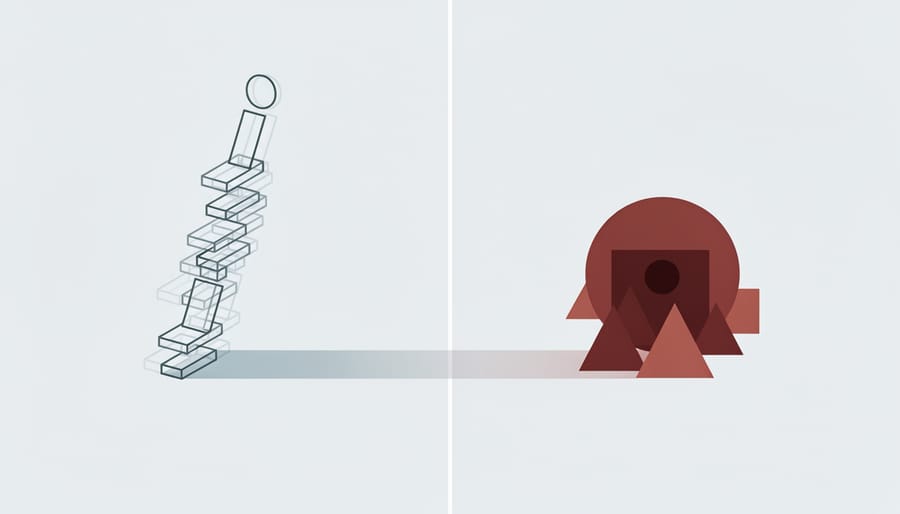 This metaphor illustrates how anxiety and fear can feel different: one is shaped by what might happen, the other by what is happening now. The visual contrast supports the article’s message about choosing the right response.
Choosing the Right Approach: Anxiety Management Strategies That Work
Understanding which response you’re experiencing changes how you address it. When you recognize fear, you know the feeling will pass once the immediate threat is gone. When you identify anxiety, you understand that simply removing the trigger won’t eliminate the worry because anxiety lives in anticipation, not just reaction.
For fear responses to immediate threats, your body already knows what to do. The surge of adrenaline, rapid heartbeat, and heightened alertness naturally subside when the danger passes. You don’t need special techniques to manage fear in these moments, you need to trust your survival instincts. Once you’ve stepped away from the speeding car or finished the presentation that terrified you, your nervous system begins settling on its own.
Anxiety requires a different toolkit because it doesn’t resolve automatically when external circumstances change. Since anxiety focuses on what might happen rather than what is happening, evidence-based relief techniques work by interrupting the anticipatory cycle. These approaches help you shift from future-focused worry to present-moment awareness, challenge catastrophic thinking patterns, and regulate your body’s stress response even when no immediate threat exists.
Many people experience both responses at once. You might feel anxious about an upcoming medical appointment (anticipating discomfort) and then experience fear during the actual procedure (responding to present sensations). Recognizing this overlap helps you understand why you might need different approaches at different moments, calming anticipatory anxiety beforehand and managing fear responses in real time.
The crucial point is that persistent anxiety, especially when symptoms are severe and cause distress to your daily life, benefits from structured support. While fear serves its protective purpose and fades, ongoing anxiety that interferes with your family, social, or work life signals the need for additional resources beyond self-management alone. Understanding this difference isn’t about diagnosing yourself but about recognizing when the strategies that work for momentary fear aren’t enough for persistent anxiety.
Your Questions Answered
Can you have anxiety and fear at the same time?
Yes, it’s common to experience both simultaneously. You might feel anxious about an upcoming presentation (future-focused worry) while also experiencing fear the moment you step on stage (present-moment response). These responses can layer on each other, making it challenging to separate what you’re feeling.
Is anxiety always a disorder?
No. Anxiety is a normal and often necessary response to stress or perceived threats that everyone experiences. It only becomes concerning when symptoms are persistent and severe and cause distress to your daily life, interfering with family, social, or work activities.
How do I know if I need professional help?
Consider reaching out if your anxiety persists for weeks without relief, interferes with daily activities like work or relationships, or if you’re avoiding situations that matter to you. Professional support is especially valuable when worry feels overwhelming or uncontrollable.
What if I can’t identify what I’m anxious about?
This is a hallmark of anxiety rather than fear. Unlike fear, which has a clear, identifiable trigger, anxiety often involves vague worry about what might happen without a specific threat you can point to. This diffuse quality doesn’t make your experience less valid or important.
These questions reflect what many people wrestle with when trying to understand their emotional responses. The confusion is understandable because anxiety and fear can feel similar in your body, even though they’re responding to different time frames and types of threats.
One point worth emphasizing: everyone’s experience of anxiety varies in intensity, frequency, and how it shows up physically. Some people primarily notice racing thoughts, while others feel it more as physical tension or restlessness. What matters isn’t whether your anxiety looks like someone else’s, but whether it’s affecting your ability to do things you care about or causing you persistent distress. Symptoms of anxiety often have onset during childhood or adolescence, but anxiety can also emerge or change in adulthood.
If you’re still uncertain whether you’re dealing with normal worry, situational fear, or something that warrants additional support, trust your instincts. You know your own experience best, and reaching out for guidance is always a reasonable step when you’re unsure.