Borderline Personality Disorder affects how you experience yourself and relate to others, creating intense emotional swings that can feel like riding a rollercoaster without brakes. If you’re searching for answers about BPD, you might be trying to make sense of patterns in your own life or understand someone you care about. Perhaps you’ve noticed that relationships feel impossibly complicated, emotions shift rapidly between extremes, or there’s a persistent fear of abandonment that shapes daily decisions.
BPD is a mental health condition characterized by instability in moods, self-image, and relationships. But those clinical words don’t capture what it actually feels like: the terror of being left alone, the moments when you’re not sure who you really are, the impulse to do something harmful when emotions become overwhelming. About 1.4% of adults experience BPD, though many go undiagnosed for years because symptoms often overlap with depression, anxiety, or bipolar disorder.
Understanding BPD matters because it’s treatable. With proper diagnosis and specialized therapy, people with BPD learn to manage symptoms and build fulfilling lives. This isn’t about labeling yourself or someone else. It’s about finding clarity, accessing the right support, and recognizing that what you’re experiencing has a name and a path forward.
The journey starts with information. What symptoms define BPD? How do professionals diagnose it? What does living with this condition actually look like, and what steps can you take today? Let’s explore these questions together with compassion and honesty.
Understanding Borderline Personality Disorder: The Basics
Borderline Personality Disorder, or BPD, is a mental health condition that fundamentally changes how you experience yourself and connect with the world around you. At its core, BPD is characterized by pervasive mood and relationship instability along with a shifting sense of self that can feel like standing on constantly moving ground.
If you have BPD, your emotional experiences are often more intense than what others might feel in the same situations. A minor disappointment can feel devastating. A small criticism can shake your entire sense of who you are. These aren’t overreactions or choices. They’re the result of how BPD affects the way your brain processes emotions and relationships.
What makes BPD distinct from other mental health conditions is this pattern of instability across multiple areas of life. While someone with depression might struggle primarily with low mood, or someone with anxiety might battle persistent worry, BPD creates a more complex picture. It affects your emotions, yes, but also how you see yourself, how you view others, and how you navigate relationships. Your self-image might shift dramatically based on external feedback. One day you might feel confident and capable, the next utterly worthless, triggered by something that seems small to an outside observer.
People with BPD often describe feeling like they’re riding an emotional rollercoaster they can’t control. Relationships can become intensely important, which makes the fear of losing them equally intense. This isn’t about being dramatic or difficult. It’s about experiencing the world through a lens that magnifies both connection and potential loss.
BPD is a real, diagnosable condition recognized by mental health professionals worldwide. It’s not a character flaw, a phase, or something you can simply snap out of. Understanding that BPD is a legitimate disorder is the first step toward getting the right support and treatment.
 A quiet moment captures the inner experience many people describe with BPD, feeling emotionally exposed and needing support.
The Core Symptoms: How BPD Shows Up in Daily Life
Emotional Intensity and Mood Shifts
For someone with BPD, emotions don’t just feel bad or good, they feel overwhelming. A minor disagreement can trigger rage or crushing sadness. A kind word might bring euphoria that feels almost too intense to contain. These aren’t chosen reactions; the emotional volume is turned up so high that what others might experience as mild irritation becomes unbearable distress.
What makes BPD particularly challenging is how quickly these emotions can change. You might wake up feeling hopeful, then plunge into despair by lunchtime after an unanswered text. By evening, you could feel calm again, or spiral into Anxiety 101 territory, convinced something terrible is about to happen. This isn’t the fluctuation between normal vs abnormal anxiety; it’s a constant emotional rollercoaster that exhausts both the person experiencing it and those around them.
These rapid mood shifts aren’t about being dramatic. They reflect genuine difficulty regulating emotions, a core feature of BPD that affects every aspect of daily life, from work performance to friendships to self-perception.
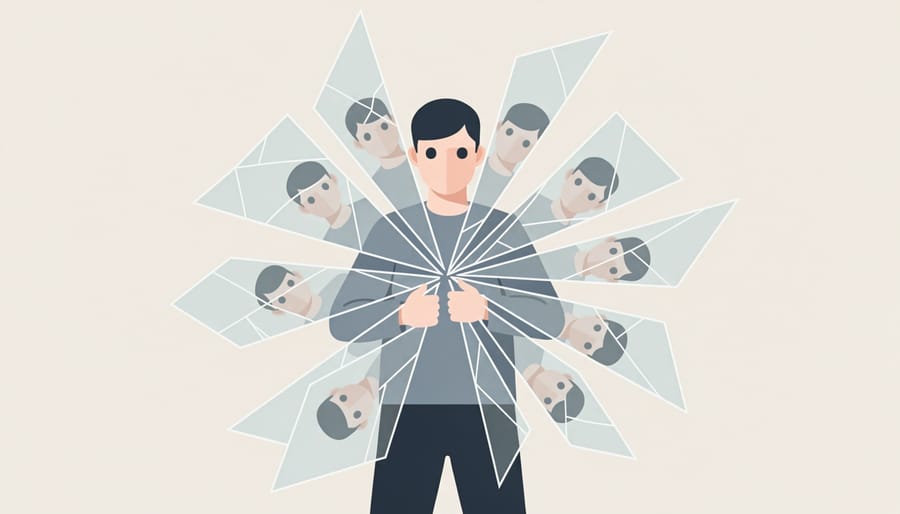 The cracked glass and shifting reflections represent how self-image and emotion can feel unstable, even when someone is trying to hold things together.
Fear of Abandonment and Relationship Challenges
For someone with BPD, the fear of being abandoned isn’t just a passing worry. It’s an overwhelming, visceral panic that can feel as real as a physical threat. This fear often stems from past experiences of loss or inconsistency, and it shapes how relationships unfold in profound ways.
When this fear gets triggered, sometimes by something as small as a delayed text response or a cancelled plan, it can lead to desperate efforts to prevent the abandonment from happening. Someone might reach out excessively, become clingy, or paradoxically push people away before they can leave first. These behaviors aren’t manipulative; they’re protective responses to what feels like emotional survival.
The challenge is that these very attempts to maintain closeness can strain relationships. Partners, friends, and family members may feel confused by sudden shifts from intense affection to anger or withdrawal. One day you’re the most important person in their life, the next you’re perceived as rejecting or untrustworthy, based on minor cues that others might not even notice.
This pattern makes building stable, long-term relationships genuinely difficult. The person with BPD often desperately wants close connections but struggles with the vulnerability they require. Recognizing this pattern is the first step toward developing healthier relationship skills with professional support.
Impulsivity and Self-Harming Behaviors
People with BPD sometimes act on impulse in ways that can harm them. This might look like reckless spending, substance use, risky driving, unsafe sexual behavior, or binge eating. These actions often happen during moments of overwhelming emotional pain, when the person desperately needs relief from feelings that have become unbearable.
Self-harm is particularly misunderstood. When someone with BPD cuts, burns, or otherwise injures themselves, they’re not seeking attention. They’re trying to manage internal pain that feels impossible to express or contain. For some, physical pain provides temporary distraction from emotional agony. For others, it’s a way to feel something real when numbness takes over, or to punish themselves when self-hatred becomes crushing.
These behaviors serve as coping mechanisms, however unhealthy. They represent attempts to survive intense distress, not manipulation or weakness. Understanding this context matters because it shifts how we respond. Instead of judgment, people struggling with these symptoms need compassion and professional support that addresses the pain driving these actions. Both impulsivity and self-harm are recognized criteria in the diagnostic picture of BPD, reflecting the profound emotional dysregulation at the condition’s core.
How BPD Is Diagnosed: What Mental Health Professionals Look For
Getting a BPD diagnosis isn’t about ticking boxes on a checklist. It’s about a trained mental health professional taking the time to understand your experiences, patterns, and struggles in a comprehensive way. If you’re wondering whether what you’re going through might be BPD, knowing what professionals look for can help you understand the process and feel less anxious about seeking an evaluation.
Mental health professionals use the Diagnostic and Statistical Manual of Mental Disorders (DSM-5) as their guide. For a BPD diagnosis, a person must meet five out of nine DSM-5 criteria that describe pervasive patterns of instability in relationships, self-image, and emotions. The symptoms must be present across different contexts, not just in one area of life, and they typically emerge by early adulthood.
These nine criteria can feel overwhelming to remember, but there’s a helpful memory tool called the IMPULSIVE mnemonic. Each letter represents one of the diagnostic criteria, explained here in everyday language:
- I, Interpersonal instability
- Your relationships swing between extremes, from intense closeness to sudden distance or conflict.
- M, Mood instability
- You experience intense emotional shifts that can change within hours, feeling fine one moment and devastated the next.
- P, Paranoia or dissociation
- You sometimes have brief episodes where you feel disconnected from reality or suspect others have harmful intentions.
- U, Unstable self-image
- Your sense of who you are changes frequently, affecting your goals, values, and even career path.
- L, Labile affect
- Your emotional reactions are intense and can shift rapidly in response to situations.
- S, Suicidality or self-harm
- You’ve engaged in self-harming behaviors or had recurring thoughts about ending your life.
- I, Impulsivity
- You act on urges without thinking through consequences, in areas like spending, sex, substance use, or reckless driving.
- V, Vulnerability to abandonment
- You go to great lengths to avoid real or imagined abandonment, which can drive many of your actions.
- E, Emptiness
- You feel a chronic sense of inner emptiness or hollowness that’s hard to shake.
The diagnostic process typically involves multiple sessions where a psychiatrist or psychologist asks detailed questions about your experiences, relationships, and emotional patterns. They’ll want to understand how long you’ve been struggling with these issues and how they affect your daily life. It’s not a quick process, and that’s intentional. Mental health professionals need to distinguish BPD from other conditions that can look similar, like depression or bipolar disorder.
If you’re nervous about seeking a diagnosis, that’s completely understandable. Many people worry about being labeled or stigmatized. But a proper diagnosis is actually the first step toward getting the right help. Treatment for BPD exists and can be genuinely life-changing, but it starts with understanding what you’re dealing with.
Sarah’s Story: Living With BPD
Sarah didn’t know what was happening to her emotions. One day she’d feel confident and hopeful, planning projects and reaching out to friends. The next, she’d wake up feeling hollow, convinced everyone secretly hated her. The shifts happened so fast she couldn’t explain them, even to herself.
“I’d look at my reflection and genuinely not recognize the person staring back,” Sarah says. “Some days I felt capable and strong. Other days I was convinced I was worthless, that I didn’t deserve the space I took up in the world.”
Relationships were especially confusing. Sarah craved deep connection but often pushed people away when they got too close, terrified they’d eventually abandon her. When her partner mentioned needing space one evening, Sarah spiraled into panic, certain it meant the relationship was ending. She sent dozens of texts, then immediately regretted it, feeling ashamed of what she perceived as neediness.
The intensity of her emotions felt unbearable. Joy wasn’t just happiness; it was euphoria. Hurt wasn’t just sadness; it was crushing despair that made her question whether life was worth living. Sarah started engaging in impulsive behaviors to cope, spending money she didn’t have, making sudden plans to move cities, anything to escape the chronic emptiness that settled in her chest.
After years of struggling alone, Sarah finally talked to a therapist who recognized the pattern. The diagnosis felt both validating and overwhelming. But it also opened a door to understanding herself differently, not as broken or too much, but as someone living with a real condition that could be addressed.
“I’m still learning,” Sarah says. “But knowing what I’m dealing with helps. I’m not just dramatic or unstable. I have BPD, and that’s something I can work with, not something that defines my worth as a person.”
Treatment and Hope: What Helps With BPD
Here’s the reality: BPD is treatable, and many people who receive appropriate support see meaningful improvement over time. This isn’t a life sentence. While recovery looks different for everyone, professional treatment can help reduce symptom intensity, improve relationships, and build a more stable sense of self.
Therapy is the cornerstone of BPD treatment. Approaches that focus on emotion regulation, interpersonal skills, and distress tolerance have shown strong results. Many people work with therapists who specialize in personality disorders, learning practical techniques to manage intense emotions before they escalate. These aren’t just coping strategies, they’re life skills that become more natural with practice.
Note: Recovery from BPD is possible, and symptoms often improve significantly with consistent professional treatment and support.
Skills development plays a crucial role in managing BPD. People learn to identify their emotional triggers, pause before acting impulsively, and communicate needs more effectively. This process takes time and patience, but each small improvement builds on the last. Some also find that addressing physical health factors, including the connection between diet and mental health supports their overall wellbeing and emotional stability.
Professional support makes a real difference. Working with a qualified mental health provider who understands BPD can help you develop personalized strategies that fit your life. Some people benefit from individual therapy, while others find group settings helpful for practicing new skills and feeling less alone.
The journey isn’t linear. There will be setbacks and difficult days. But with the right support and commitment to treatment, people with BPD often find they can build the stable, meaningful lives they want, lives defined by their strengths and values, not just their diagnosis.
 A calm, supportive therapy environment symbolizes that BPD is treatable and that professional help can provide steady guidance.
Supporting Someone With BPD: What Loved Ones Should Know
Supporting someone with BPD takes patience, compassion, and a clear understanding of your own limits. You care deeply about this person, and that matters. But caring doesn’t mean sacrificing your own wellbeing or allowing harmful patterns to continue unchallenged.
Start by educating yourself about what BPD actually is. The more you understand the condition, the less you’ll take behaviors personally. When someone with BPD lashes out or pushes you away, it often stems from intense fear of abandonment rather than how they truly feel about you. That context doesn’t make hurtful behavior acceptable, but it helps you respond thoughtfully rather than reactively. Consider learning Mental Health First Aid to better recognize and respond to mental health crises.
Boundaries aren’t walls. They’re essential structures that protect both of you. Be clear about what behaviors you can and cannot accept, and follow through consistently. If you say you’ll end a conversation when someone starts yelling, actually end it. Inconsistent boundaries create confusion and can intensify the very behaviors you’re trying to address. This isn’t punishment. It’s teaching what healthy relationships look like.
Encourage professional treatment without demanding it. You might say, “I’ve noticed you’ve been struggling, and I think talking to someone could help. Can I support you in finding a therapist?” Avoid ultimatums like “Get help or I’m leaving,” which can trigger abandonment fears and worsen the situation. Share information, offer to help with logistics, and respect their autonomy.
Take care of yourself. Supporting someone with BPD can be emotionally draining. You’ll likely experience confusion, frustration, and exhaustion. That’s normal. Maintain your own support network, pursue your own interests, and consider therapy for yourself. You can’t pour from an empty cup, and burning out helps no one.
Remember that you didn’t cause their BPD, and you can’t cure it. Your role is to offer compassionate support while maintaining healthy boundaries. That balance is difficult but necessary for both of you.
Breaking the Stigma: Why Understanding BPD Matters
People with Borderline Personality Disorder face more than the challenges of their symptoms. They navigate a world thick with misunderstanding, where BPD is frequently portrayed as manipulative behavior rather than recognized as a legitimate mental health condition. This mental health stigma creates real harm, discouraging individuals from seeking diagnosis and treatment, damaging relationships, and leaving people isolated when they need support most.
Common misconceptions paint people with BPD as deliberately difficult or impossible to help. Some believe the intense emotions and relationship struggles are choices rather than symptoms of pervasive patterns of instability in mood, self-image, and interpersonal relationships. Others dismiss BPD as less serious than conditions like depression or anxiety, ignoring the genuine suffering it causes.
These misunderstandings affect how people with BPD are treated in healthcare settings, workplaces, and their own families. Someone struggling with fear of abandonment and emotional dysregulation already carries an enormous burden without adding judgment from those around them.
Accurate information matters because it shifts perception from blame to understanding. When we recognize that distorted perceptions of self and others, difficulty regulating emotions, and impulsive behaviors stem from a diagnosable mental health condition, we respond with appropriate support rather than frustration. Mental Health Awareness and Education help people see that BPD is treatable, that individuals with this diagnosis deserve compassionate care, and that recovery is possible.
Understanding BPD creates space for empathy. It allows families to support rather than punish, professionals to treat rather than dismiss, and those living with BPD to seek help without shame.
Understanding what BPD is marks an important first step, whether you’re seeking answers for yourself or someone you care about. Borderline personality disorder is a real mental health condition characterized by persistent patterns of instability in mood, self-image, and relationships. It’s not a character flaw, a phase, or something anyone chooses.
The core message worth taking forward is this: BPD is treatable. Many people with this condition learn to manage symptoms, build healthier relationships, and lead fulfilling lives. Recovery looks different for everyone, but improvement is absolutely possible with the right support.
If you recognize these symptoms in yourself or a loved one, reaching out to a mental health professional is the most important next step. A qualified clinician can provide a proper assessment and discuss treatment options tailored to individual needs. There’s no shame in seeking help. In fact, it takes courage.
For loved ones, your compassion and willingness to understand matter deeply. Supporting someone with BPD isn’t always easy, but your presence and patience can make a real difference in their journey.
You don’t have to navigate this alone. Whether you’re living with BPD or supporting someone who is, professional guidance, peer support, and education can provide the tools and understanding needed to move forward.
This condition doesn’t define anyone’s worth or potential. With knowledge, support, and hope, change is within reach.