Your heart is racing. Your chest feels tight. You can’t catch your breath, and a wave of terror washes over you, telling you something is terribly wrong. If you’re a woman experiencing these sensations, you’re not alone, and what you’re feeling is real.
Anxiety attacks affect women differently than men, and understanding these gender-specific symptoms can be the first step toward finding relief. Women are twice as likely to experience anxiety disorders compared to men, and our symptoms often manifest in ways that can be confusing or even frightening. You might experience overwhelming nausea, dizziness that makes you feel like you’re losing control, or physical pain that sends you to the emergency room convinced you’re having a heart attack.
The confusion is understandable. Many women describe their first anxiety attack as the scariest moment of their lives, not knowing whether to call an ambulance or ride it out. Some of you reading this right now might be wondering if what you experienced last night, last week, or even minutes ago was an anxiety attack or something more serious.
Here’s what matters: your symptoms deserve attention and validation. Whether you’re experiencing chest tightness, tingling in your hands, sudden hot flashes, or an inexplicable sense of doom, these are recognized manifestations of anxiety attacks in women. Hormonal fluctuations, societal pressures, and biological differences all play roles in how anxiety presents itself in female bodies.
This article will walk you through the specific symptoms women experience during anxiety attacks, help you distinguish them from other medical conditions, and provide you with both immediate coping strategies and long-term solutions. You’ll also find answers to common questions through our Anxiety 101 resource.
You deserve to understand what’s happening in your body and to know that effective help exists.
What Actually Happens During an Anxiety Attack
Your heart suddenly feels like it’s trying to break through your chest. Your hands go numb. You can’t catch your breath, and your mind screams that something is terribly, catastrophically wrong. This is what happens during an anxiety attack, and understanding the mechanics behind these terrifying moments can help you recognize what your body is actually doing.
Panic attacks are sudden, intense episodes of fear or overwhelming anxiety that can peak within minutes.
Clinically speaking, the DSM abrupt surge definition describes these experiences as an abrupt surge of intense fear that reaches its peak rapidly. They don’t build gradually over hours. One moment you’re going about your day, and within seconds to minutes, you’re overwhelmed by physical and emotional symptoms that feel completely out of your control.
What makes anxiety attacks so frightening is the mind-body connection at work. Your brain perceives a threat, whether real or imagined, and triggers your body’s ancient survival system. Your sympathetic nervous system floods your body with stress hormones like adrenaline and cortisol. This isn’t your imagination creating fake symptoms. These are real, measurable physiological changes happening inside you.
Your racing heart isn’t malfunctioning. It’s pumping harder to send blood to your muscles for fight or flight. The sweating and trembling are your body preparing for physical action. The difficulty breathing happens because you’re taking rapid, shallow breaths to get more oxygen quickly. Even the tingly or numb hands occur because blood flow redirects away from your extremities toward your core organs.
The cruel irony is that these protective mechanisms designed to save you from danger feel absolutely terrifying when triggered by anxiety rather than an actual threat. Your body can’t distinguish between a legitimate emergency and an internal false alarm, which is why the physical symptoms feel so overwhelming and convincing.
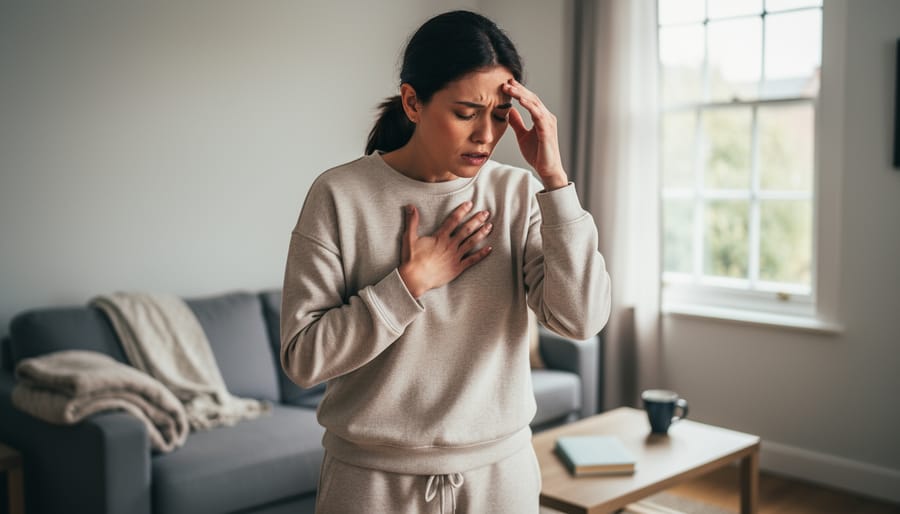 A woman pauses in her home as anxiety feels overwhelming, capturing the real-life moment when symptoms can start suddenly.
The Physical Warning Signs Your Body Is Giving You
Your body doesn’t whisper when an anxiety attack begins. It shouts. That pounding sensation in your chest might feel like your heart is trying to escape. Your hands start trembling without permission. Sweat beads on your forehead even though you’re not hot. These aren’t subtle hints; they’re urgent, overwhelming physical experiences that demand your attention.
The intensity catches most people off guard. One moment you’re going about your day, and the next, your body activates every alarm system simultaneously. Your heart races or pounds so hard you can feel it in your throat. Common panic physical symptoms include sweating that seems to come from nowhere, trembling or shaking you can’t control, and breathing that becomes difficult or feels like you’re gasping for air.
Many women describe feeling weak, like their legs might give out underneath them. Dizziness or lightheadedness can make the room spin. Your hands or feet might tingle or go numb, creating an unsettling disconnection from your own body. Some experience chills that make them shiver despite the temperature. Others feel waves of heat flooding through them.
What makes these symptoms particularly frightening is how real they are. This isn’t your imagination playing tricks. These physical manifestations stem from your body’s stress response kicking into overdrive, flooding your system with adrenaline and activating your fight-or-flight mechanism at full intensity. The trembling, the racing heart, the difficulty catching your breath are all genuine physical responses, even when there’s no external threat present.
The symptoms can vary from one anxiety attack to another. You might experience chest tightness during one episode and overwhelming nausea during the next. Some women report feeling like they’re choking or being smothered, unable to get enough air despite breathing rapidly. The unpredictability adds another layer of anxiety, making you wonder what your body will do next time.
Understanding these warning signs helps you recognize what’s happening when it happens. Your body isn’t broken or betraying you. It’s responding to perceived danger with ancient survival mechanisms that, while uncomfortable and scary, aren’t physically harming you.
 Close-up focus on shaking sensations and physical tension, small, visible cues that often accompany anxiety attacks.
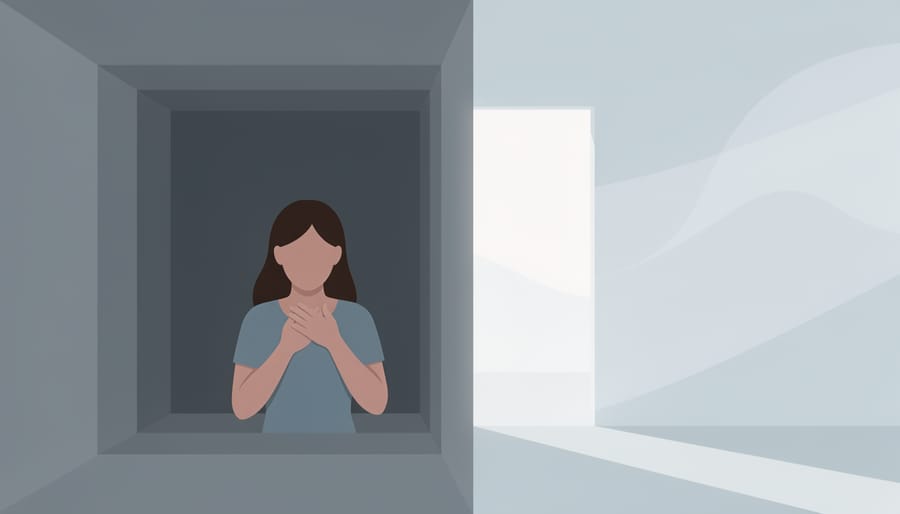 The contrast between dim indoor space and brighter air outdoors symbolizes the breathless, trapped feeling some women report during anxiety attacks.
How Anxiety Attacks Show Up Differently in Women
Here’s the brutal truth nobody likes to say out loud: when you’re doubled over struggling to breathe while doctors dismiss your symptoms as stress, knowing that women experience certain anxiety attack manifestations differently can literally save your life. The research shows that while the core experience of panic attacks remains consistent across genders, the way these attacks present in women’s bodies often follows distinct patterns that deserve recognition and validation.
Women are statistically more likely to experience trouble breathing, feeling faint, or sensations of being smothered during anxiety attacks. These aren’t minor variations. When you can’t catch your breath and the room starts spinning, that’s your body responding to perceived danger in ways that research has documented as more common in female physiology. The distinction matters because these particular symptoms are the same ones that often get minimized in medical settings or attributed to being overly emotional rather than recognized as legitimate anxiety manifestations.
Note: Research confirms that women specifically experience breathing difficulties, feeling faint, and sensations of being smothered at higher rates during panic attacks than men.
Understanding this pattern empowers you to advocate for yourself more effectively. When you walk into a doctor’s office and describe your symptoms, knowing that these experiences align with documented patterns of anxiety attacks in women gives you the language and confidence to push back against dismissal. You’re not overreacting. You’re experiencing a recognized physiological response that happens to show up more frequently in female bodies.
The hormonal fluctuations throughout menstrual cycles, pregnancy, and menopause can also intensify anxiety symptoms or alter their presentation, though the fundamental mechanics of the panic attack remain the same. Some women report that attacks feel more intense during certain phases of their cycle or that new symptoms emerge during perimenopause. Your body’s changing landscape doesn’t invalidate your experience; it contextualizes it.
This gender-specific knowledge isn’t about creating separate categories or suggesting weakness. It’s about precision. When you understand exactly how anxiety attacks tend to manifest in your body, you can develop more targeted coping strategies, communicate more clearly with healthcare providers, and stop second-guessing whether what you’re experiencing is real. It is real, it’s documented, and it deserves proper attention and treatment.
The Heart Attack Fear: When to Seek Immediate Help
Your chest tightens, your heart pounds so hard you can feel it in your throat, and suddenly you’re convinced this is it, you’re having a heart attack. This fear grips nearly everyone experiencing their first anxiety attack, and it’s completely understandable. Panic attacks can feel eerily similar to heart attacks, with chest pressure, sweating, and shortness of breath that convince you something is terribly wrong with your heart.
Here’s what matters: if you’re uncertain, always seek medical help. There’s no shame in calling 911 or going to the emergency room when you’re experiencing chest pain or difficulty breathing. Medical professionals would rather evaluate you and confirm it’s anxiety than have you wait and risk missing something serious.
That said, there are some distinguishing patterns. Anxiety attack symptoms typically come on suddenly during a period of intense stress or fear, peak within minutes, and often improve with calming techniques like deep breathing. The chest discomfort tends to be sharp or stabbing rather than the crushing pressure of a heart attack. If you can make the symptoms lessen by focusing on slow breathing or grounding yourself in your surroundings, it’s more likely anxiety.
Heart attack pain, conversely, usually builds gradually and persists or worsens despite attempts to calm down. It often radiates to your jaw, shoulder, or arm, and may come with nausea, cold sweats, or a sense of impending doom that doesn’t shift with breathing exercises. The key difference is that heart attack symptoms don’t improve with relaxation techniques.
Women face an additional challenge here. Heart attack symptoms in women can be subtler than the classic chest-clutching presentation, sometimes showing up as unusual fatigue, nausea, or back pain. Meanwhile, women experiencing anxiety attacks are more likely to have trouble breathing or feel faint, which can muddy the waters even further.
Understanding what’s normal vs abnormal anxiety becomes crucial in these moments. If you’ve never had an anxiety attack before, your first one absolutely warrants medical evaluation. If you have a history of anxiety attacks and the symptoms feel familiar and begin improving within 10-15 minutes of using coping techniques, you’re likely experiencing another anxiety episode rather than a cardiac event.
When in doubt, get checked. Your peace of mind matters, and ruling out medical emergencies allows you to focus on addressing the anxiety itself.
Anxiety Management Strategies That Work in the Moment
When panic rises and your heart starts pounding, you need tools that work right now. The good news is that symptoms often improve with calming techniques, and with practice, these strategies become second nature. You’re not powerless in these moments.
Start with your breath, but forget the pressure to “just breathe.” When your chest feels tight, deep breathing might feel impossible. Instead, try the 4-7-8 technique: breathe in through your nose for four counts, hold for seven, then exhale slowly through your mouth for eight. The lengthened exhale activates your body’s natural calm response. If that feels too structured, simply breathe out longer than you breathe in. Count your exhales. This gives your racing mind something concrete to focus on while signaling safety to your nervous system.
Grounding techniques pull you out of the fear spiral and anchor you to the present moment. These practical steps can stop a panic attack from escalating:
- Name five things you can see around you, then four things you can touch, three you can hear, two you can smell, and one you can taste.
- Press your feet firmly into the floor and notice the sensation of ground beneath you.
- Hold an ice cube in your hand or splash cold water on your face to interrupt the panic response.
- Touch different textures around you, describing each one in your mind.
- Say your name, age, and location out loud to reconnect with reality.
Your body can’t maintain peak panic indefinitely. Attacks typically crest within ten minutes, even without intervention. Knowing this helps you ride the wave rather than fight it, which paradoxically makes symptoms ease faster.
Movement helps too. If you can safely stand, try stretching your arms overhead or rolling your shoulders back. Physical movement reminds your body it’s not actually under threat. Some women find that walking, even pacing in a small space, helps discharge the adrenaline flooding their system.
Keep a “calm kit” accessible, whether you’re managing anxiety at home or on the go. Include items that engage your senses: essential oils, a smooth stone, headphones with a calming playlist, or photos that ground you. One woman I know carries a small vial of lavender oil and a worn photograph of her grandmother. Simple, but they work.
If you experience frequent attacks, these techniques become more effective with repetition. They’re different from ongoing treatment for conditions like generalized anxiety disorder but they’re your first line of defense when panic strikes. Practice them when you’re calm so they’re ready when you need them. You’re building a toolkit that puts you back in control.
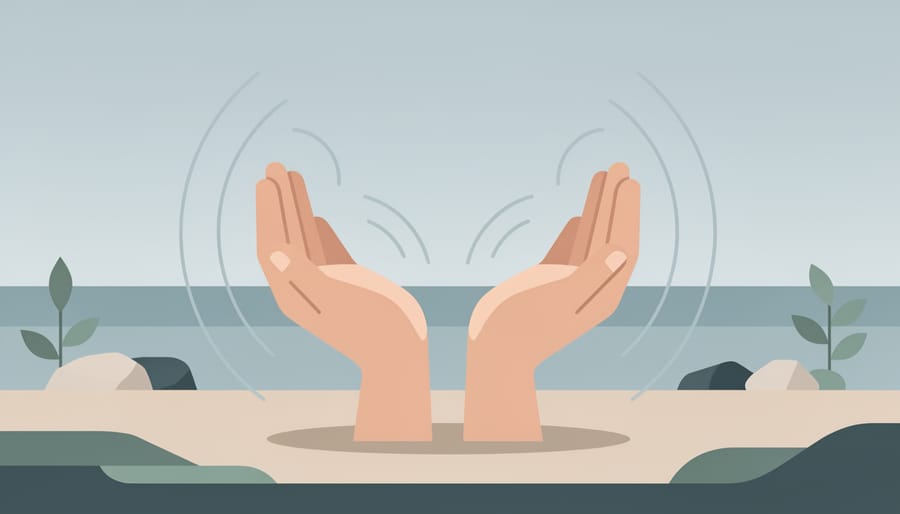 A calm outdoor scene with open hands represents grounding and breathing practices used in the moment to reduce anxiety intensity.
Building Your Long-Term Support System
You don’t have to navigate this alone. Building a support system around your anxiety isn’t just helpful, it’s one of the most powerful steps you can take toward lasting change.
Start by talking with your primary care doctor or a mental health professional who can assess what you’re experiencing and recommend treatment options. Therapy, particularly cognitive behavioral therapy, has strong evidence for treating panic and anxiety disorders. A therapist can help you understand your triggers, develop personalized coping strategies, and work through the underlying patterns that fuel your anxiety attacks. Some women also find medication helpful, either short-term or as part of a longer treatment plan. These conversations with professionals aren’t admissions of failure; they’re investments in your wellbeing.
Support groups offer something different but equally valuable: connection with others who truly understand what you’re going through. Whether in-person or online, hearing how other women manage their anxiety attacks can provide both practical ideas and emotional validation. You’ll find you’re not alone in this experience, and that realization itself can be incredibly healing.
Mental Health Support offers resources designed specifically for moments when you need guidance or reassurance. Our platform provides real-time support options when anxiety hits, connecting you with trained listeners who understand what you’re experiencing. We also offer educational materials, self-assessment tools, and a community where you can share your journey without judgment.
Consider building your everyday support network too. Trusted friends or family members who know what’s happening can provide grounding when anxiety strikes. You might share your coping techniques with them so they can help you remember to use your breathing exercises or grounding strategies when panic makes it hard to think clearly.
Seeking help isn’t weakness, it’s wisdom. You deserve support, and recovery is absolutely possible.
Your body’s alarm system doesn’t define you. The symptoms you’ve experienced, the fear that accompanied them, the concern that brought you to this page, all of it is valid, and none of it means you’re broken. Anxiety attacks are real, they’re treatable, and countless women manage them successfully every single day.
You don’t have to navigate this alone. Whether you’re just beginning to understand your symptoms or you’ve been dealing with anxiety for years, support is available right now. Mental Health Support offers real-time crisis resources, community connection, and practical tools designed specifically for moments when anxiety feels overwhelming.
Recognizing your symptoms is the first step. Reaching out for help is the second. You’ve already shown strength by seeking information, now let that same courage guide you toward the support you deserve. Your experiences matter, your concerns are legitimate, and healing is possible.