The core difference is this: panic attacks strike without warning and peak within 10 minutes, while anxiety attacks build gradually in response to a stressor and can linger for months. If your heart suddenly pounds, you can’t catch your breath, and you feel like you’re dying out of nowhere, that’s likely a panic attack. If worry and tension escalate over hours or days until your chest feels tight and your mind won’t stop racing, you’re probably experiencing intense anxiety.
Here’s why the distinction matters. Sarah, a 32-year-old teacher, spent two years avoiding grocery stores because she’d had three terrifying episodes where her vision tunneled, her hands went numb, and she was convinced she was having a heart attack. Each time, the feeling came out of nowhere and disappeared within 20 minutes. That’s panic disorder. Her brother Michael, meanwhile, spent weeks before his wedding unable to sleep, constantly checking his phone, feeling his stomach churn every morning. His anxiety was tied directly to the event and eased once it passed. Different experiences, different treatment paths.
Understanding which one you’re dealing with changes everything about how you respond in the moment and what help you seek long-term. Panic attacks are often linked to panic disorder and respond well to specific therapies that address the fear of the attacks themselves. Anxiety that builds and persists usually signals an underlying anxiety condition, sometimes rooted in trauma, that benefits from different approaches.
You’re not imagining these experiences, and you’re not alone. Over 6 million adults in the U.S. have had panic attacks, and anxiety disorders are even more common. What you’re feeling has a name, an explanation, and most importantly, effective treatment options. Let’s break down exactly how to tell them apart and what to do next.
Key Takeaway: If your symptoms strike suddenly and intensely, peaking within minutes, you’re likely experiencing panic attacks. If worry builds gradually over days or weeks with persistent physical tension, it’s more consistent with anxiety. A
mental health evaluation can provide the accurate diagnosis and personalized treatment plan you need.
At a Glance: Panic Attack vs. Anxiety Attack
When you’re in the middle of an overwhelming experience, trying to figure out whether you’re having a panic attack or an anxiety attack isn’t easy. The two share enough similarities to confuse anyone, but understanding the key differences can help you recognize what’s happening and respond more effectively.
Here’s what sets them apart:
| Feature |
Panic Attack |
Anxiety Attack |
| Onset |
Sudden, often without warning |
Gradual build-up over time |
| Peak Intensity |
Reaches maximum intensity around 10 minutes |
Intensity varies, can fluctuate |
| Typical Duration |
Brief, usually subsides within 20-30 minutes |
Prolonged, can last days to months |
| Physical Symptoms |
Intense and severe (racing heart, chest pain, feeling of losing control) |
Moderate tension, restlessness, muscle tightness |
| Related Conditions |
Panic disorder |
Often linked to trauma or other mental health conditions |
Panic attacks hit like a wave, cresting fast with overwhelming physical symptoms that can feel life-threatening. Anxiety attacks build more slowly, creating persistent unease that settles in and lingers. Both are real, both are distressing, and both deserve attention and care. If you’re experiencing chest pain during either type of episode, get it checked out regardless of what you think might be causing it.
What Panic Attacks and Anxiety Attacks Actually Are
Understanding Panic Attacks
 A person looks visibly unsettled, holding still and breathing while staying seated at home. The image conveys what an intense episode can feel like in everyday life.
A panic attack hits like a lightning strike, sudden, overwhelming, and terrifying. One moment you’re going about your day, the next you’re caught in an intense wave of fear or discomfort that floods your body with physical symptoms. Your heart races, you can’t catch your breath, you might feel dizzy or nauseous, and there’s often a crushing sense that something catastrophic is about to happen. These episodes are discrete events with a clear beginning and end, typically peaking around 10 minutes, though the aftermath can leave you shaken for hours.
What makes panic attacks particularly confusing is that they can strike without an obvious external threat. You might be sitting at your desk, standing in line at the grocery store, or even relaxing at home when one hits. The physical sensations are so intense that many people having their first panic attack rush to the emergency room convinced they’re having a heart attack, and that’s actually the right call, because chest pain should always be checked out.
Panic attacks are closely connected to panic disorder, a condition where these episodes become recurrent and unpredictable. What distinguishes them from other forms of anxiety is their sudden onset and the specific constellation of intense physical symptoms that come on fast and hard. Many situations can trigger bodily sensations in panic disorder, anger, excitement, drugs, caffeine, making it feel like your nervous system is on a hair trigger. Over time, fear of having another attack, especially in places where escape feels difficult or help isn’t available, can become its own problem.
Understanding Anxiety Attacks
 A person moves through a calm, real-world setting while feeling mentally overwhelmed. The scene reflects anxiety that builds over time rather than striking suddenly.
Anxiety attacks build gradually rather than striking out of nowhere. You might notice tension mounting over hours or days, tightness in your chest that won’t ease, racing thoughts that spiral, a growing sense that something bad is coming. Unlike the sudden jolt of a panic attack, anxiety creeps up and settles in, sometimes persisting for weeks or months.
What makes anxiety attacks distinct is what they’re signaling. These prolonged experiences often point to underlying mental health conditions that may be connected to past trauma, chronic stress, or ongoing life circumstances that feel overwhelming. The anxiety doesn’t arrive, peak, and fade within minutes, it lingers, coloring your days and making ordinary tasks feel impossible.
Sarah describes it as “carrying a heavy weight that never quite lifts. I wake up anxious, move through my day anxious, and lie awake at night replaying everything. It’s exhausting in a completely different way than the panic I’ve also experienced.”
This gradual build-up matters because it means you’re dealing with something that needs sustained attention, not just crisis management. Anxiety attacks don’t fit the clinical criteria for panic disorder, which involves discrete episodes with specific physical symptoms. Instead, they reflect broader patterns, persistent worry, difficulty concentrating, muscle tension, sleep disruption, that interfere with daily life and signal the need for comprehensive support rather than just in-the-moment coping techniques.
How They Differ: Symptoms, Duration, and Triggers
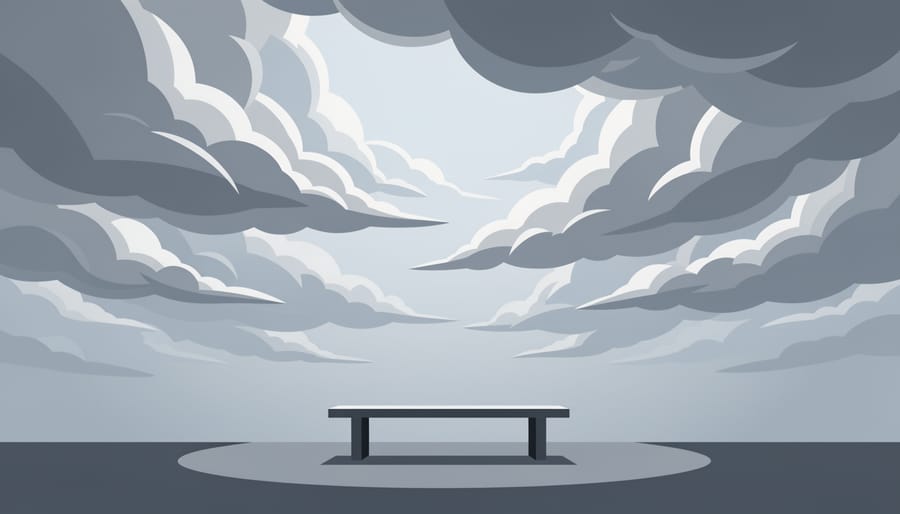 A lone bench sits beneath a turbulent sky, symbolizing anxiety that feels like it’s lingering and expanding. The lighter break in the clouds suggests relief is possible.
Symptom Differences: What You’ll Notice
The most striking difference between panic and anxiety attacks shows up in how suddenly and intensely symptoms hit. Panic attacks slam into you without warning, bringing a cascade of terrifying physical signs that can feel like you’re dying or losing your mind. Your heart pounds so hard you’re certain it’s a heart attack, your chest tightens, you can’t catch your breath, and waves of dizziness or nausea wash over you. The intensity peaks within minutes, leaving you shaking and exhausted.
Anxiety attacks build more gradually but settle in for the long haul. You might notice tension creeping into your shoulders over hours or days, a persistent knot in your stomach, headaches that won’t quit, or a fatigue that doesn’t improve with rest. The physical sensations are real and uncomfortable, but they lack the explosive, crescendo quality of panic.
Common panic attack symptoms include:
- Racing or pounding heart, chest pain, and shortness of breath
- Sweating, trembling, and hot or cold flashes
- Intense fear of dying, losing control, or going crazy
- Feeling detached from reality or from your own body
- Nausea, dizziness, or numbness and tingling
Common anxiety attack symptoms include:
- Persistent muscle tension, especially in neck, shoulders, and jaw
- Ongoing fatigue and difficulty concentrating
- Restlessness, irritability, and sleep problems
- Chronic worry that’s hard to control
- Digestive issues and lingering headaches
Sarah, who lives with both experiences, puts it this way: “With panic, I’m convinced I’m about to die right now. With anxiety, I’m convinced something terrible is going to happen, and I carry that dread around for weeks.”
Fear and avoidance also show up differently. Panic attacks can trigger intense fear of specific places where escape feels difficult or help isn’t available, crowded stores, bridges, elevators. Anxiety attacks generate more diffuse worry across many areas of life without the same acute avoidance patterns.
Duration Patterns: How Long Each Lasts
One of the most striking differences between panic and anxiety attacks lies in how they unfold over time. A panic attack hits fast and hard. According to the panic attack description from mental health experts, these episodes typically peak around 10 minutes, though the intense physical symptoms can start within seconds. You might go from feeling fine to experiencing crushing chest tightness, sweating, and overwhelming dread in less time than it takes to make a cup of tea. Most panic attacks subside within 20 to 30 minutes, leaving you exhausted but relatively clear-headed again.
Anxiety attacks follow a completely different clock. They build gradually, sometimes over hours or days, as worry layers upon worry. The tension, restlessness, and physical discomfort can persist for weeks or even months, waxing and waning but never fully lifting. You might wake up anxious, carry it through your workday, and take it to bed with you.
This timeline difference matters enormously for both recognition and response. If your distress peaks sharply and then fades within half an hour, you’re likely dealing with panic. If it’s a persistent companion that follows you around, anxiety is the better description. Understanding this pattern helps you choose the right coping strategies and communicate clearly with healthcare providers about what you’re experiencing.
Trigger Patterns: What Sets Them Off
Understanding what sets off panic attacks versus anxiety attacks can help you recognize patterns in your own experience and take steps to manage them more effectively.
Panic attacks often strike without obvious warning. Many situations can trigger bodily sensations in panic disorder, including anger, excitement, drugs and caffeine. This might seem confusing, why would something positive like excitement trigger the same response as something threatening? The answer lies in how your body interprets intense physical sensations. Your nervous system can misread increased heart rate, rapid breathing, or adrenaline surges as danger signals, regardless of their actual cause. Some people have their first panic attack after drinking too much coffee or using certain substances. Others notice them following intense emotions of any kind, whether positive or negative.
Anxiety attacks follow a different pattern. They typically build gradually over time, often in response to ongoing stress or worry. You might notice mounting tension about work deadlines, relationship concerns, or health fears that slowly escalates into an overwhelming experience. Anticipatory anxiety about future events frequently contributes to this build-up, creating a cycle where worry about what might happen intensifies your current distress.
The key difference is immediacy versus accumulation. Panic attacks can seemingly come out of nowhere or from unexpected physical states, while anxiety attacks usually have identifiable stressors you’ve been carrying for days, weeks, or longer. Recognizing your personal trigger patterns helps you communicate more clearly with healthcare providers and develop targeted coping strategies that address your specific experience.
Which Experience Fits What You’re Going Through
 Close-up hands practicing grounding with a smooth stone convey staying steady during a frightening moment. The image supports the article’s emphasis on practical, calming steps.
Recognizing what you’re experiencing is not about self-diagnosis, but about understanding your symptoms well enough to communicate them clearly and seek appropriate support. If your episodes arrive suddenly, with overwhelming intensity that peaks within minutes and then gradually subsides, you’re likely dealing with panic attacks. These typically involve a constellation of physical symptoms, racing heart, shortness of breath, chest tightness, dizziness, that hit all at once and feel immediately catastrophic.
If, instead, you notice worry and physical tension building gradually over days or weeks, with symptoms that persist and fluctuate but don’t necessarily spike into discrete episodes, your experience aligns more with anxiety attacks. You might feel constantly on edge, experience ongoing muscle tension, have difficulty concentrating, and find that the worry doesn’t fully lift between episodes.
Some people experience both. You might have underlying anxiety that occasionally escalates into full panic attacks, or you might develop persistent anxiety about having another panic attack. Both patterns are common and valid. What matters is that you recognize your specific pattern so you can describe it accurately when seeking help.
Pay attention to what happens before your symptoms start. Panic often strikes without obvious warning or in response to specific triggers like crowded spaces, whereas anxiety typically builds in response to ongoing stressors or worries. Notice how long symptoms last and how they resolve. Track whether certain situations consistently provoke your symptoms or whether they seem to come from nowhere.
Whatever you’re experiencing deserves professional attention. Your observations about timing, triggers, and symptom patterns will help a healthcare provider understand what’s happening and recommend the most effective treatment approach for your specific situation.
What to Do When It Happens: Immediate Steps
When panic or anxiety strikes, having a clear plan helps more than you might think. Your body is doing what it evolved to do, protect you from danger, but right now, you need to signal that you’re safe.
Start with your breath. Panic attacks respond well to controlled breathing because they often involve hyperventilation. Try breathing in slowly for four counts, holding for four, then out for six. The longer exhale activates your parasympathetic nervous system, which counteracts the fight-or-flight response. If counting feels impossible in the moment, just focus on making your exhales longer than your inhales.
Grounding techniques work by pulling your attention away from overwhelming internal sensations and anchoring you to the present. The 5-4-3-2-1 method is particularly effective: identify five things you can see, four you can touch, three you can hear, two you can smell, and one you can taste. This interrupts the panic spiral and reminds your brain that you’re not in immediate danger.
For panic attacks specifically, remind yourself that what you’re feeling is temporary. Most panic attacks peak within 10 minutes and resolve within 30. Knowing this doesn’t make the experience pleasant, but it can prevent the secondary panic of “will this ever end?” If you need additional strategies to stop a panic attack from escalating, targeted interventions make a real difference.
For longer anxiety episodes, the same techniques help you calm fast but you might need to repeat them throughout the day. Consider going for a walk, talking to someone you trust, or engaging in a simple physical task that requires focus. Movement helps metabolize stress hormones.
Here’s what’s not negotiable: if you experience chest pain, get it checked out. Heart attacks and panic attacks share symptoms, and only medical evaluation can tell you which you’re experiencing. Don’t wait to see if it passes.
If you’re having thoughts of harming yourself or feel you’re in crisis, call 1-800-784-2433 or dial 9-8-8. These lines connect you immediately with people trained to help, and reaching out is a sign of strength, not weakness.
Long-Term Anxiety Management Strategies
Once you’ve weathered the immediate storm, building a foundation for lasting change means looking beyond crisis management to sustained care. Whether you’re dealing with panic attacks, anxiety attacks, or both, effective long-term management typically combines professional support with daily practices that strengthen your resilience.
Professional Treatment Options
Therapy offers powerful tools for both conditions. Cognitive Behavioral Therapy (CBT) helps you identify and reshape thought patterns that fuel panic and anxiety, teaching you to respond differently when symptoms arise. For panic disorder specifically, exposure therapy gradually reduces the fear of physical sensations and situations you’ve been avoiding. Many people find that combining therapy with medication, particularly SSRIs or SNRIs, provides relief when symptoms are severe or haven’t responded to therapy alone. Your doctor can help you weigh whether medication makes sense for your situation.
Daily Practices That Make a Difference
Building sustainable management strategies means integrating practices into your everyday life:
- Regular physical activity, which reduces baseline anxiety and helps regulate the stress response system that drives both panic and anxiety
- Consistent sleep schedules, since sleep deprivation intensifies symptoms and lowers your threshold for panic
- Limiting caffeine and alcohol, especially if you’ve noticed they trigger bodily sensations that spark panic episodes
- Mindfulness or meditation practices that train your nervous system to settle more quickly when anxiety builds
- Structured problem-solving for specific worries, breaking overwhelming concerns into manageable steps rather than ruminating
- Connection with others who understand, whether through support groups, trusted friends, or peer communities
None of these replaces professional care, but they create conditions where therapy and medication work better.
Support Systems and Resources
You don’t have to navigate this alone. Our organization offers both digital resources and face-to-face support programs designed specifically for people managing anxiety and panic. Peer support groups connect you with others who’ve been through similar experiences, reducing isolation and providing practical strategies that actually work in real life. Many people find that combining individual therapy with group support accelerates their progress.
If you’re unsure where to start, reaching out for an initial assessment helps clarify what level of support makes sense right now. Recovery isn’t linear, and what works shifts over time. The key is building a flexible approach that adapts as your needs change.
What Each Option Is
When you’re in the grip of overwhelming fear or distress, understanding what’s happening to you matters. Let’s break down what panic attacks and anxiety attacks actually are in straightforward terms.
Panic attacks are sudden, intense episodes that hit you like a freight train. Your body reacts as if you’re in immediate danger, even when you’re not. Your heart races, you might feel chest pain, you struggle to breathe, and you’re convinced something terrible is about to happen. These episodes are specifically linked to panic disorder, and they peak quickly, usually within about 10 minutes. What makes them distinctive is how abruptly they start and how overwhelming they feel in the moment. Many situations can trigger the bodily sensations in panic disorder: anger, excitement, certain drugs, or even just caffeine.
Anxiety attacks build more gradually and tend to hang around longer. They signal underlying mental health conditions that could be related to trauma or other concerns. Rather than hitting a sharp peak and subsiding, anxiety can persist for weeks or even months. The distress accumulates over time, creating a sustained state of worry, tension, and physical discomfort that doesn’t have the same sudden onset-and-resolution pattern as panic.
Both experiences are real, frightening, and deserving of care and support.
Who Should Choose Which
You’re not choosing between panic and anxiety attacks like picking a product, you’re identifying what’s happening in your body so you can get the right support. If your episodes come on suddenly, peak within minutes, and feel like they’re going to kill you even when there’s no obvious threat, you’re likely experiencing panic attacks. This is especially true if you’ve started avoiding places where you fear having another attack, or if specific situations like caffeine, excitement, or anger seem to trigger intense physical reactions.
If your distress builds gradually over hours or days, connects to specific worries or past experiences, and feels more like a constant hum of dread than a lightning strike, you’re more likely dealing with anxiety attacks. This pattern often signals an underlying condition that might be related to trauma or chronic stress.
Many people experience both. If you’re not sure, that’s completely normal, even clinicians sometimes need time to identify patterns. What matters most is that you recognize something needs attention. Start by tracking when episodes happen, what you notice in your body, and how long they last. This information helps healthcare providers understand your experience and create a treatment plan that actually fits what you’re going through.
Questions People Ask About Panic and Anxiety Attacks
When you’re in the middle of a frightening episode, it’s natural to have questions racing through your mind. The experiences of panic and anxiety can feel isolating, but these concerns are ones many people share. Understanding what’s happening and what options you have can make the path forward feel less overwhelming.
Can I experience both panic and anxiety attacks?
Yes, absolutely. Many people experience both types of episodes, sometimes even overlapping or one triggering the other. Since panic attacks are related to panic disorder and anxiety attacks usually signal a mental health condition that could be related to trauma, you might be dealing with more than one underlying condition. This doesn’t mean your situation is hopeless, it means getting a comprehensive assessment can help you address all the factors contributing to your distress.
How do I explain what I’m going through to my family?
Start by describing the physical sensations you experience, since these are often easier for others to understand than internal anxiety states. You might say something like, “My heart races and I feel like I can’t breathe, and it comes on suddenly” for panic attacks, or “I’ve been feeling keyed up and on edge for weeks, and it’s getting harder to function” for anxiety. Let them know this is a real medical experience, not something you can just snap out of, and that their patience and support matter.
Will these attacks ever go away?
With proper treatment and support, many people see significant improvement or complete recovery. Both panic attacks and anxiety attacks are treatable conditions, and developing effective management strategies can reduce their frequency and intensity over time.
When should I go to the emergency room?
Chest pain should always be checked out, even if you think it might be anxiety. If you’re experiencing feelings of distress or thoughts of harming yourself, call 1-800-784-2433 or dial 9-8-8 immediately.
What if I can’t afford treatment?
Many communities offer sliding-scale therapy, support groups at no cost, and crisis resources that are free and confidential. Start by reaching out to local mental health organizations or community health centers to explore your options.
How can I tell them apart when I’m actually experiencing one?
In the moment, focus on the onset and intensity. Panic attacks are sudden, intense episodes that peak at around 10 minutes, often triggered by situations that make you feel trapped or when escape is difficult. They can also be set off by many situations that trigger bodily sensations, including anger, excitement, drugs and caffeine. Anxiety attacks build gradually and can last for months, with a persistent sense of dread or worry that doesn’t necessarily have a clear trigger point.
Should I avoid things that might trigger an episode?
Short-term avoidance might feel protective, but it often reinforces the fear cycle, especially with panic disorder where fear or avoidance of places where escape is difficult or help is not available becomes part of the problem. Working with a therapist on gradual exposure can help you reclaim your life rather than shrinking it around your fears.
Understanding whether you’re experiencing a panic attack or an anxiety attack isn’t about earning a diagnosis, it’s about knowing yourself better and finding what helps. Both experiences are real, both are treatable, and neither means you’re broken or weak. They’re your body and mind responding to stress in ways that, while frightening, can be managed with the right support and tools.
If you’ve recognized yourself in these descriptions, you’ve already taken a meaningful step. You’re not alone in this. Thousands of people navigate these experiences every day, and effective help exists, from therapy and grounding techniques to medication and peer support. What matters now is reaching out, whether that means talking to a healthcare provider, calling our crisis line at 1-800-784-2433 or 9-8-8 if you’re in distress, or connecting with our digital resources and face-to-face programs.
Recovery isn’t always linear, and some days will feel harder than others. But with understanding, practical strategies, and the right support network, you can move from feeling overwhelmed to feeling equipped. You don’t have to figure this out alone or wait until it becomes unbearable. Help is available now, and you deserve to feel better.