You can identify signs of social anxiety by asking yourself a structured set of screening questions that measure fear and avoidance in social situations, physical symptoms during interactions, and the impact these experiences have on your daily life. Taking a self-assessment isn’t about diagnosing yourself. It’s about recognizing patterns in your experiences so you can decide whether reaching out for professional support makes sense.
If you’ve been wondering whether your discomfort in social settings goes beyond normal shyness, you’re not alone. Many people spend years feeling intense dread before meetings, avoiding gatherings, or replaying conversations in their head, assuming everyone feels this way. They don’t. Social anxiety disorder affects millions of people, but it often goes unrecognized because the symptoms can feel like personality traits rather than something treatable.
“I thought I was just an introvert who hated small talk,” one person shared. “It wasn’t until I took a screening quiz and saw my answers laid out that I realized how much energy I was spending on avoiding normal interactions. That’s not introversion. That was anxiety controlling my choices.”
Self-assessment tools like the Liebowitz Social Anxiety Scale ask specific questions about fear levels and avoidance behaviors across different social scenarios. They help you measure whether you experience excessive fear in social situations, avoid interactions or endure them with intense distress, have physical symptoms like sweating or trembling, or struggle to speak or perform in front of others. The goal isn’t to label yourself. It’s to gather information that helps you understand your experience and communicate it clearly if you choose to seek help.
This guide walks you through the key questions to ask yourself, explains what your answers might indicate, and shows you how to take the next step toward support that actually works.
Key Takeaway: Social anxiety shows up in three main ways: excessive fear or worry about social situations, avoidance patterns that limit your life, and automatic physical symptoms like sweating, trembling, or racing heart. Recognizing these patterns is the first step toward understanding what you’re experiencing.
What You Need Before You Start
Before you begin any self-assessment, give yourself the best chance for honest, useful results. You don’t need much, but what you do need matters.
Find a quiet space where you won’t be interrupted for 15 to 20 minutes. This isn’t about perfect silence, but about creating enough calm to reflect honestly on your experiences without distractions pulling your attention. Turn off notifications, close the door if you can, and give yourself permission to focus inward.
The most important thing you’re bringing to this process is honesty with yourself. Social anxiety often comes with shame or the impulse to minimize what you’re feeling. Try to answer questions based on what actually happens, not what you wish were true or what you think you should feel. There’s no judgment here, just information.
Here’s what you’ll want to have ready:
- A quiet, private space where you can focus for 15-20 minutes
- A notebook, phone, or computer to record your responses and track patterns over time
- An honest mindset, ready to acknowledge your experiences without judgment
- Access to a validated screening tool like the Social Anxiety Test app or screener
- A glass of water and anything else that helps you feel grounded
It’s also important to know when self-assessment is the right tool and when it isn’t. These screening questions work well when you’re curious about your symptoms, noticing patterns you want to understand better, or preparing for a conversation with a doctor or therapist. They’re a starting point for awareness, not a substitute for professional evaluation.
If you’re in crisis, experiencing thoughts of self-harm, or finding that anxiety is severely disrupting your ability to function in daily life, skip the quiz and reach out for immediate support. Self-assessment can wait. Your safety can’t.
When Self-Assessment Isn’t Enough
 A calm, private moment of self-reflection shows how starting with self-assessment can feel steady and manageable.
Self-assessment tools can be valuable starting points, but they’re not appropriate for everyone in every situation. If you’re experiencing certain warning signs, professional support should come first.
Warning: If you’re having thoughts of self-harm, experiencing a mental health crisis, or finding that anxiety prevents you from meeting basic needs like eating, sleeping, or leaving your home, contact a crisis helpline immediately or go to your nearest emergency room.
Skip the quiz and reach out to a professional right away if you’re experiencing severe panic attacks that feel uncontrollable, if your anxiety has led to substance use as a coping mechanism, or if you’ve withdrawn completely from work, school, or essential daily activities. Self-assessment can’t capture the full picture when symptoms are this intense, and waiting to complete a screening tool could delay the support you need now.
The same applies if you’ve been avoiding situations for so long that your world has shrunk significantly, or if you’re experiencing depression alongside social anxiety. These situations require professional evaluation and often benefit from immediate intervention rather than self-assessment.
For crisis support, contact the Canada Suicide Prevention Service at 1-833-456-4566 (available 24/7) or text 45645. You can also reach out through our real-time support options, including our active social media channels where our team responds promptly.
If you’re unsure whether your situation warrants immediate help, err on the side of caution and reach out. Our Anxiety 101 resource can help you understand the spectrum of anxiety experiences and when different levels of support make sense. Professional guidance can help you determine whether self-assessment is a safe and appropriate next step for your specific situation.
Understanding Social Anxiety: What to Look For
Social anxiety isn’t just feeling nervous before a big presentation. It’s a persistent pattern of intense fear that shows up across everyday situations, from ordering coffee to attending a meeting, and it can reshape your entire life around avoidance.
I remember standing outside a colleague’s birthday gathering for twenty minutes, heart racing, rehearsing what I’d say when I walked in. I finally texted an excuse and drove home, relieved but ashamed. That relief-shame cycle became my normal.
Here’s what separates social anxiety from shyness or introversion: shyness fades as you warm up to people, and introverts recharge alone by choice. Social anxiety doesn’t fade with familiarity, and avoidance isn’t about preference, it’s about fear. You’re not just tired after social events; you’re anticipating judgment so intensely that your body treats a dinner party like a threat.
The Social Anxiety Test and similar screening tools assess these three core areas because together they paint a picture of how social anxiety operates. Fear is the mental experience: Do you dread being judged, embarrassed, or rejected? This isn’t occasional worry; it’s persistent and out of proportion to the actual situation.
Avoidance is the behavioral response. You skip events, let calls go to voicemail, or stay silent in meetings. You might endure situations while feeling trapped, already planning your escape. This avoidance provides short-term relief but reinforces the fear cycle.
Physical symptoms are your body’s automatic alarm system. The physical signs include sweating, blushing, trembling, nausea, rapid heartbeat, or feeling like your mind has gone blank. These aren’t things you choose, and they often happen before you consciously register fear.
What makes these three areas crucial is how they interact. Fear triggers avoidance, which prevents you from learning the situation isn’t actually dangerous, which keeps the fear alive. Physical symptoms amplify the fear because now you’re also worried about others noticing you’re anxious. Understanding this cycle helps you see that what you’re experiencing has a name, a pattern, and most importantly, a path forward.
Step-by-Step: How to Assess Your Social Anxiety
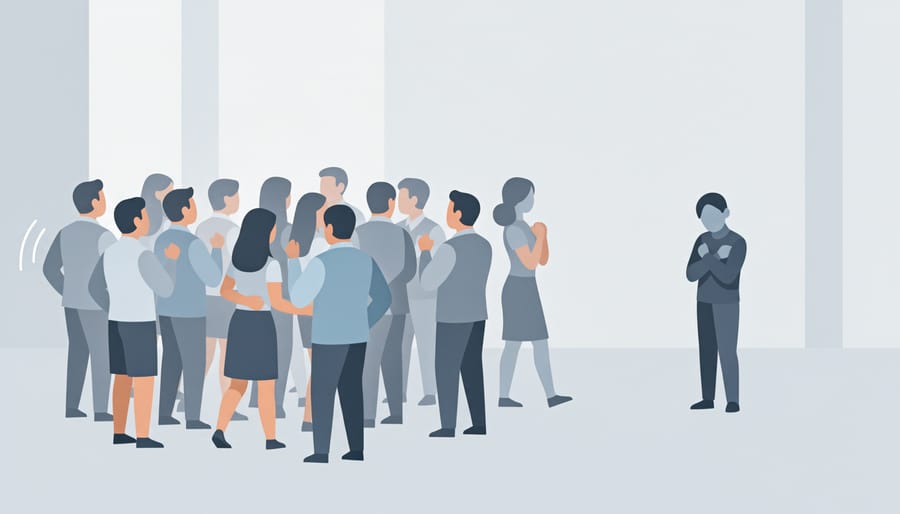 The bustling environment mirrors the kinds of social settings where fear and discomfort can show up.
Step 1: Choose a Trusted Screening Tool
Your choice of screening tool shapes the reliability of your self-assessment. Not all quizzes are created equal. Some are informal checklists designed to spark reflection, while others are validated instruments backed by clinical research.
Start with evidence-based tools whenever possible. The Liebowitz Social Anxiety Scale (LSAS-SR) is one of the most widely used measures in clinical settings. The LSAS is 24-item self-rating scale that examines your experiences across three key areas: fear in social situations, avoidance behaviors, and physical symptoms. This structure gives you a more complete picture than a simple yes-or-no quiz.
The Social Anxiety Test app uses the LSAS-SR format and offers a practical advantage: you can retake it weekly and track how your scores change over time. This matters because social anxiety often fluctuates. A single snapshot might catch you on an unusually good or difficult week. Patterns tell a clearer story.
Another solid option is the screening tool, which provides a quick assessment of whether you show signs and symptoms of social anxiety. It’s designed to be accessible while still grounding your self-reflection in clinically meaningful questions.
Why does validation matter? Validated tools have been tested with real populations and refined to distinguish social anxiety from everyday nervousness or other conditions. They ask the right questions in the right way, which means your results are more likely to reflect what’s actually happening rather than what a content creator thought sounded relevant.
Step 2: Answer Questions About Fear and Anxiety
The fear-related questions in validated screening tools focus on your emotional responses in social situations. You’ll encounter questions like “Do you feel excessive fear or anxiety in social situations?” and “Do you have difficulty speaking or performing in front of others due to fear or anxiety?” These questions aren’t asking whether you feel nervous sometimes, everyone does. They’re asking about fear that feels out of proportion to the situation itself.
When you’re answering, think about specific moments. That presentation at work where your voice shook. The dinner party where you rehearsed conversations in your head for days beforehand. The meeting where you stayed silent even though you had something valuable to say. The screening tools want to know how intense that fear feels and how often it shows up.
Here’s what matters: answer based on how you actually feel, not how you think you should feel or how others might respond. There’s no benefit to minimizing your experience or exaggerating it. If a question asks about fear during social interactions and your honest answer is “most of the time,” that’s useful information. If it’s “rarely,” that’s equally valid. These tools work only when you’re truthful with yourself.
Step 3: Evaluate Your Avoidance Patterns
Avoidance is one of the clearest markers of social anxiety, yet it’s often the hardest pattern to recognize in yourself. You might think you’re just being practical or protecting your energy, but if fear is driving your choices, that’s worth noting.
Start by asking yourself: Do you avoid social situations or endure them with intense fear or anxiety? The key word here is “avoid.” This doesn’t just mean declining a party invitation. It shows up in smaller, everyday decisions: taking the stairs to skip small talk in the elevator, ordering food online instead of calling, skipping meetings where you might need to speak, or leaving events early to escape before interactions intensify.
Some people don’t avoid situations outright but endure them with overwhelming dread. You go to the work lunch, but your heart races the entire time. You attend the family gathering, but you rehearse conversations in your head for days beforehand and feel exhausted afterward.
Why does this matter for assessment? Because avoidance reinforces the anxiety loop. The more you skip situations, the scarier they become, and the harder it is to distinguish between genuine preference and fear-based retreat. When screening tools ask about avoidance, they’re measuring how much social anxiety is shaping your life choices, not just how you feel in the moment.
Step 4: Identify Physical Symptoms
Your body often speaks before your mind catches up. Physical symptoms are a core part of social anxiety assessment because they’re measurable, unmistakable, and automatic. You’re not imagining them, and you’re not weak for experiencing them.
When you’re assessing for physical symptoms, you’re looking for your body’s stress response in social situations. The Liebowitz Social Anxiety Scale asks about these reactions specifically because they’re reliable indicators. Pay attention to whether you experience:
- Sweating or feeling overheated, especially in your palms, face, or underarms
- Trembling or shaking in your hands, legs, or voice
- Blushing or feeling your face flush hot
- Rapid heartbeat or feeling your heart pounding in your chest
- Shortness of breath or feeling like you can’t catch your breath
- Nausea or stomach discomfort
- Dizziness or feeling lightheaded
- Muscle tension, particularly in your shoulders, jaw, or neck
These reactions happen because your nervous system perceives social situations as threats, triggering your fight-or-flight response. It’s biology, not choice. You didn’t decide to sweat through your shirt or shake during a presentation. Your body is trying to protect you from what it reads as danger, even when there’s no actual physical threat.
When answering questions about physical symptoms, note the frequency and intensity. Do these happen occasionally or almost every time? Do they fade quickly or persist throughout the situation? The pattern matters more than any single instance.
Step 5: Track Your Results Over Time
Taking the assessment once gives you a snapshot, but tracking your scores weekly reveals the patterns that matter most. Use an app like Social Anxiety Test to retake the 24-question LSAS-SR regularly and log your results. You might notice your anxiety spikes before certain events, improves with practice, or stays consistently high, all useful information for conversations with a professional. A single high score might reflect a rough week; a trend shows what’s truly happening in your life.
What Your Results Mean (And What They Don’t)
You’ve completed the assessment, and now you’re looking at your scores wondering what they actually tell you. Here’s what you need to know: elevated scores suggest that your experiences align with patterns commonly seen in social anxiety, but they don’t mean you have a formal diagnosis. The LSAS-SR scoring ranges can help you understand severity levels, but those ranges are guidelines, not definitive answers. A higher score means your fear, avoidance, and physical symptoms are more pronounced, which is information worth sharing with a healthcare provider.
Note: Self-assessment tools screen for symptoms, they don’t diagnose. Only a qualified mental health professional can provide a diagnosis through a comprehensive
mental health evaluation that considers your full history and context.
What your results can tell you is whether your social experiences are causing distress and impairment in your daily life. If you’re avoiding situations that matter to you, if physical symptoms are interfering with work or relationships, or if fear is limiting your choices, those patterns deserve attention regardless of where you fall on a screening scale. The power of these tools is in validation, they help you recognize that what you’re experiencing has a name and that others experience it too.
What your results cannot tell you is whether medication is needed, if another condition better explains your symptoms, or exactly what treatment approach would work best. They can’t account for life circumstances that might amplify anxiety temporarily, like a recent job change or major life transition. That context matters, and it’s part of what makes professional guidance so valuable.
Your scores are a starting point for conversation, not an endpoint. Whether they’re borderline or clearly elevated, they give you concrete information to bring into your next step, which is reaching out for support. That’s where understanding turns into relief.
Your Next Steps After Self-Assessment
You’ve taken the self-assessment. Now what? The most important thing you can do with your results is use them to start a conversation about getting help. Self-assessment tools aren’t endpoints, they’re bridges to support.
I remember staring at my own screening results, feeling both validated and terrified. My score suggested significant social anxiety, but I sat on that information for three months before making my first appointment. Looking back, I wish I’d known how straightforward the next steps could be. Here’s what actually helped me move forward, and what can help you too.
- Prepare what you want to say. Write down your self-assessment results, specific situations that trigger anxiety, and how these feelings affect your daily life. You don’t need polished language, jot notes like “avoid team meetings,” “can’t eat in front of others,” or “cancelled plans five times last month.”
- Find the right provider. Start with your family doctor if you have one, they can refer you to a therapist or psychiatrist. If you don’t have a GP, contact the organization’s support line for help connecting to local services. Ask potential therapists directly: “Do you have experience treating social anxiety?” and “What approaches do you use?”
- Know what to expect in your first session. Your provider will ask questions similar to your self-assessment, about fear, avoidance, physical symptoms, and impact on your life. They might also ask about related conditions like depression or Agoraphobia vs Social Anxiety since these can overlap. This isn’t an interrogation; it’s information gathering to build a treatment plan tailored to you.
Bring your self-assessment results to your appointment. That tracked data from tools like the Social Anxiety Test app shows patterns your provider can use to understand your experience. If cost is a barrier, ask about sliding scale fees, community mental health services, or the organization’s digital support options, help exists at multiple price points and access levels.
Common Questions About Social Anxiety Self-Assessment
 A supportive, nonjudgmental setting represents taking the next step after self-assessment, talking with a professional.
Can I diagnose myself with social anxiety using an online quiz?
No. Self-assessment tools help you recognize symptoms and patterns, but only a qualified mental health professional can provide an actual diagnosis. Think of these quizzes as a first step in understanding your experience, not the final word.
How accurate are online social anxiety quizzes?
Validated tools like the Liebowitz Social Anxiety Scale are designed with clinical research backing, making them reliable for identifying symptoms. However, they can’t account for other conditions that might cause similar symptoms or capture the full context of your experience the way a professional assessment would.
What if my results are borderline or unclear?
Borderline results often mean your symptoms are real but inconsistent, or that you’re experiencing subclinical anxiety that still affects your life. This is exactly when talking to a professional makes sense, even if you’re not sure you meet diagnostic criteria.
How often should I reassess my social anxiety symptoms?
The Social Anxiety Test app is designed for weekly tracking, which helps you spot patterns and monitor whether symptoms are improving or worsening. If you’re actively working on anxiety management strategies, weekly assessments give you meaningful feedback without becoming obsessive.
You might also wonder what to do if professional help feels financially out of reach. Many community health centers offer sliding-scale fees based on income, and some therapists provide reduced-cost sessions for people without insurance. University counseling programs often provide low-cost therapy through supervised graduate students, and online therapy platforms sometimes cost less than traditional in-person sessions. Our organization connects people to both digital and face-to-face support options, including resources that can help you navigate cost barriers.
Remember that taking a self-assessment quiz isn’t about getting a label. It’s about gaining clarity on what you’re experiencing so you can make informed decisions about support. Whether your results suggest mild symptoms or significant anxiety, they’re valid enough to deserve attention and care.
Taking the time to honestly assess your experiences with social anxiety, whether through a structured screening tool, quiet reflection, or the questions you’ve worked through here, is a meaningful step forward. It’s not always easy to sit with uncomfortable feelings or admit that something has been harder than it should be. But that willingness to look clearly at what you’re experiencing? That’s self-awareness, and it takes real courage.
You’ve learned about the patterns that matter: fear in social situations, avoidance behaviors, and physical symptoms that show up uninvited. You’ve seen how tools like the Liebowitz Social Anxiety Scale help track these experiences over time, giving you a clearer picture than any single moment can provide. And you now understand that self-assessment is a starting point, not an endpoint. It’s meant to open a door, not close one.
If your results suggest you might be dealing with social anxiety, you’re not alone in this. Thousands of people reach out for support every day, and many find that connecting with the right resources makes an enormous difference. Our organization offers both digital and face-to-face support designed to meet you where you are. You’ll also find an active, engaged community on social media where people share their experiences and remind each other that recovery is possible.
Anxiety management strategies work. People do get better. Recognizing what you’re dealing with is often the hardest part, and you’ve already done that. Whatever your next step looks like, reaching out to a therapist, talking to your doctor, or simply tracking your symptoms over the coming weeks, you’re moving in the right direction.