Your chest tightens, your heart races, and a crushing pressure spreads across your ribs. The immediate question isn’t whether it’s anxiety or something more serious. It’s this: you need to rule out a heart attack first, then learn to recognize and manage anxiety-driven chest pain so it doesn’t control your life.
Anxiety chest pain is real, physical, and terrifying. When a panic attack peaks within minutes, as the Canadian Psychological Association describes, your body floods with stress hormones that can mimic cardiac symptoms with frightening accuracy. The tightness, sharp stabbing sensations, or pressure you feel are your chest muscles contracting, your breathing becoming shallow, and your nervous system responding to perceived danger.
Here’s what matters right now: if you’re experiencing persistent, severe chest pain, shortness of breath that won’t ease, pain radiating to your jaw or arm, or crushing pressure, call 911 immediately. Focus on safety rather than self-diagnosis. These symptoms require emergency evaluation, period.
But if medical causes have been ruled out, or if you recognize the pattern of your anxiety symptoms, understanding the difference becomes your foundation for managing these episodes. The chest pain from anxiety typically shifts location, responds to breathing techniques, and peaks quickly before subsiding. Cardiac chest pain tends to be steadier, more centered, and doesn’t improve with relaxation.
Deep-breathing exercises form the foundation of most relaxation strategies and can help prevent panic attacks from escalating. Learning to distinguish between anxiety and cardiac symptoms gives you back control when your body sends alarm signals that feel like a life-or-death emergency but stem from your fight-or-flight response working overtime.
Key Takeaway: Chest pain from anxiety is real physical pain caused by your body’s fight-or-flight response, not something you’re imagining. Understanding this physiological connection is the first step toward managing these frightening symptoms effectively.
Understanding the Connection: Why Anxiety Causes Real Chest Pain
Your chest tightens, your heart races, and suddenly you’re convinced something is terribly wrong with your heart. Here’s what’s actually happening: your brain has triggered your body’s ancient fight-or-flight system, flooding you with stress hormones that create very real physical sensations. This isn’t your imagination playing tricks on you, it’s a measurable physiological response.
When anxiety activates your sympathetic nervous system, your body releases adrenaline and cortisol. Your heart rate increases to pump blood to your muscles. Your chest muscles tense. You breathe faster and more shallowly, which can cause your chest wall muscles to fatigue and ache. The blood vessels around your heart can constrict slightly. All of these changes create genuine chest pain or tightness that you feel just as intensely as pain from any other cause.
It’s important to understand the difference between a panic attack vs anxiety when discussing chest pain. A panic attack is a formal clinical diagnosis, a sudden surge of intense fear that the Canadian Psychological Association notes will typically panic attacks peak quickly within 10 minutes. In contrast, “anxiety attack” is everyday language people use to describe periods of heightened anxiety, it’s not a term you’ll find in the DSM-5 or NICE clinical guidelines. Both experiences can cause chest pain, but panic attacks tend to come on suddenly and intensely, while general anxiety might build more gradually and last longer.
The physical symptoms you experience during either type of episode are your body’s way of preparing you to face danger. Unfortunately, your alarm system doesn’t distinguish between a genuine threat and perceived stress. When there’s no actual danger to fight or flee from, all that physiological activation has nowhere to go, and you’re left dealing with uncomfortable, frightening sensations in your chest that feel alarmingly similar to heart problems.
What You Need Before Symptoms Strike
Preparation is your most powerful tool when anxiety strikes. When chest pain begins, you’re already frightened and your thinking narrows. Having a plan in place before symptoms appear means you won’t need to make critical decisions while panicking.
Start by creating your emergency response kit. Think of this as your anxiety first-aid setup, keeping key information and resources within immediate reach. Having these basics organized now prevents fumbling through contacts or trying to remember techniques when your heart is racing.
Here’s what to prepare:
- Emergency numbers saved in your phone with clear labels: 911, your doctor’s office, a trusted friend or family member who knows about your anxiety
- A breathing exercise card in your wallet or a quick-access app on your phone home screen with the 4-4-6 technique written out
- Your designated calm space identified at home and work, a quiet corner, a specific room, or even your car where you can practice grounding techniques without interruption
- A simple list of your personal anxiety triggers and early warning signs, which helps you recognize patterns before full-blown panic develops
- Your healthcare provider’s contact information for non-emergency follow-up
Beyond physical preparation, spend time learning one deep-breathing technique until it becomes automatic. Deep-breathing exercises are the foundation of most relaxation strategies and can help prevent panic attacks from escalating. Practice your chosen method daily for two minutes when you’re calm. This repetition builds muscle memory, so the technique becomes accessible even when anxiety clouds your thinking.
Understanding your own anxiety patterns matters too. Notice when symptoms typically occur, what situations precede them, and how long episodes usually last. This self-knowledge reduces the shock when chest pain appears because you’ll recognize it as part of a familiar pattern rather than a completely unknown threat.
Safety First: When to Call 911 Immediately
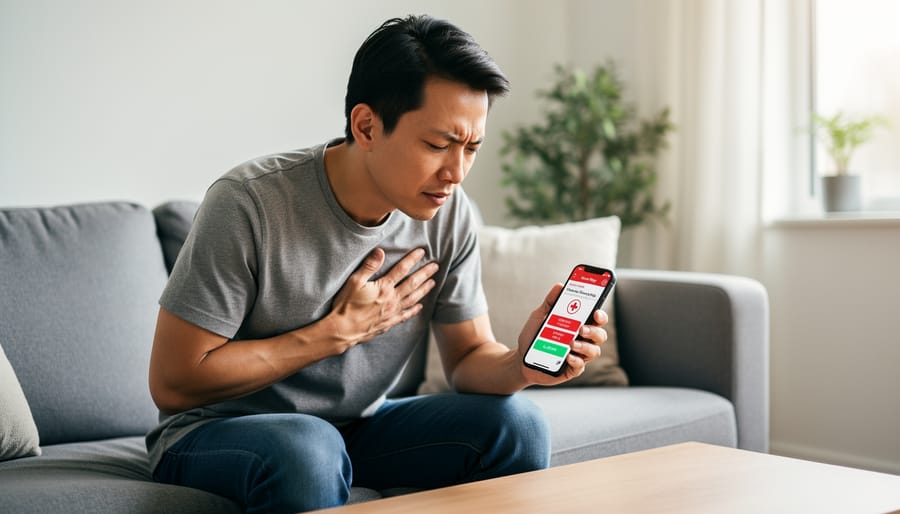 A person pauses during chest discomfort, checking emergency readiness on a phone while staying seated and calm.
When chest pain strikes, your first job isn’t to diagnose yourself, it’s to stay safe. The physical sensations of anxiety can be so intense and frightening that distinguishing them from a cardiac event becomes nearly impossible in the moment. That’s why the rule is simple: when in doubt, get help.
Your body doesn’t come with a label that says “this is just anxiety” when symptoms begin. Chest pain, shortness of breath, and a racing heart all trigger the same alarm bells regardless of their cause. Trying to analyze whether your pain is anxiety-related or heart-related while you’re experiencing it puts you at unnecessary risk. The Canadian Psychological Association notes that panic attacks peak within 10 minutes, but during those intense moments, self-diagnosis is dangerous.
Warning: Call 911 immediately if you experience persistent, severe chest pain, especially if it spreads to your arm, jaw, or back, or lasts longer than 5-10 minutes. When you’re experiencing a medical emergency, safety comes before self-diagnosis.
Beyond severe or spreading pain, certain accompanying symptoms demand emergency response. If your chest pain comes with dizziness, cold sweats, nausea, or difficulty catching your breath that doesn’t improve with rest, call 911. If the pain feels crushing or like pressure rather than sharp or stabbing, seek help. If you’ve never experienced these symptoms before and they came on suddenly, that’s another reason to call.
It’s better to visit the emergency room and discover it was anxiety than to delay help during an actual cardiac event. Emergency healthcare professionals would rather evaluate ten cases of anxiety-related chest pain than have someone wait at home during a heart attack. There’s no shame in seeking emergency care for symptoms that frighten you, that’s exactly what emergency services exist for. The focus must be on safety rather than self-diagnosis when symptoms like chest pain, shortness of breath, or a racing heart begin suddenly.
Step-by-Step: How to Respond to Chest Pain from Anxiety
Step 1: Prioritize Safety Over Self-Diagnosis
When chest pain hits, your first instinct might be to figure out whether it’s anxiety or something more serious. Resist that urge. Your immediate job isn’t to diagnose yourself, it’s to get safe.
Stop what you’re doing right now. If you’re standing, sit down. If you can lie down comfortably, even better. This isn’t about being dramatic; it’s about reducing strain on your body while you assess what’s happening.
Focus on safety rather than self-diagnosis when symptoms like chest pain, shortness of breath, or a racing heart begin suddenly. Don’t waste precious minutes Googling symptoms or trying to convince yourself it’s just anxiety. Instead, quickly check for emergency warning signs: Is the pain severe and persistent? Does it spread to your arm, jaw, or back? Are you dizzy, nauseous, or breaking into a cold sweat?
If you’re experiencing persistent, severe chest pain or any of these symptoms, call 911 immediately. Let medical professionals make the determination. There’s no prize for toughing it out, and dismissing symptoms because you have an anxiety history can be dangerous. Even if it turns out to be anxiety, you’ve done the right thing by prioritizing your safety first.
Step 2: Use Deep-Breathing Exercises as Your Foundation
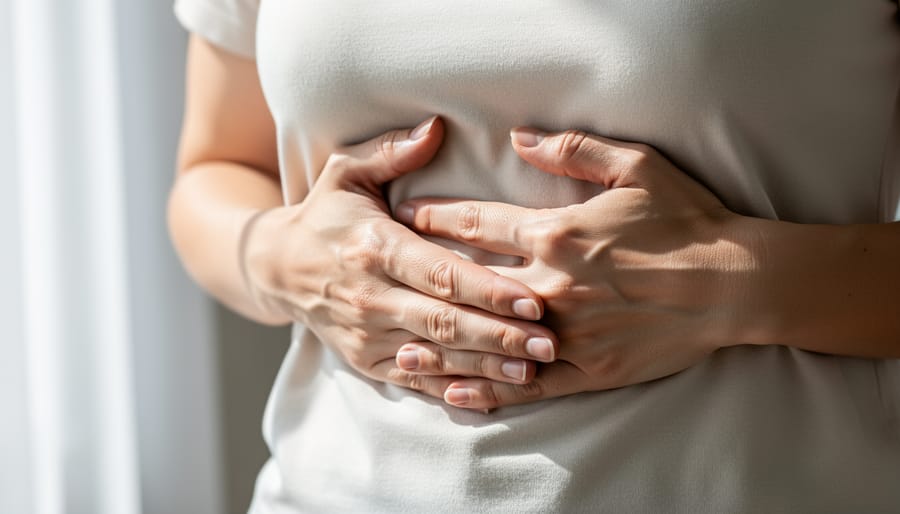 Close-up of hands resting on the abdomen to support slow, calming breathing during anxiety-related chest tightness.
Once you’ve prioritized safety and assessed your situation, deep breathing becomes your most powerful tool for interrupting the anxiety cycle. Research confirms that deep-breathing exercises form the foundation of most relaxation strategies and can help prevent panic attacks from escalating, and unlike medication or therapy, breathing is available to you instantly, anywhere.
Here’s the specific technique to use: breathe in slowly through your nose for a count of four, hold that breath for four counts, then exhale through your mouth for six counts. That longer exhale is crucial. When you extend your out-breath beyond your in-breath, you activate your parasympathetic nervous system, the part of your nervous system responsible for calming your body down. This physiological response directly counters the fight-or-flight activation causing your chest pain.
Place one hand on your chest and one on your belly as you breathe. You want the hand on your belly to rise more than the one on your chest, signaling that you’re taking deep diaphragmatic breaths rather than shallow chest breaths. If you find counting difficult while anxious, try breathing in for “one-Mississippi, two-Mississippi” instead, or simply focus on making each exhale noticeably longer than each inhale.
Repeat this pattern for at least two minutes, though five to ten minutes works better if symptoms are intense. Your chest pain won’t vanish immediately, but you should notice breathing becoming easier and the tightness beginning to loosen as your body receives the signal that the threat has passed.
Step 3: Apply Grounding Techniques
 A person uses a simple cold-water grounding step to interrupt anxiety and reduce escalating chest discomfort.
Once your breathing settles into a steady rhythm, add grounding techniques to pull your focus away from the chest pain. The 3-3-3 grounding method works well: name three things you see, three sounds you hear, and move three parts of your body. This interrupts the anxiety spiral by anchoring you in the present moment.
Physical grounding adds another layer. Run cold water over your wrists or splash it gently on your face, the temperature change signals your nervous system to shift gears. You can also try progressive muscle relaxation, but start with your feet or hands rather than your chest. Tensing and releasing muscles near the pain site might intensify your focus there, which keeps the anxiety loop spinning.
These grounding in minutes strategies aren’t distractions. They’re tools that redirect your nervous system away from fight-or-flight mode while you continue monitoring how your body responds.
Step 4: Monitor and Document Your Symptoms
While your chest feels tight and your heart races, grab your phone and open a simple note. Write down the time symptoms started and rate your pain on a scale of 1-10. Jot down what you’re feeling: crushing sensation, stabbing pain, tightness? Note anything else happening, dizziness, nausea, sweating, numbness.
This isn’t busywork. Panic attacks typically peak within 10 minutes, so tracking helps you see if symptoms follow that pattern or worsen instead. If your chest pain intensifies after 10 minutes or spreads to your arm, jaw, or back, that’s your signal to call 911 rather than wait it out.
Beyond the immediate moment, your notes become invaluable. When you sit with your doctor next week, you won’t struggle to remember details. You’ll have concrete information: “Pain started at 3 p.m., peaked at 7/10 within 8 minutes, completely gone by 3:20.” That specificity helps healthcare providers distinguish anxiety patterns from cardiac concerns and build your personalized management plan.
Keep a running log on your phone. Over time, you’ll spot triggers, maybe symptoms spike after poor sleep or too much caffeine, giving you power to prevent episodes before they start.
Step 5: Reach Out for Support
During an anxiety episode with chest pain, isolation amplifies fear. Reaching out to another person can interrupt the escalating anxiety cycle and help you regain perspective.
If symptoms aren’t severe enough to warrant 911, contact a trusted friend or family member who knows about your anxiety. You don’t need them to fix anything, just hearing a calm voice can shift your nervous system’s response. Tell them you’re experiencing chest pain and anxiety, and ask them to stay on the phone while you practice your breathing exercises.
Crisis lines provide immediate support when personal contacts aren’t available. Trained counselors can talk you through grounding techniques and help you assess whether you need emergency care. Many organizations now offer text-based crisis support if phone calls feel overwhelming.
Digital mental health platforms have expanded real-time support options. Some provide instant messaging with licensed therapists, while others offer peer support communities where people share coping strategies. These resources work best as part of your prepared response plan rather than something you search for mid-episode.
Connection doesn’t eliminate the physical symptoms, but it prevents the secondary panic about being alone with frightening sensations. That reduction in fear often helps the initial anxiety symptoms resolve more quickly.
How to Tell If It’s Working: Verifying Your Response
 A symbolic image of a calming “pulse” spreading outward, representing how anxiety-driven chest symptoms can crest and settle.
When you’ve responded to chest pain from anxiety using the steps outlined above, you need to know whether your approach is actually helping. Successful management has a clear pattern: your symptoms should peak and then start to ease within 10 to 20 minutes. You’ll notice your breathing gradually returning to a normal rhythm instead of feeling shallow and rapid. The tightness in your chest should begin to loosen, even if it doesn’t disappear completely right away.
Pay attention to your ability to redirect your thoughts. If you can start noticing details in your environment or follow a conversation, that’s a good sign your nervous system is calming down. Your heart rate should slow from that pounding sensation to something more manageable. You might still feel shaky or tired, that’s normal after your body’s alarm system has been activated, but the acute fear and physical intensity should be fading.
The timeline matters here. Research shows that panic symptoms subside quickly, typically peaking within 10 minutes and then decreasing. If 20 minutes have passed and you’re not seeing any improvement, or if your symptoms are getting worse instead of better, that’s important information.
Don’t wait to see if symptoms eventually improve when they’re worsening or remaining severe. If chest pain persists beyond 20 minutes without lessening, if it spreads to your arm, jaw, or back, or if you develop new symptoms like dizziness, nausea, or cold sweats, call 911 immediately. This isn’t about second-guessing yourself. When symptoms don’t follow the expected pattern of anxiety, you need medical evaluation to rule out cardiac causes. Trust what your body is telling you and err on the side of seeking emergency care.
Building Your Long-Term Anxiety Management Plan
Once you’ve practiced responding to chest pain episodes, the next step is building a sustainable plan that reduces how often they happen. Effective anxiety management combines professional support with daily habits that keep your nervous system more balanced.
Working with a mental health professional trained in anxiety treatment gives you structured tools that go beyond emergency techniques. Cognitive Behavioral Therapy (CBT) helps you identify and challenge the thoughts that trigger physical symptoms, while Acceptance and Commitment Therapy (ACT) teaches you to experience anxiety without fighting it, which often reduces its intensity. If you’re ready to find anxiety therapy look for providers who specialize in panic and somatic symptoms.
A comprehensive anxiety management plan includes several interconnected elements:
- Professional mental health support from a therapist trained in CBT or ACT approaches
- Daily relaxation practice, even when you feel calm, to strengthen your body’s ability to regulate stress
- Trigger identification through tracking patterns in your anxiety and chest pain episodes
- Lifestyle modifications including consistent sleep schedules, regular movement, and reduced caffeine intake
- Support network of trusted people who understand your experience and can help during difficult moments
- Regular medical check-ups to rule out physical causes and adjust your treatment plan as needed
Your daily breathing practice matters more than you might think. Practicing deep-breathing exercises for five minutes twice daily, when you’re already calm, trains your nervous system to shift out of fight-or-flight mode more easily when chest pain strikes. This preventive approach is different from using breathing only during panic.
Medication can be part of your plan, too. Some people benefit from daily medications that reduce baseline anxiety, while others use fast-acting options for specific situations. These decisions require conversation with a psychiatrist or family doctor who can assess your individual needs, medical history, and preferences.
Keep a simple log of your chest pain episodes: what you were doing beforehand, your stress level that day, how long symptoms lasted, and what helped. Patterns often emerge within a few weeks, showing you which situations or habits make episodes more likely. This information helps you and your healthcare providers make informed adjustments to your management plan rather than guessing what might work.
Common Questions About Anxiety Chest Pain
When chest pain strikes during an anxious moment, your mind races with questions. Here are answers to the concerns we hear most often, based on clinical understanding and the safety principles we’ve discussed throughout this article.
Can anxiety chest pain last for days?
While a panic attack typically peaks within 10 minutes, lingering muscle tension from anxiety can cause chest discomfort that persists for hours or even days afterward. However, if you’re experiencing chest pain that lasts beyond a single episode or keeps returning, this requires medical evaluation to rule out other causes.
How is anxiety chest pain different from a heart attack?
Anxiety chest pain often feels sharp or stabbing and tends to stay localized in one area, while cardiac chest pain is typically described as pressure or squeezing that may spread to the arm, jaw, or back. Anxiety symptoms usually peak quickly and then improve, especially with breathing exercises, whereas cardiac symptoms tend to persist or worsen. That said, these distinctions aren’t foolproof, which is why we always prioritize safety over self-diagnosis.
Will I always have anxiety chest pain?
No. Anxiety chest pain is a symptom, not a permanent condition. With appropriate anxiety management strategies like therapy, breathing techniques, and sometimes medication, most people see significant improvement in both the frequency and intensity of their symptoms over time.
Can anxiety actually cause a heart attack?
Anxiety itself doesn’t directly cause heart attacks. However, chronic stress and anxiety can contribute to heart disease risk factors over time, such as high blood pressure. The immediate chest pain you feel during anxiety is caused by muscle tension and hyperventilation, not damage to your heart.
Is anxiety chest pain dangerous?
The chest pain from anxiety is not dangerous in itself, but it signals that your body’s stress response is highly activated. The real danger lies in dismissing chest pain that could be cardiac, which is why you should always seek emergency care if you’re uncertain or if symptoms match the warning signs we outlined earlier.
Why does my chest hurt even when I don’t feel anxious?
Your body can react to stress before your mind consciously registers anxiety. You might also be experiencing residual muscle tension from earlier anxiety, or your breathing pattern may have shifted without you noticing. This disconnect between physical symptoms and emotional awareness is common and doesn’t mean something else is wrong, though it’s worth discussing with your healthcare provider to ensure nothing is being missed.
Remember that these answers provide general guidance, not personalized medical advice. Your experience with anxiety chest pain is unique to you, shaped by your body’s particular stress responses, your health history, and your life circumstances. Working with a healthcare provider allows you to get answers specific to your situation and build a management plan that addresses your individual patterns and concerns.
If you find yourself repeatedly searching for reassurance about chest pain or frequently wondering whether you should seek emergency care, this pattern itself is worth addressing with a mental health professional. Health anxiety often accompanies physical anxiety symptoms, creating a cycle where worry about symptoms makes them worse. Breaking that cycle becomes an important part of your overall anxiety management strategy.
Experiencing chest pain from anxiety is frightening, but it’s also manageable. You’ve learned how to prioritize safety, apply deep-breathing exercises and grounding techniques, and monitor your symptoms effectively. These aren’t just coping strategies, they’re tools that help you recalibrate an overactive alarm system.
Remember the safety-first principle: when chest pain strikes, always focus on safety rather than self-diagnosis. Work with your healthcare provider to rule out cardiac causes and develop a personalized anxiety management plan that addresses your specific triggers and patterns.
If you’re experiencing chest pain right now, and it’s persistent or severe, call 911 immediately. Your safety comes first, always.
Here’s what matters most: experiencing anxiety chest pain doesn’t mean you’re weak or broken. It means your body’s stress response is sensitive, and with the right support and strategies, that sensitivity can be recalibrated. Progress isn’t linear, and setbacks happen, but each time you apply these techniques, you’re building resilience.
You don’t have to navigate this alone. Our organization offers real-time support options when you need someone to talk to, and mental health professionals can help you develop long-term strategies that work for your life. Taking that first step toward support is an act of strength.