If you’re struggling with both anxiety and sleep problems but worry about becoming dependent on medication, you’re not alone in that concern. The good news: effective non-addictive options exist that can help you rest without the risk of dependency associated with benzodiazepines. These alternatives range from cognitive behavioral therapy for insomnia (recommended as the first-line treatment in Canadian guidelines) to newer medications like suvorexant and ramelteon, which work differently than habit-forming sleep aids.
Your worry about addiction is completely valid. Benzodiazepines and similar drugs carry real risks, especially when used beyond four weeks, which is why healthcare providers across Canada are now emphasizing safer approaches first. Many people don’t realize that what feels like normal vs abnormal anxiety often overlaps with sleep disturbances, creating a cycle where each problem feeds the other.
The challenge is that when you’re exhausted and anxious at 3 a.m., you need relief now. But reaching for the quickest solution can sometimes lead to longer-term complications. That’s why understanding your full range of options matters. Some medications address the root causes of sleeplessness without creating dependency. Others, like certain antihistamines or low-dose antidepressants, have been used off-label for years with good safety profiles when prescribed appropriately.
This article breaks down specific non-addictive medications available in Canada, explains how they work in accessible terms, and gives you the language to have productive conversations with your doctor. You’ll learn which treatments Canadian guidelines recommend first, what questions to ask about side effects, and how to weigh the trade-offs between different approaches. Because you deserve both good sleep and peace of mind about the treatment you choose.
Why Traditional Sleep and Anxiety Medications Raise Concerns
If you’ve ever been prescribed benzodiazepines (like Xanax or Ativan) or “Z-drugs” (like Ambien) for anxiety or sleep, you might already know the uneasy feeling that comes with taking them. Your concerns aren’t unfounded. These medications, collectively called benzodiazepine receptor agonists (BZRAs), work by essentially slowing down your brain’s activity to induce calm or sleep. While they’re effective in the short run, they carry real risks that your healthcare provider should discuss with you upfront.
The dependency issue isn’t just theoretical. BZRAs change how your brain responds to its natural calming chemicals, and with regular use, your body adapts to their presence. This means two things happen: you may need higher doses to get the same effect (tolerance), and stopping suddenly can trigger withdrawal symptoms ranging from rebound anxiety and insomnia to more serious complications. This isn’t a matter of willpower or dependency vs anxiety confusion, it’s a physiological response to how these medications interact with your brain chemistry.
Warning: Clinical guidelines recommend using BZRAs no longer than 4 weeks maximum, and only under close medical supervision.
That’s why healthcare providers are increasingly cautious about prescribing them as first-line treatments. The Canadian guidelines for insomnia now prioritize non-drug approaches first, recognizing that while BZRAs can provide quick relief, they don’t address the underlying causes of anxiety-related sleep problems. They’re more like putting a bandage on a wound that needs proper healing, helpful temporarily, but not a long-term solution.
This shift in prescribing practices reflects growing recognition that safer, non-addictive alternatives deserve the first chance to help. Your doctor’s hesitation to prescribe benzodiazepines isn’t about dismissing your struggle. It’s about protecting your long-term wellbeing while still addressing your very real need for sleep and anxiety relief.
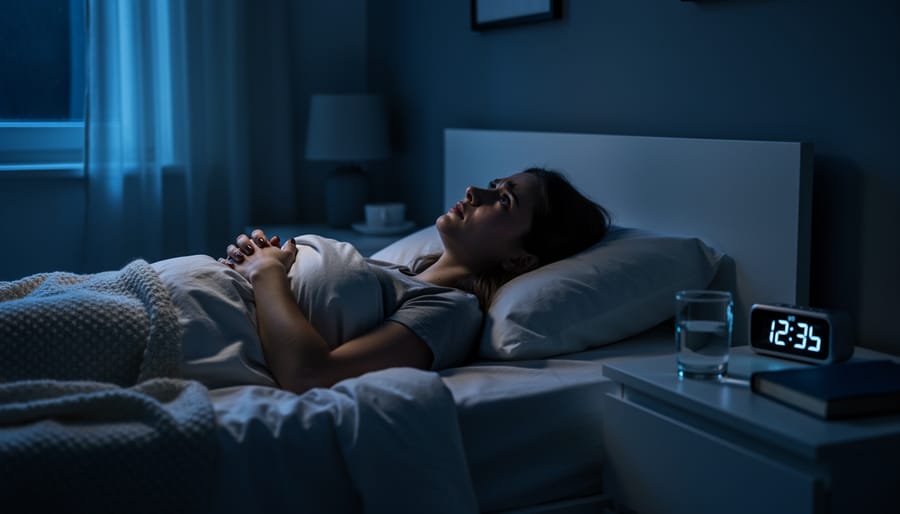 A quiet night scene captures the emotional reality of lying awake when anxiety keeps your mind active.
The Treatment Path That Works Best: Starting Without Pills
Before reaching for any medication, there’s a treatment approach that works better than pills for most people dealing with anxiety-related sleep issues. Cognitive Behavioral Therapy for Insomnia, or CBT-I, is recommended as the first-line treatment in Canadian clinical guidelines. If that sounds intimidating, hear me out, this isn’t about lying on a couch for years. It’s a practical, structured program that typically runs six to eight sessions.
CBT-I focuses on changing the thoughts and behaviors that keep you awake. A therapist helps you identify patterns you might not even realize are sabotaging your sleep. Maybe you’re spending ten hours in bed trying to force eight hours of sleep, which actually makes insomnia worse. Or perhaps you’ve started associating your bedroom with anxiety instead of rest. The therapy tackles these issues head-on through techniques like sleep restriction (yes, intentionally limiting time in bed at first), stimulus control (retraining your brain to link bed with sleep), and cognitive restructuring (addressing the worry spiral about not sleeping).
What makes CBT-I powerful is that it addresses the root causes rather than masking symptoms. Studies show it produces lasting improvements, even years after treatment ends. It pairs well with other evidence-based relief strategies you might already use during the day.
CBT-I can help even when insomnia comes alongside PTSD-related anxiety. It is not a quick fix, but understanding why sleep has become a battleground, and having concrete tools to change that, gives back a sense of control. Other techniques still have a place too, such as grounding for nights when anxiety spikes.
Here’s the frustrating reality: accessing CBT-I can be difficult. Trained therapists are scarce, wait lists stretch for months, and costs can be prohibitive. This is exactly why we advocate loudly for expanded mental health resources. You deserve better access to treatments that work. While we push for systemic change, know that some online CBT-I programs have shown promise, and talking with your healthcare provider about available options in your area is a worthwhile first step.
 Grounding objects and a nighttime routine feel represented through calm, non-medication supports that complement anxiety and sleep care.
Non-Addictive Medication Options When You Need Extra Support
Melatonin Receptor Agonists: Working With Your Natural Sleep Cycle
Ramelteon works differently from traditional sleep medications because it mirrors what your body already does naturally. Your brain produces melatonin when it’s time to sleep, signaling that nighttime has arrived. Ramelteon activates the same receptors in your brain that respond to your natural melatonin, helping regulate your sleep-wake cycle without forcing sedation the way benzodiazepines do.
This matters if you’re dealing with anxiety and sleep issues. Rather than knocking you out, ramelteon helps your body recognize when it’s time to rest. It carries no addiction risk and doesn’t cause the dependency concerns associated with stronger sleep medications.
Healthcare providers typically prescribe ramelteon for people who struggle to fall asleep, especially when anxiety keeps your mind alert at bedtime. It won’t work instantly like a sedative. You might need to take it consistently for several nights before noticing meaningful changes to your sleep pattern.
The medication works best when combined with good sleep habits and, ideally, therapy approaches like CBT-I. Think of it as supporting your natural sleep system rather than overriding it. That gentler approach means fewer side effects and no withdrawal concerns, though it also means you need realistic expectations about how quickly you’ll see results.
Orexin Receptor Antagonists: Quieting the Wakeful Brain
 The glowing lamp and quiet window view symbolize a safer path to sleep support, steady, soothing, and non-addictive.
Your brain has a natural system called orexin that keeps you awake and alert. When you’re anxious, this system can go into overdrive, making it nearly impossible to quiet your mind at night. Suvorexant works by blocking those wakefulness signals, letting your brain settle naturally rather than forcing sedation the way traditional sleep medications do.
This matters especially if you lie awake with racing thoughts. Instead of knocking you out, suvorexant allows your natural sleep drive to take over by reducing the wakeful signals your brain generates. Think of it as turning down the volume on your brain’s alert system rather than switching it off completely.
Because it works with your body’s existing sleep mechanisms instead of introducing sedation, suvorexant doesn’t carry the same addiction risks as benzodiazepines. You’re not fighting your brain’s chemistry, you’re working with it. Many people find this approach feels more natural and less disruptive to normal sleep architecture.
That said, suvorexant isn’t right for everyone, and it requires a prescription and medical supervision. Your healthcare provider can help determine whether this approach suits your specific situation, considering your anxiety patterns, sleep difficulties, and overall health picture.
Low-Dose Antidepressants: Dual Benefits for Anxiety and Sleep
It might sound surprising that an antidepressant could help with sleep, but low-dose doxepin offers exactly that combination. At doses much smaller than those used for depression (typically 3-6 mg rather than 75-300 mg), doxepin works primarily as a sleep aid by blocking histamine receptors, the same mechanism that makes some antihistamines cause drowsiness.
What makes this approach particularly helpful for anxiety-related insomnia is that doxepin addresses both concerns without carrying addiction potential. While it helps you fall asleep and stay asleep through the night, it’s also reducing the anxious activation that might be keeping you awake in the first place.
The medication works differently than sedatives that force your brain into sleep. Instead, it quiets the wake-promoting signals, allowing natural sleep processes to occur. You won’t develop tolerance or dependence, and there’s no risk of withdrawal when you stop taking it under medical guidance.
That said, doxepin isn’t right for everyone. It can cause next-day drowsiness in some people, and it may take a few nights to notice the full benefit. Your healthcare provider can help determine whether this dual-action approach matches your specific situation and health history.
Short-Acting Sleep Medications: When Carefully Used
Short-acting sleep medications like eszopiclone, zaleplon, and zolpidem occupy a middle ground in insomnia treatment. These medications can help you fall asleep or stay asleep, but they require careful medical oversight and aren’t appropriate for everyone.
Healthcare providers sometimes consider these options when behavioral approaches haven’t provided sufficient relief and anxiety is significantly disrupting your sleep. They work by affecting brain chemistry to promote drowsiness, but they do carry some dependency risk if used long-term, which is why guidelines emphasize short-term use only.
If your doctor suggests one of these medications, it’s important to have an honest conversation about your complete health picture, including any history of substance use concerns. These medications work best as part of a broader treatment plan that includes addressing the underlying anxiety and developing sustainable sleep habits.
Your provider will likely recommend them for the shortest effective period, monitoring how you respond. While they can provide temporary relief when you’re struggling, they’re tools to use strategically rather than long-term solutions. The goal remains finding sustainable ways to manage both your anxiety and sleep without ongoing medication dependence.
Temazepam: Understanding the Middle Ground
Temazepam appears in treatment guidelines as an insomnia medication, but here’s what you need to know: it’s a benzodiazepine. That means it carries the same dependency risks we’ve been discussing throughout this article. Unlike the truly non-addictive options covered earlier, temazepam works on the same brain receptors as other benzodiazepines, and tolerance can develop with regular use.
Healthcare providers sometimes prescribe it for short-term sleep difficulties when other approaches haven’t worked. The key word is short-term. Canadian guidelines are clear that medications like temazepam shouldn’t be used longer than four weeks. If your doctor suggests temazepam, it’s worth asking about the alternatives we’ve covered first, and ensuring there’s a clear plan for how long you’ll use it and what comes next. This isn’t a judgment about anyone who’s taken or been prescribed temazepam. It’s simply important to understand where it fits in the treatment landscape so you can make informed decisions with your healthcare provider.
Comparing Your Options: What to Consider
When you’re weighing your options, it helps to see how different medications compare. Each type works in its own way, and what matters most is finding an approach that fits your specific situation and concerns.
Here’s a snapshot of the main categories:
| Medication Type |
How It Works |
Addiction Potential |
Best Suited For |
| Melatonin receptor agonists (ramelteon) |
Mimics natural sleep hormone to regulate your sleep-wake cycle |
Low |
People wanting to work with natural body rhythms, especially those with delayed sleep onset |
| Orexin receptor antagonists (suvorexant) |
Reduces wakefulness signals rather than forcing sedation |
Low |
Those with racing thoughts at night or anxiety-driven wakefulness |
| Low-dose antidepressants (doxepin) |
Addresses both anxiety and sleep through histamine receptors at low doses |
Low |
People dealing with both conditions who may benefit from dual support |
| Short-acting sleep aids (eszopiclone, zaleplon, zolpidem) |
Promotes sleep through GABA receptors but with shorter duration |
Moderate |
Occasional use under careful medical supervision, not long-term solutions |
| Temazepam |
Benzodiazepine that enhances GABA activity |
Higher |
Short-term use only (maximum 4 weeks), when other options haven’t worked |
The key thing to remember is that “non-addictive” doesn’t automatically mean “right for you,” and vice versa. Your healthcare provider needs to consider your full picture: the nature of your anxiety, your sleep patterns, other medications you’re taking, and your personal health history.
Some people find melatonin receptor agonists work beautifully because they’re gentle and align with how their body already functions. Others need something that more directly addresses the wakeful signals their anxious brain keeps sending, making orexin antagonists a better fit.
Think about what matters most to you. Are you primarily worried about becoming dependent on medication? Do you need something that works quickly, or are you comfortable with a gradual approach? Does the idea of taking an antidepressant feel right, or does it raise concerns you’d want to discuss first?
Bring these questions to your healthcare provider. The comparison above gives you a foundation for that conversation, helping you articulate what you’re looking for and what worries you.
Having the Conversation With Your Healthcare Provider
Walking into your doctor’s office prepared makes all the difference. You’re not asking for something unreasonable, you’re seeking safer options because you understand the risks.
Start by describing what you’re experiencing with specifics. Instead of “I can’t sleep,” try “I lie awake for two hours most nights with racing thoughts about work, and I’ve averaged four hours of sleep for the past month.” Share how anxiety shows up for you during the day and how it affects your nights. If you’ve tried behavioral approaches like keeping a consistent sleep schedule or limiting screen time, mention those too.
Then express your concerns directly. “I’m worried about becoming dependent on medication” is a valid statement that deserves respect. You can mention you’ve heard benzodiazepines carry addiction risks and you’re looking for alternatives that address both anxiety and sleep without that concern. Your doctor should understand this, since 2017, Canadian clinical guidelines have emphasized careful prescribing around substances with dependency potential, particularly for older adults.
Ask specific questions that help you understand your options. What non-addictive medications might work for both my anxiety and sleep issues? How long does each typically take to show results? What are the most common side effects? Would Cognitive Behavioral Therapy for Insomnia work alongside medication?
If your provider suggests a comprehensive mental health evaluation before prescribing, that’s actually a positive sign. They’re taking your concerns seriously and want to understand the full picture.
Remember, you’re partners in this process. A good provider will listen to your preferences, explain their reasoning, and work with you to find an approach that feels safe and sustainable.
What to Expect: The Reality of Treatment
Starting a non-addictive medication for anxiety-related sleep issues looks different from what you might expect if you’ve only heard about traditional sleeping pills. These options typically don’t knock you out within 30 minutes or guarantee immediate results. Instead, they work more gently with your body’s natural systems, often requiring several days or even weeks to show their full effect. This slower timeline can feel frustrating when you’re desperate for relief, but it’s actually part of what makes them safer.
Note: Finding the right treatment approach is a process that requires patience and open communication with your healthcare provider as your needs evolve.
It helps to know what to expect. Ramelteon may not work immediately the way a short-term benzodiazepine such as lorazepam does, and the first week can bring little noticeable difference, which is easy to find discouraging. Your doctor may warn you about this in advance. Combined with sleep hygiene changes and therapy, the aim is gradual, sustainable improvement rather than an instant or perfect result.
The most successful outcomes happen when medication is just one part of your treatment plan. Continuing with therapy, maintaining consistent sleep schedules, managing daytime anxiety, and addressing lifestyle factors all work together. Some nights will still be difficult, and that’s normal. Progress isn’t always linear, but these non-addictive approaches offer something valuable: the possibility of long-term improvement without the worry of dependence or tolerance.
Finding the right support for anxiety-related sleep struggles isn’t about settling for medications that create new problems. Non-addictive options exist, and they can be part of a comprehensive approach that includes therapy, lifestyle changes, and the right medication when you need it. CBT-I remains the gold standard first-line treatment, and medications like melatonin receptor agonists, orexin antagonists, and low-dose antidepressants offer genuine alternatives to dependency-forming drugs.
You deserve treatment that supports your recovery without adding risk. The journey to better sleep and reduced anxiety takes patience, and what works best often combines several approaches tailored to your specific situation. You don’t have to figure this out alone.
If you’re struggling right now, our real-time support options connect you with someone who understands. Whether you need to talk through your concerns before a doctor’s appointment or you’re having a difficult night, reach out. Text START to 741741 for our Crisis Text Line, call 1-888-668-6810 to speak with someone, or visit our resources page for additional support options.
Your concerns about addiction are valid, your sleep matters, and effective help exists. Start the conversation with your healthcare provider, advocate for what you need, and know that finding the right path forward is possible.