Recognizing anxiety disorder requires watching for seven key warning signs: persistent, excessive worry lasting six months or more, physical symptoms like racing heartbeat and shortness of breath, avoidance behaviors, sleep disruption, difficulty concentrating, muscle tension, and withdrawal from loved ones. Unlike everyday stress that fades once a situation resolves, clinical anxiety persists regardless of circumstances and interferes with your ability to work, maintain relationships, and enjoy life.
If you’ve been questioning whether what you’re experiencing goes beyond normal worry, you’re not alone. Sarah, a 34-year-old teacher, spent two years dismissing her racing thoughts and constant fatigue as “just stress” before learning she had generalized anxiety disorder. “I thought everyone felt this way,” she told us. “I didn’t realize that waking up with a knot in your stomach every single day wasn’t normal.”
The distinction matters because anxiety disorders are among the most treatable mental health conditions when properly identified. Clinical diagnosis relies on specific criteria: adults must experience at least three of six physical and cognitive symptoms outlined in the DSM-5, and these symptoms must cause significant distress or impairment in daily functioning. What separates normal anxiety from a disorder is the persistence, intensity, and disproportionate nature of the response compared to actual circumstances.
This guide walks you through a systematic recognition process using the seven most reliable warning signs, explains what warrants immediate professional attention, and provides clear next steps whether you’re assessing yourself or someone you care about. Understanding these patterns empowers you to seek support confidently, without second-guessing whether your experience “counts” or minimizing what you’re going through.
Key Takeaway: If you’ve identified with several of these seven warning signs, especially excessive worry, physical symptoms, difficulty controlling thoughts, avoidance behaviors, sleep problems, concentration difficulties, or symptoms lasting six months or more, reaching out for professional diagnosis is your most important next step. Help is available, accessible, and proven to work.
What You Need to Know Before Self-Assessment
Before you start identifying specific warning signs, it helps to understand what you’re actually looking for. Anxiety is a universal human emotion. We all feel nervous before a big presentation or worried about a loved one’s health. The question that probably brought you here is whether what you’re experiencing crosses into something more serious.
I remember sitting in my car after work, heart pounding, trying to figure out if my constant dread was “normal” or if I needed help. I’d Google symptoms late at night, reading clinical descriptions that felt both exactly right and impossibly vague. That confusion is common, and it’s why understanding the line between everyday worry and anxiety disorder matters so much.
Note: Anxiety disorders are distinguished from normal anxiety by persistent, disproportionate, or distorted responses that lead to impaired functioning in your daily life.
The key difference between normal vs abnormal anxiety isn’t intensity alone. It’s persistence, proportion, and impact. Normal anxiety fades when the stressor passes. An anxiety disorder sticks around, amplifying everyday concerns into overwhelming distress that interferes with work, relationships, or basic activities. The anxiety feels stuck on, impossible to turn off no matter how hard you try.
From a clinical standpoint, adults typically need to experience at least three of six DSM-5 physical and cognitive symptoms to meet diagnostic criteria. These include things like restlessness, difficulty concentrating, muscle tension, and sleep disturbances. But diagnosis isn’t a simple checklist you can complete alone. It requires clinical evaluation by a trained professional who can assess the full context of your experience.
That said, self-assessment tools can give you initial guidance. The American Psychological Association offers a number of online assessment measures with instructions, scoring information, and interpretation guidelines. These aren’t substitutes for professional diagnosis, but they can help you organize your observations and decide whether reaching out for help makes sense.
When to Pause: Red Flags That Need Immediate Attention
 A person at night with tense posture and sleepless cues suggests how anxiety can affect rest and the body’s sense of safety.
Some warning signs go beyond recognizing a pattern and demand you act right away. If you’ve noticed a marked decrease in enjoyment and time spent with friends and family, that’s a red flag signaling your anxiety may be severely interfering with your life. When your world shrinks to the point where relationships and activities that once brought you joy now feel impossible or overwhelming, it’s time to reach out for help.
Warning: If you’re experiencing thoughts of self-harm,
severe panic that leaves you unable to function, or symptoms alongside substance use, contact a mental health professional immediately or use Mental Health Support’s real-time digital support services available 24/7.
Anxiety disorders often don’t arrive alone. They commonly coexist with alcohol use disorder, major depression, or panic disorder, creating a layered challenge that makes symptoms harder to manage on your own. If you’re dealing with multiple struggles at once, that combination itself is a signal to seek professional evaluation rather than trying to parse it out yourself.
The six-month mark matters too. When symptoms persist for six months or longer and interfere with your daily functioning, whether that’s work, school, relationships, or basic self-care, you’ve moved past a rough patch into territory that meets clinical thresholds. GAD criteria include impairment in important areas of life, and that duration and disruption mean it’s not something you should wait out. Professional support can provide the clarity and treatment plan you need to start recovering your life.
The 7 Warning Signs of Anxiety Disorder
 Scattered notes and stopped thinking symbolize intrusive worry and difficulty controlling anxious thoughts.
Sign 1: Excessive Worry That Won’t Stop
Everyone worries. You worry about a work deadline, a friend’s health scare, or whether you remembered to lock the door. That’s normal. But if you find yourself caught in a loop of worry that jumps from topic to topic, your job performance, your kids’ safety, your finances, your health, whether you said the wrong thing in a conversation three days ago, and it happens most days for weeks or months, you might be experiencing the hallmark of generalized anxiety disorder.
This isn’t the occasional “I’m stressed about this presentation” worry that fades once the event passes. It’s persistent anxiety about multiple activities or events, present more days than not. You might wake up anxious without knowing exactly why, then latch onto whatever feels threatening in that moment. The worry feels uncontrollable and disproportionate to the actual situation. You know logically that your child’s school trip is safe, but the “what if” scenarios won’t stop playing.
Here’s what distinguishes it: the worry doesn’t resolve when circumstances change. You finish one project and immediately fixate on the next concern. It shifts targets but never truly leaves.
Sign 2: Physical Symptoms You Can’t Explain
Your heart races while you’re sitting calmly at your desk. Your hands shake during a normal conversation. You wake up drenched in sweat with no fever or nightmare to explain it. These physical signs can feel alarming, especially when they appear without warning or obvious cause.
Anxiety disorder often shows up in your body before your mind fully registers what’s happening. You might experience palpitations that make you check your pulse, diaphoresis that leaves your shirt soaked, or trembling that others notice. Some people describe a sensation of shortness of breath even when their oxygen levels are normal, or a choking feeling in their throat with nothing physically stuck. Nausea, stomach cramps, and digestive upset can become daily companions.
What makes these symptoms particularly confusing is their persistence despite medical tests coming back clear. You’ve ruled out heart problems, thyroid issues, and digestive diseases, yet your body keeps sounding false alarms. When these physical symptoms occur regularly alongside excessive worry, they’re not random, they’re your nervous system stuck in overdrive, signaling that anxiety has crossed into disorder territory.
Sign 3: Difficulty Controlling Your Worries
You know the thoughts are unreasonable. You’ve tried distraction, deep breathing, telling yourself to stop. But the worries keep spinning, circling back no matter what you do. This loss of control over your own thinking process is one of anxiety disorder’s most frustrating hallmarks.
Sarah, a teacher from Manchester, describes it this way: “I’d lie awake catastrophizing about a parent-teacher meeting scheduled for next week. I’d tell myself, ‘This is ridiculous, you’ve done hundreds of these.’ But five minutes later, I’d be right back imagining every possible disaster, my mind just running the same script on loop. It felt like my brain had hijacked itself.”
This inability to stop or redirect anxious thoughts, even when you recognize they’re excessive, marks a clear boundary between everyday worry and anxiety disorder. Normal worry responds to reassurance or conscious effort to refocus. Anxiety disorder worry operates on its own momentum. You might successfully distract yourself for an hour with work or a conversation, only to find the exact same worry waiting the moment your attention shifts.
The exhaustion isn’t just from the worry content itself. It’s from the constant mental effort of trying to regain control of thoughts that won’t obey your instructions to stop.
Sign 4: Avoiding People, Places, or Activities You Once Enjoyed
When anxiety takes hold, it often whispers that staying home is safer, easier, less overwhelming. You might notice yourself declining invitations you would’ve jumped at months ago, skipping the weekly coffee meetup, or backing out of the book club you used to love. These aren’t just scheduling conflicts piling up. They’re avoidance behaviors, and they’re one of anxiety disorder’s most insidious warning signs.
This withdrawal looks different for everyone. Maybe you’ve stopped going to the gym because the crowd feels suffocating. Perhaps you’ve cancelled on friends three times in a row, each time with a different excuse that felt true in the moment. You might avoid driving certain routes, visiting particular stores, or attending social gatherings that once brought you joy. The common thread? A marked decrease in enjoyment and time spent with friends and family, which signals a mental health problem that needs attention.
Here’s what makes this sign particularly telling: you’re not losing interest because these activities suddenly became boring. You’re avoiding them because anxiety convinces you that something bad will happen, that you won’t cope, or that the discomfort isn’t worth it. The world gradually shrinks, and isolation becomes the default response to worry.
 A quiet, isolated figure in a social room reflects avoidance behaviors and withdrawal from people or activities.
Sign 5: Sleep Problems and Constant Fatigue
When anxiety keeps your mind spinning at night, quality sleep becomes impossible. You might lie awake for hours replaying conversations or catastrophizing about tomorrow’s meeting, only to finally drift off as your alarm goes off. Or you fall asleep quickly but wake at 3 a.m., heart racing, unable to quiet your thoughts.
Sleep disturbances appear in the DSM-5 criteria for generalized anxiety disorder because they’re such a common manifestation. The connection runs both ways: anxiety disrupts sleep, and lack of sleep makes anxiety worse, creating a vicious cycle that leaves you exhausted.
This fatigue differs from the normal tiredness after a busy day. It’s bone-deep exhaustion that persists even after you’ve rested. You wake feeling drained rather than refreshed. Simple tasks require enormous effort. Your body feels heavy, your thinking sluggish.
The fatigue stems partly from poor sleep quality, but also from the constant physiological arousal that anxiety creates. Your nervous system stays in overdrive, burning through energy reserves. You’re tired but also wired, unable to truly rest.
If you’re consistently struggling with sleep or feeling perpetually exhausted despite adequate rest time, it’s worth examining whether anxiety might be the underlying cause.
Sign 6: Difficulty Concentrating or Mind Going Blank
You’re reading the same paragraph three times but can’t remember what it said. You sit in a meeting and realize you haven’t absorbed a single point your colleague just made. Your mind feels foggy, unfocused, like you’re trying to think through cotton wool. This cognitive disruption is one of the DSM-5’s recognized symptoms of generalized anxiety disorder, and it shows up in frustratingly concrete ways.
When anxiety hijacks your brain’s processing power, concentration becomes nearly impossible. You might find yourself staring at your computer screen, unable to start a simple task you’d normally breeze through. Students describe studying the same chapter repeatedly without retention. Parents forget important appointments or struggle to follow their children’s stories. Some people experience their mind literally going blank mid-sentence or during routine tasks they’ve done hundreds of times.
These aren’t occasional lapses everyone has. With anxiety disorder, the difficulty concentrating happens persistently, interfering with your ability to function at work, complete schoolwork, or manage daily responsibilities. You’re not losing your intelligence or developing a memory disorder. Your brain is simply overwhelmed by constant worry, leaving little capacity for focus. If this mental fog has become your daily reality rather than an occasional frustration, it’s another warning sign worth taking seriously.
Sign 7: Symptoms Lasting Six Months or Longer
Time is the telling factor that separates temporary stress from a true anxiety disorder. While everyone experiences anxious periods during difficult life circumstances, generalized anxiety disorder requires that your symptoms persist for at least six months. This duration criterion exists because anxiety that lingers this long is no longer a reasonable response to external events, it has become self-sustaining and chronic.
Symptoms for at least six months indicate that your nervous system has shifted into a persistent state of high alert, one that won’t resolve on its own simply by waiting it out. If you’ve been experiencing excessive worry, physical tension, sleep problems, and difficulty concentrating since spring and it’s now fall, or if you can’t remember the last time you felt truly calm, this duration signals the need for professional evaluation.
The six-month threshold isn’t arbitrary. It helps distinguish between adjustment reactions (which typically improve as circumstances change) and a disorder that requires targeted treatment. Recognizing that your symptoms have persisted this long can actually bring relief: it confirms that what you’re experiencing isn’t weakness or something you should have overcome by now, but a legitimate condition with effective treatments available.
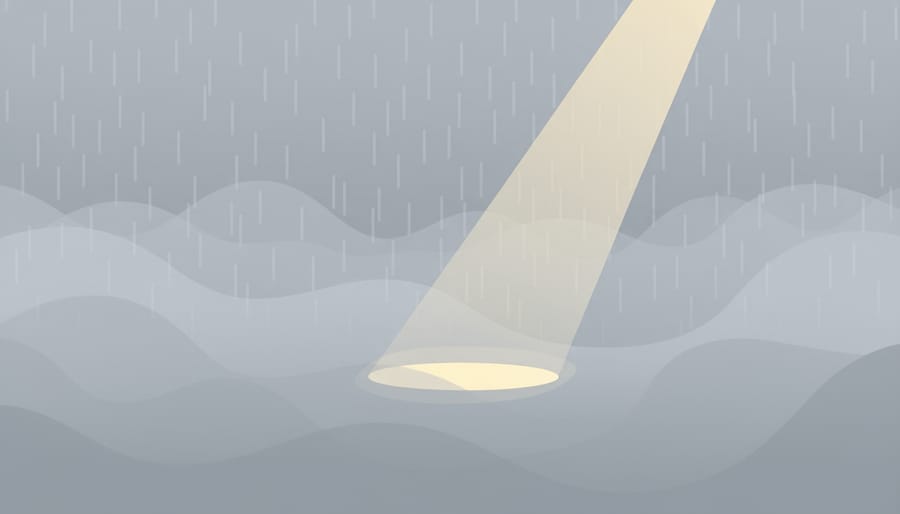 Foggy rain and a small beam of light represent how anxiety can feel persistent over time while still leaving room for hope and support.
How to Verify What You’re Experiencing
Recognizing these seven warning signs is important, but only a healthcare professional can provide an accurate diagnosis of anxiety disorder. Self-recognition helps you understand your experiences, but clinical diagnosis opens the door to effective treatment and support.
Online assessment tools can offer initial guidance as you prepare to seek professional help. The American Psychological Association provides assessment measures with scoring information and interpretation guidelines that can help you organize your observations before speaking with a provider. These tools aren’t diagnostic on their own, but they give you a structured way to track patterns and prepare for a mental health evaluation. Think of them as a starting point for conversation, not a conclusion.
If you’ve identified several warning signs in your own life, here’s what you can do now:
- Complete a self-assessment tool from APA to organize your symptoms and their impact on daily functioning
- Contact your primary care physician or a mental health professional to discuss your experiences and concerns
- Reach out to Mental Health Support for educational resources that explain anxiety disorders in clear, accessible language
- Write down specific examples of when symptoms occur, how long they last, and what triggers them to share during your evaluation
- Consider joining one of our support programs where you can connect with others who understand what you’re facing
Mental Health Support offers both digital resources and face-to-face programs designed to educate and support individuals navigating anxiety. Our materials break down complex clinical information into practical guidance you can actually use. Whether you’re still gathering information or already working with a professional, we’re here to walk alongside you. Remember, seeking clarity about what you’re experiencing isn’t weakness. It’s the brave first step toward feeling better.
Common Questions About Anxiety Disorder Symptoms
Recognizing anxiety disorder symptoms often raises more questions than it answers. The experiences can be confusing, inconsistent, and sometimes overlap with other conditions. Here are answers to the most common questions people ask when they’re trying to understand what they’re experiencing.
Can anxiety disorder symptoms come and go?
Yes, anxiety symptoms can fluctuate in intensity and even seem to disappear for periods before returning. However, for a diagnosis of generalized anxiety disorder, symptoms must be present more days than not for at least six months, even if their severity varies.
How is anxiety disorder different from panic disorder?
Panic disorder involves sudden, intense episodes with symptoms like palpitations, sweating, trembling, and shortness of breath that peak quickly. Generalized anxiety disorder is characterized by persistent, excessive worry about multiple activities or events that’s harder to control, and the two conditions can coexist in the same person.
Can you have anxiety disorder without physical symptoms?
While physical symptoms like muscle tension and sleep disturbances are common, the primary feature of generalized anxiety disorder is excessive, uncontrollable worry. Adults must experience at least three of six DSM-5 symptoms, which include both physical and cognitive signs, but the specific combination varies between individuals.
What if I only have some of these signs?
You don’t need all seven warning signs to have an anxiety disorder. Diagnosis is based on clinical criteria assessed by a professional who can determine whether your specific pattern of symptoms meets the threshold for a disorder and rule out other conditions.
These questions reflect the real uncertainty people feel when trying to assess their mental health. Many also wonder about the relationship between different anxiety presentations, such as social anxiety symptoms and generalized worry. The key distinction is that anxiety disorders involve persistent, disproportionate responses that impair your ability to function in daily life, not just occasional stress or nervousness.
What matters most isn’t whether you fit a perfect checklist, but whether your anxiety is causing you distress and interfering with work, relationships, or activities you value. The fluctuating nature of symptoms can make self-assessment tricky, which is exactly why professional evaluation provides such valuable clarity. A trained clinician can distinguish between normal anxiety, generalized anxiety disorder, panic disorder, and other conditions that commonly coexist, like major depression or alcohol use disorder.
Remember that asking these questions is itself a positive step. It means you’re paying attention to your mental health and seeking understanding rather than dismissing your experiences.
Recognizing these seven warning signs takes courage, and simply reading this article shows you’re already taking steps toward better mental health. You don’t have to figure this out alone or wait until symptoms become overwhelming. Professional evaluation provides the clarity you need and opens the door to effective treatment that addresses your specific experience.
The path from recognition to recovery isn’t always straightforward, but it becomes clearer once you’ve named what you’re experiencing. Diagnosis based on clinical criteria gives you a framework for understanding your symptoms and connects you with evidence-based anxiety relief techniques that actually work. You’ll discover tools tailored to your needs rather than continuing to struggle with strategies that don’t fit your situation.
Mental Health Support offers both digital resources and face-to-face support designed to meet you where you are. Whether you prefer starting with online assessment measures or connecting directly with someone who understands, we’re here. Recovery is possible, and thousands of people who once experienced these same warning signs are now living fuller, calmer lives. Your story doesn’t end with anxiety, it begins with this brave first step of recognition. Reach out today, because you deserve support and the relief that comes with proper treatment.