You wake at 3 a.m. with your heart racing, drenched in sweat, replaying a moment you’ve tried desperately to forget. Or maybe you find yourself snapping at your partner over something trivial, feeling nothing when you used to feel everything, avoiding places that once brought you joy. These aren’t character flaws or signs of weakness. They’re potential symptoms of post-traumatic stress disorder, a condition that affects millions of people who’ve experienced or witnessed trauma.
PTSD doesn’t always look like the Hollywood version. You don’t need to be a combat veteran or a survivor of a catastrophic event to develop it. The quiet traumas count too: childhood neglect, emotional abuse, a car accident, medical trauma, or ongoing exposure to distressing situations. Your brain’s alarm system gets stuck in overdrive, treating everyday moments as threats.
“I spent two years thinking I was just broken,” shares Maria, a 34-year-old teacher who developed PTSD after a violent home invasion. “I didn’t realize that my irritability, my constant need to check the locks fifteen times, my inability to concentrate at work… these were all connected. I thought I was losing my mind.”
Understanding the symptoms is the first step toward healing. PTSD shows up differently in different people. Some experience vivid flashbacks and nightmares. Others feel emotionally numb, disconnected from loved ones, or hypervigilant about potential dangers. You might notice changes in how you think about yourself and the world, struggle with memory and concentration, or engage in risky behaviors to feel something or nothing at all.
The good news? PTSD is treatable. Recognition matters because effective, evidence-based treatments exist that can help you reclaim your life. You’re not imagining these symptoms, and you’re definitely not alone.
What PTSD Really Looks Like
PTSD doesn’t announce itself with a single, dramatic moment. It emerges at least one month after someone experiences a traumatic event involving threats to their life or physical safety, but what that emergence looks like varies dramatically from person to person. One survivor might replay their trauma vividly every night, while another quietly stops going places or seeing people without realizing why.
The common image of PTSD centres on flashbacks: that sudden, overwhelming sense of being back in the traumatic moment. But PTSD includes more than flashbacks. It shows up in how you think, how you feel, how you react to everyday situations, and what you avoid without consciously deciding to. Someone might struggle with persistent anger, feel emotionally numb around loved ones, or jump at sounds that never bothered them before. These patterns don’t always connect back to the trauma in obvious ways, which is exactly why they’re so often missed.
Because symptoms manifest so differently, two people with PTSD can have completely different daily experiences. One might battle intrusive thoughts while maintaining their routine; another might seem fine emotionally but develop hypervigilance that exhausts them. Some people notice Anxiety 101 symptoms first, physical tension, racing thoughts, worry, before recognizing the deeper trauma response beneath. Understanding that PTSD develops after one month helps explain why symptoms don’t always appear immediately after the event, and why they can look so different across individuals facing similar traumas.
The Four Core Symptom Categories You Need to Know
 A solitary moment at night highlights how PTSD-related distress can feel isolating and constant, even when no one else sees it.
Intrusive Thoughts and Memories
Intrusive memories arrive uninvited, often when you least expect them. Sarah, a paramedic who responded to a fatal collision in 2024, describes it this way: “I’ll be washing dishes, and suddenly I’m back at the accident scene. I can smell the gasoline, hear the sirens, feel my hands shaking. It’s not a memory I’m choosing to think about, it’s happening to me all over again.”
These flashbacks are among the most recognizable intrusive symptoms, yet they vary widely in intensity. Some people experience full sensory re-experiencing episodes where they lose touch with present surroundings. Others notice brief flashes, a split-second image or sensation that jolts them out of whatever they’re doing. Both are normal vs abnormal in the sense that while anyone might occasionally recall a distressing event, PTSD flashbacks feel overwhelmingly real and immediate rather than like distant recollections.
Nightmares present another common intrusion. You might dream directly about the trauma or experience variations on the theme, feeling trapped, endangered, or helpless in scenarios that mirror the original threat. These dreams often disrupt sleep so severely that you dread bedtime altogether.
Physical reactions matter too. Your heart might race when you encounter reminders of the trauma, a smell, a sound, even a particular time of day. Marcus, who survived a workplace assault, breaks into a cold sweat whenever he enters similar buildings. His body remembers the danger even when his conscious mind tries to rationalize that he’s safe now.
These intrusive symptoms aren’t signs of weakness. They’re your nervous system’s attempt to process an overwhelming experience, signaling that you need support to heal.
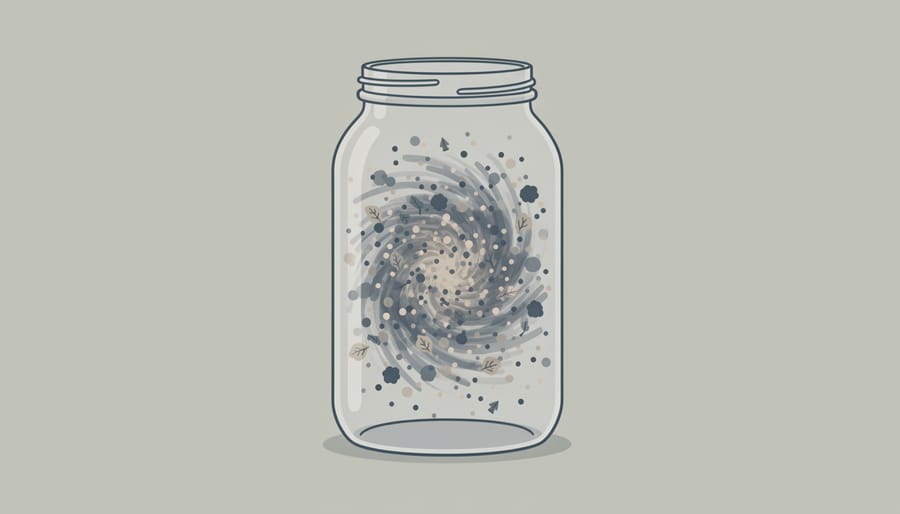 The swirling particles inside a glass jar symbolize intrusive thoughts that feel hard to control or escape.
 Avoidance can show up in everyday settings, where someone turns away from places or crowds that feel too activating.
Avoidance Behaviors That Hide in Plain Sight
Avoidance shows up in everyday choices that seem perfectly reasonable on the surface. Someone who survived a car accident might suddenly prefer working from home, not because they dislike the office, but because the commute triggers anxiety they can’t name. A veteran might skip family gatherings, citing work obligations, when the real issue is that crowded rooms feel threatening.
These behaviors protect us from emotional pain, but they also shrink our lives. You might notice yourself gravitating toward certain routes, declining invitations, or changing the subject when particular topics arise. A woman who experienced assault might throw herself into work to avoid being alone with her thoughts. Someone who lost a loved one might clear their home of photographs, not out of acceptance but to dodge the memories that surface when they see a familiar face.
The trouble with avoidance is how logical it feels. Why wouldn’t you skip the movie that reminds you of that night? Why wouldn’t you stay busy to keep your mind occupied? These choices feel like self-care when they’re actually reinforcing the trauma’s grip.
Physical avoidance is easier to spot: steering clear of specific neighborhoods, refusing to drive, avoiding hospitals. Emotional avoidance is sneakier. Numbing yourself with alcohol, staying perpetually distracted, pushing away people who care about you, these all serve the same purpose. They keep the trauma at arm’s length, but they also keep healing out of reach.
When avoidance starts dictating your choices, it’s worth examining what you’re really protecting yourself from.
Changes in Thoughts and Mood
After trauma, the world can feel fundamentally different. Many people with PTSD develop persistent negative beliefs, thinking “I can’t trust anyone,” “The world is completely dangerous,” or “I’m permanently broken.” These aren’t just occasional doubts; they’re core convictions that colour every interaction and decision.
Sarah, who survived a car accident, stopped believing she deserved good things. When friends invited her out, she’d decline, thinking, “Why would they want me there?” She couldn’t pinpoint when this shift happened, only that her old confidence had vanished.
Emotional numbness often accompanies these beliefs. You might feel disconnected from people you once felt close to, as if you’re watching your life through glass. Positive emotions, joy, love, excitement, seem unreachable, replaced by a constant undercurrent of fear, shame, or anger that never quite lifts.
Some people describe feeling like a stranger in their own life, going through motions without truly participating. Others lose chunks of memory related to the trauma, not just of the event itself but also surrounding details that should be clear.
These cognitive and emotional changes aren’t character flaws or signs of weakness. They’re your brain’s attempt to protect you after overwhelming threat. The problem is that these protective mechanisms can trap you in isolation and hopelessness, making it hard to remember that connection and meaning are still possible. Recognizing these patterns as symptoms rather than permanent truths opens the door to reclaiming your sense of self.
Arousal and Reactivity Symptoms
Your body’s alarm system stays switched on long after danger has passed. This constant state of high alert affects everything from how you sleep to how you react when someone accidentally drops a glass.
Sarah describes it this way: “I’d snap at my kids over nothing. A door slamming would send my heart racing. I felt wired all the time, like I was waiting for something terrible to happen.”
Irritability often shows up as a short fuse you can’t seem to lengthen. Small frustrations trigger disproportionate anger. You might lash out at people you love, then feel terrible about it later. Some people engage in reckless driving, substance use, or other high-risk behaviors they wouldn’t have considered before their trauma.
Hypervigilance means constantly scanning for threats. You check exits in every room. You monitor who’s around you. Your shoulders stay tense because you can’t let your guard down. This exhausting vigilance drains your energy even when nothing threatening is actually happening.
The exaggerated startle response catches people off guard. Sudden noises or movements make you jump out of your skin. Your partner reaches to touch your shoulder and you flinch violently. It’s not a choice; your nervous system reacts before your brain catches up.
Concentration becomes nearly impossible when part of your mind stays on constant alert. You read the same paragraph three times without absorbing it. Work tasks that used to be simple now feel overwhelming.
Sleep disturbances create a vicious cycle. You struggle to fall asleep because your mind races or your body stays tense. When you do sleep, nightmares wake you. Some people wake frequently, checking locks or looking out windows. This chronic exhaustion makes every other symptom harder to manage.
 A piercing headlight beam in fog represents hypervigilance, staying “on alert” as if danger could appear at any moment.
Why Some PTSD Symptoms Go Unrecognized
Understanding why PTSD symptoms often slip through the cracks starts with recognizing a fundamental misconception: many people still believe PTSD only affects combat veterans. This narrow view leaves countless trauma survivors unaware that their struggles have a name and a path to treatment. When someone experiences symptoms after a car accident, childhood abuse, or medical trauma, they might dismiss their reactions as personal weakness rather than recognizing them as PTSD.
Cultural factors play a significant role in this gap. In many communities, openly discussing mental health challenges remains taboo. People learn to mask their symptoms, putting on a brave face while struggling internally. Some cultures emphasize resilience in ways that discourage seeking help, framing it as bringing shame to the family or admitting defeat. Others lack the language to describe psychological distress, making it harder to recognize and name what’s happening.
The overlap with other conditions creates additional confusion. PTSD symptoms can look remarkably similar to depression, anxiety disorders, or even physical health problems. Sleep disturbances might be attributed to stress. Irritability and angry outbursts might be dismissed as personality traits. Memory and concentration difficulties could be mistaken for ADHD or aging. Without understanding the connection to trauma, healthcare providers might treat individual symptoms without addressing the underlying PTSD.
Stigma remains a powerful barrier. Despite growing mental health awareness in 2026, admitting to experiencing flashbacks or feeling constantly on edge can feel vulnerable. People worry about being labeled as broken or unstable. They fear judgment from employers, friends, or family members who might not understand.
The statistics tell a troubling story. About 8% have moderate to severe PTSD symptoms yet many remain undiagnosed because they don’t fit the stereotypical image of PTSD or because their symptoms have been normalized or misattributed. Recognizing these barriers helps us understand why reaching out for proper assessment matters so deeply.
Getting Help: Current Treatment Approaches That Work
Here’s the truth: recovery from PTSD is possible. The treatments available in 2026 aren’t experimental or unproven, they’re backed by decades of research and the 2025 APA guidelines that establish clear, evidence-based pathways to healing. While everyone’s journey looks different, knowing what actually works can be the difference between suffering in silence and reclaiming your life.
The gold standard remains trauma-focused cognitive behavioral therapy. This isn’t about endlessly rehashing your trauma. Instead, you’ll work with a trained therapist to process what happened in a safe, controlled environment. The approach helps you reframe the experience, reduce avoidance, and develop coping strategies that actually hold up under pressure. Many people notice meaningful changes within 12 to 16 sessions, though your timeline might differ.
For some, therapy combined with medication offers the most complete relief. SSRIs, specifically fluoxetine, paroxetine, and sertraline, treat the core symptoms of PTSD by regulating serotonin levels in your brain. The SNRI venlafaxine works similarly but targets both serotonin and norepinephrine. These aren’t quick fixes. They typically take four to six weeks before you’ll notice improvement, but they can significantly reduce intrusive thoughts, ease hypervigilance, and lift the persistent negative mood that makes daily life feel impossible.
| Treatment Type |
Primary Focus |
What to Expect |
| Trauma-Focused CBT |
Processing trauma, reducing avoidance |
12-16 sessions, gradual exposure techniques |
| SSRIs (fluoxetine, paroxetine, sertraline) |
Core PTSD symptoms, mood regulation |
4-6 weeks to effect, daily medication |
| Venlafaxine (SNRI) |
Intrusive thoughts, emotional numbing |
4-6 weeks to effect, daily medication |
| Prazosin |
Nightmares, sleep disturbances |
Taken at bedtime, effects within days to weeks |
If nightmares are wrecking your sleep and leaving you exhausted, prazosin specifically targets PTSD-related sleep disturbances. It’s prescribed at bedtime and many people experience relief faster than with other medications, sometimes within days.
Treatment might also include learning practical skills to stop a panic attack when trauma reminders trigger intense physical responses. These techniques work alongside your primary treatment to give you immediate tools when symptoms spike.
What matters most isn’t which specific treatment you start with, it’s that you start. The research is unequivocal: people with PTSD who engage in evidence-based treatment show significant improvement. You’re not stuck with these symptoms forever. With the right support, you can move from merely surviving to actually living again.
When to Seek Support
You don’t have to wait until symptoms become unbearable. If trauma-related symptoms have persisted for more than a month and they’re affecting your work, relationships, or daily functioning, that’s reason enough to reach out. Maybe you’ve noticed yourself pulling away from people you care about, or you can’t shake a constant feeling of being on edge. Perhaps sleep has become a battleground, or you’re struggling to concentrate on tasks that used to come easily.
Starting the conversation with a healthcare provider can feel daunting, but you don’t need to have everything figured out. You might begin with something simple: “I went through something difficult, and I’m not feeling like myself.” Your doctor will likely ask about the traumatic event, when symptoms started, and how they’re impacting your life. They may use screening tools to assess symptom severity and determine if your experience aligns with conditions like SMI and SPMI which can inform treatment planning.
The initial assessment typically covers all four symptom categories: intrusive thoughts, avoidance patterns, changes in mood and thinking, and arousal symptoms. Be honest about what you’re experiencing. There’s no “right” level of suffering required to deserve help.
If waiting for an appointment feels impossible, you have options now. Many organizations offer real-time support through crisis lines, text services, and online chat. Some provide immediate access to trained counselors who understand trauma. Additionally, mental health programs offer structured support while you wait for longer-term treatment.
Recovery starts with one conversation. Whether that’s with your family doctor, a counselor, or a crisis support line, reaching out is the most important step you can take.
Recognizing the symptoms we’ve explored today is truly the first step toward healing. You don’t have to carry the weight of PTSD alone. Recovery is not just possible, it’s happening every day for people who reach out and access evidence-based support. Whether you choose digital resources, face-to-face counseling, or connect with others through social media communities, help is available right now.
If what you’ve read today resonates with your experience, or if you’re concerned about someone you care about, consider taking that next step. Talk to a healthcare provider about what you’re experiencing. Your symptoms are real, your struggle matters, and you deserve support.
You’ve already shown courage by seeking to understand PTSD symptoms. Now, let that understanding guide you toward the healing you deserve. Reach out today, because your journey toward recovery can begin right now.