If you’ve seen SMI in a doctor’s note, insurance form, or treatment plan, you’re probably wondering what it means for you or someone you care about. SMI stands for Serious Mental Illness, a clinical classification used by mental health professionals, insurance companies, and government agencies to describe conditions that significantly interfere with major life activities.
The definition matters more than you might think. It determines access to specialized treatment programs, disability benefits, housing assistance, and even which medications your insurance will cover. According to the National Institute of Mental Health, SMI refers to mental, behavioral, or emotional disorders that result in serious functional impairment. This typically includes conditions like schizophrenia, bipolar disorder, and major depressive disorder when they substantially limit one or more major life activities.
You might also encounter SPMI, which stands for Serious and Persistent Mental Illness. The “persistent” part emphasizes that the condition is ongoing, usually lasting a year or longer. Some states and treatment facilities use SPMI to identify people who need long-term, coordinated care.
Here’s what frustrates many people: these definitions aren’t perfectly consistent across healthcare systems. One insurance company might classify your diagnosis as SMI while another doesn’t. A therapist in California might use different criteria than one in New York. This inconsistency can create real barriers when you’re trying to access care or understand what your diagnosis means for your future.
The good news? Understanding these terms gives you power to advocate for yourself and ask better questions about your treatment options.
SMI in Mental Health: What the Acronym Actually Stands For
SMI stands for Serious Mental Illness, a clinical classification used in mental health care and policy to identify individuals who need intensive, coordinated treatment and support. When healthcare providers, insurance companies, or government programs refer to SMI, they’re talking about mental health conditions that significantly impair your ability to carry out major life activities, things like maintaining relationships, holding down a job, or taking care of yourself.
The SMI definition by SAMHSA the federal agency overseeing mental health services, provides specific criteria: adults aged 18 or older with a diagnosable mental, behavioral, or emotional disorder that results in serious functional impairment. This classification isn’t about labeling people. It’s a tool that determines eligibility for specialized services, funding streams, and community mental health programs designed for those facing the most substantial challenges.
You’ll also encounter SPMI, which stands for Severe and Persistent Mental Illness. While SMI focuses on current severity and functional impact, SPMI adds the element of duration, it describes conditions that are both severe and ongoing, typically requiring long-term treatment and support. SPMI defined in research captures this distinction, though healthcare systems don’t always agree on where to draw the line between serious and persistent.
The relationship between these terms can feel murky because they overlap considerably. SPMI is essentially a subset of SMI, all SPMI is SMI, but not all SMI is persistent. Someone experiencing a severe depressive episode might meet SMI criteria temporarily, while someone managing schizophrenia over many years would likely be classified as having SPMI. Understanding this difference matters when you’re navigating treatment options and accessing the specialized care designed for long-term needs.
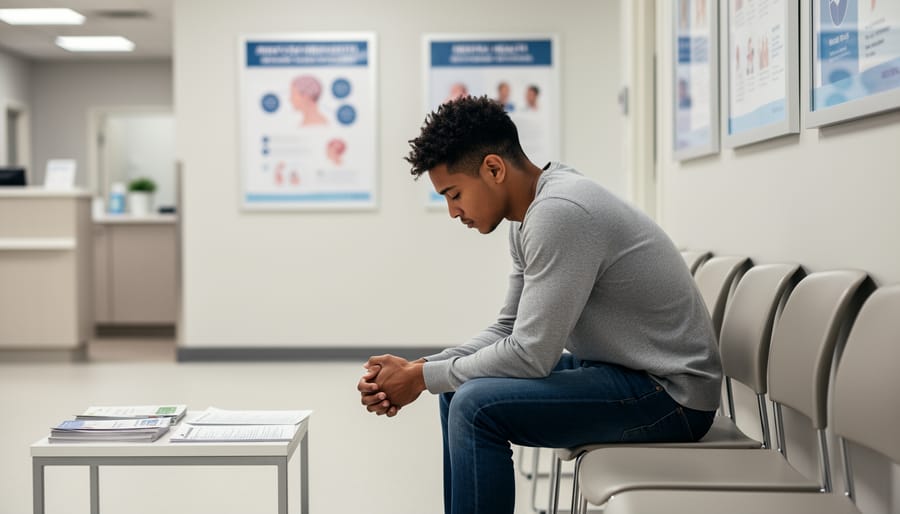 A person waits in a clinic setting, reflecting the uncertainty and effort involved in understanding mental health care labels and next steps.
Why These Definitions Matter More Than You Might Think
When you’re dealing with serious mental health challenges, these acronyms aren’t just clinical shorthand. They’re gatekeepers to resources, treatment programs, and financial support that can make the difference between stability and crisis.
The SMI or SPMI classification on your medical records can unlock access to specialized community mental health centers, intensive case management services, and coordinated care programs designed specifically for people with complex needs. Many states reserve their most comprehensive mental health services for individuals who meet SMI criteria, including peer support programs, housing assistance, and vocational rehabilitation. For disability benefits through Social Security (SSDI or SSI), having a documented SMI diagnosis strengthens your case significantly, though it’s not automatically qualifying. Insurance companies also use these classifications to determine coverage for intensive outpatient programs, residential treatment, and long-term therapy that wouldn’t be covered for conditions considered less severe.
Note: Because definitions vary across providers and states, you may need to advocate for appropriate classification if your symptoms meet severity criteria but your records don’t reflect it.
But here’s where it gets complicated. These same labels can create barriers you didn’t ask for. Some providers might make assumptions about your capacity or prognosis based on the classification alone. Job applications that require medical disclosure can become minefields. Even within healthcare, people with SPMI face documented access gaps, they’re 3.5 times less likely to access specialist palliative care services compared to others, reflecting systemic biases about who deserves comprehensive medical attention.
The classification itself doesn’t change who you are or limit what’s possible for your recovery. It’s a tool for accessing resources, and like any tool, it works best when you understand how to use it. Knowing where these labels help and where they hurt lets you navigate the system strategically rather than letting the system define your path forward.
The Challenge: No One Agrees on What SPMI Really Means
What ‘Severe’ Means in Practice
When clinicians talk about severe mental illness, they’re looking at three key areas, though you might be surprised by how much these measurements can differ from one provider to another.
Symptom intensity matters, but it’s not just about how distressing your thoughts or feelings are. Providers consider whether you’re experiencing psychotic symptoms, severe mood episodes, or symptoms that don’t respond to standard treatments. Someone with depression that lifts with therapy and medication wouldn’t typically meet severity criteria, while someone experiencing persistent delusions or treatment-resistant depression might.
The bigger factor is usually how your condition affects daily life. Can you maintain employment or education? Are you able to manage basic self-care consistently? Do you need significant support with housing, finances, or medical care? These functional impacts often carry more weight than symptom checklists.
Risk assessment completes the picture. This includes harm to yourself or others, frequent crisis episodes, and repeated hospitalizations. If you’re regularly in the emergency room or unable to stay safe without intensive support, that signals severity to most systems.
Here’s the catch: operational criteria vary by feature from one healthcare system to another. What qualifies as severe in one treatment program might not in another, which means your classification can shift based on where you’re seeking care.
Understanding the ‘Persistent’ Part
When healthcare providers talk about “persistent,” they’re describing mental health conditions that require ongoing treatment over months or years, not just a short-term crisis. This chronicity is what separates temporary struggles from conditions that need sustained professional support.
The duration piece is critical but not always clear-cut. Some systems require symptoms to persist for at least a year despite treatment, while others look for patterns stretching back several years. What matters most is whether you need continuous or regularly recurring care rather than a single intervention.
This doesn’t mean your symptoms never change. You might have better weeks or months followed by more difficult periods. The “persistent” label recognizes that managing the condition is part of your long-term life, much like someone managing diabetes needs ongoing monitoring and treatment adjustments.
Anxiety 101 teaches us that even common conditions can become persistent when they resist initial treatments and require specialized, coordinated care. For SPMI classification, persistence signals that you’ll benefit from integrated treatment planning, consistent provider relationships, and access to community mental health resources designed for long-term support rather than short-term fixes.
Conditions Commonly Classified as SMI or SPMI
Certain conditions show up more frequently under the SMI and SPMI classifications, but here’s what matters most: having one of these diagnoses doesn’t automatically put you in this category. It’s always about how severe your symptoms are and how long they persist, not just the label itself.
Schizophrenia and schizoaffective disorder are among the most commonly classified conditions. These involve significant challenges with perception, thought patterns, and managing daily tasks. Bipolar disorder, particularly when someone experiences severe manic or depressive episodes that interfere substantially with functioning, often meets SMI criteria.
Major depression can qualify when it’s severe and ongoing, especially if it hasn’t responded well to multiple treatment attempts. We’re talking about depression that goes beyond feeling low, depression that makes basic self-care, work, or relationships extremely difficult over an extended period.
Treatment-resistant conditions occupy unique ground here. If you’ve tried several medications or therapies without significant improvement and your symptoms continue disrupting your life substantially, you might meet SPMI criteria even if your initial diagnosis wouldn’t automatically suggest it.
Other conditions that frequently appear in this category include severe obsessive-compulsive disorder when it dominates someone’s daily functioning, severe post-traumatic stress disorder, and some severe eating disorders, particularly when they’ve required repeated hospitalizations or intensive intervention.
The crucial point is this: two people with the same diagnosis might have completely different classifications. One person with bipolar disorder managing symptoms effectively with treatment and maintaining their daily routine wouldn’t meet SMI criteria. Another person with the same diagnosis facing persistent, severe symptoms despite treatment very well might. The diagnosis is just the starting point. What actually determines classification is how the condition affects your life and how it responds to care.
 Open doors and a lighted threshold symbolize how classifications can influence whether people reach specialty care and support services.
The Gap Between Labels and Care: What Research Shows
Understanding the label is one thing. Getting the care you deserve is another.
Recent research reveals a troubling reality: people with severe and persistent mental illness face significant barriers to comprehensive healthcare. A 2024 study found that individuals with SPMI experience 3.5x lower palliative care access compared to people without these diagnoses. This isn’t just about end-of-life care. It reflects a broader pattern where serious mental health conditions can actually reduce access to the very services that could improve quality of life.
The barriers are both systemic and subtle. Many healthcare providers still operate within fragmented systems where mental health and physical health teams don’t communicate effectively. Insurance approval processes can be more complicated when you have an SPMI classification. Some specialists hesitate to take patients with serious mental illness due to concerns about treatment complexity or simply lack of training in integrated care approaches.
Key Takeaway: Research shows people with SPMI are 3.5 times less likely to access specialist palliative care, highlighting a wider pattern of healthcare gaps. Understanding this disparity empowers you to advocate more forcefully for integrated, comprehensive treatment that addresses all your health needs.
This gap matters because people living with serious mental illness deserve the same comprehensive, compassionate care as anyone else. They often manage complex medical needs alongside their mental health conditions, yet coordinated treatment remains frustratingly rare in many healthcare systems.
The solution lies in integrated treatment approaches that address mental health, physical health, and social needs together. When care teams collaborate across specialties and view you as a whole person rather than a collection of diagnoses, outcomes improve significantly. Advocating for this kind of coordinated care isn’t demanding something extra. It’s asking for the standard of treatment everyone deserves.
What This Means If You’re Living with Serious Mental Illness
If you’re living with a condition that falls under SMI or SPMI, understanding this classification can help you access better care. The label itself doesn’t define you, but it can unlock resources that make a real difference in your recovery and quality of life.
Start by asking your treatment provider directly whether your condition meets the criteria for SMI or SPMI classification in your area. This matters because it determines eligibility for community mental health centers, intensive outpatient programs, and specialized services designed for people with ongoing treatment needs. Don’t assume your provider has already pursued this classification. Sometimes you need to advocate for it yourself.
Once classified, you gain access to coordinated care that addresses multiple aspects of your life, not just symptoms. This might include case management to help coordinate appointments and benefits, peer support programs where you connect with others who understand the journey, and structured environments like mental health day programs that provide therapeutic activities while you maintain your living situation.
Keep detailed records of your treatment history, hospitalizations, and how symptoms affect your daily functioning. This documentation becomes crucial when applying for disability benefits or appealing insurance denials. Write down specific examples of how your condition impacts work, relationships, and self-care. Vague statements don’t carry the same weight as concrete instances.
Connect with a case manager or social worker who specializes in serious mental illness. They know the system’s shortcuts and can help you navigate paperwork, find sliding-scale treatment options, and access community resources you might not discover on your own. Many community mental health centers offer this service at no cost.
Address all aspects of your wellbeing, not just psychiatric symptoms. If you’re struggling with anxiety at home or workplace anxiety bring these concerns to your treatment team. Comprehensive care means looking at housing stability, physical health, social connections, and vocational support alongside medication and therapy.
Remember that recovery isn’t linear, and needing intensive support doesn’t mean you’ve failed. It means you’re getting the level of care your situation requires right now.
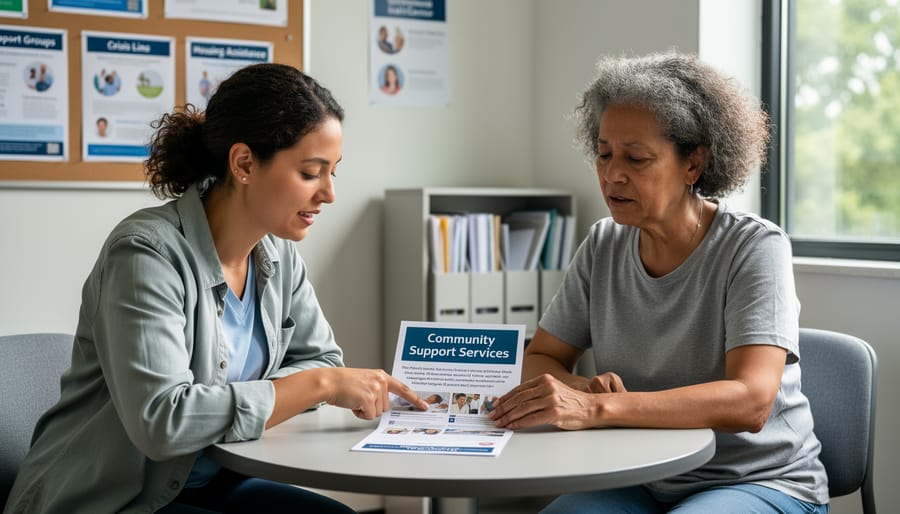 A supportive moment between a caregiver and someone living with serious mental illness highlights practical help, dignity, and connection to community resources.
For Families and Support Networks: How to Help
When someone you care about lives with serious mental illness, you might feel overwhelmed by medical terminology, treatment plans, and system navigation. You don’t need to become an expert in SPMI classifications, but understanding that these labels exist to unlock services, not define your loved one, helps you support them more effectively.
Start by learning how their healthcare team uses these terms. Ask their psychiatrist or case manager what the SMI or SPMI designation means for treatment options, insurance coverage, and community resources in your area. Since definitions vary between providers and insurance systems, getting clarity about your specific situation matters more than memorizing textbook criteria.
Coordinate care by keeping a simple record of appointments, medications, and symptoms. Many families find success creating a shared document with emergency contacts, current medications, and crisis warning signs. This becomes invaluable during transitions between providers or emergency situations.
Reduce stigma starting in your own home. Use person-first language (someone with schizophrenia rather than a schizophrenic). Challenge your own assumptions about recovery and possibility. Your loved one is navigating symptoms and side effects that most people can’t imagine, while simultaneously facing a healthcare system that often fails them, as evidenced by research showing people with SPMI are 3.5 times less likely to access specialist care when they need it.
Take care of yourself, too. Supporting someone with serious mental illness is demanding work. Find your own therapist, join a family support group, and set boundaries that protect your wellbeing. You can’t pour from an empty cup, and your loved one needs you sustainable for the long term, not burned out in six months.
Moving Forward: Getting the Support You Deserve in 2026
Understanding what SMI and SPMI stand for is just the beginning. These classifications exist to help you access the care and support you need, not to define who you are or limit what you can achieve. If you’ve been navigating the mental health system with these labels, you already know it can feel overwhelming. But you deserve comprehensive care that addresses all aspects of your health and wellbeing.
Start by building a support team that sees you as a whole person. This means finding healthcare providers who coordinate their efforts, whether that’s your psychiatrist, primary care doctor, therapist, or case manager. Don’t hesitate to ask questions about your treatment plan or to speak up when something isn’t working. Your insight into your own experience matters.
Community connection makes a real difference. Mental health peer support groups, both in-person and online, offer understanding that comes from shared experience. TEMA provides resources and programs designed specifically to support people facing serious mental health challenges and their families. As we approach Mental Health Day 2026 opportunities to connect and advocate are growing stronger.
Remember that recovery looks different for everyone, and it’s rarely a straight line. The classifications we’ve discussed throughout this article are administrative tools, nothing more. They don’t predict your future or measure your value. With the right support, information, and self-advocacy, you can build a life that works for you. You’re not alone in this journey.