Every year on October 10th, millions of people around the world pause to recognize World Mental Health Day. In 2026, this global awareness campaign returns with renewed urgency as mental health challenges continue to touch nearly every family, workplace, and community.
If you’ve been struggling lately, you’re not alone. One in four people will experience a mental health condition at some point in their lives. Sarah, a teacher from Ohio, shared her experience: “I spent years thinking I had to handle everything myself. When I finally reached out for help during World Mental Health Day, I realized that asking for support wasn’t weakness. It was strength.”
World Mental Health Day offers something powerful: permission to start the conversation. Whether you’re experiencing anxiety, depression, or simply feeling overwhelmed by daily pressures, this day creates space to acknowledge what you’re going through without judgment.
This year presents an opportunity to take meaningful action. You might join a community event, start a conversation with someone you trust, or finally schedule that appointment you’ve been putting off. Organizations worldwide will offer free resources, workplace initiatives will spotlight mental wellness, and support networks will extend their reach to connect with those who need help most.
The theme for 2026 will be announced by the World Federation for Mental Health, but the core message remains constant: mental health is health. You deserve care, compassion, and access to resources that help you thrive. This October 10th, you can be part of a global movement that’s changing how we talk about, treat, and understand mental wellness.
What Makes World Mental Health Day 2026 Special
World Mental Health Day falls on Saturday, 10 October 2026 which makes this year particularly significant. Because it lands on a weekend, more people can participate without juggling work schedules or rushing through lunchtime events. Families can attend community activities together. Organizations have the flexibility to host longer, more meaningful gatherings.
Since 1992, this day has served as a global platform for mental health advocacy, education, and awareness. Each year, the official theme set by WFMH (the World Federation for Mental Health) shapes how communities, workplaces, and health organizations frame their efforts. The theme guides conversations from boardrooms in Toronto to support groups in rural communities, creating a shared language around mental health challenges and solutions.
What started as a single-day initiative has grown into a catalyst for year-round mental health work. Countries across six continents now recognize October 10 as a touchpoint for policy discussions, public education campaigns, and grassroots support efforts. In Canada, the Government of Canada officially recognizes the day in its calendar of health promotion activities, reflecting its importance in national health conversations.
The weekend timing in 2026 offers something else too: space. Space to reflect without pressure. Space for honest conversations that might feel rushed on a workday. Space for people managing their own mental health challenges to participate at their own pace, whether that means attending an event, sharing their story online, or simply taking time for self-care. This accessibility matters, especially for those who find traditional weekday programming difficult to access.
Planning Your Organization’s World Mental Health Day Activities
 A calm, inclusive workplace setting where colleagues connect through supportive conversation and shared learning.
Getting Started with Workplace Mental Health Resources
Starting with workplace mental health initiatives doesn’t require a massive budget or specialized expertise. Many organizations already have access to tools they haven’t fully explored. The UFCW Canada mental health resources webpage offers practical materials designed specifically for addressing mental health in the workplace, a solid starting point for unions and employers alike.
Begin by identifying what you already have. Does your organization offer an employee assistance program? Do managers receive mental health training? Audit your current supports before October arrives. This prevents duplication and reveals genuine gaps.
Next, assemble a small planning team representing different departments and levels. Frontline workers often have insights leadership misses about what would genuinely help versus what looks good on paper. Include someone with lived experience if they’re willing to participate.
Download free planning guides to structure your approach. Workplace Options provides a booklet outlining concrete steps for observing World Mental Health Day, covering everything from securing leadership buy-in to scheduling activities that accommodate various shifts and work arrangements.
The most effective workplace initiatives start small and sustainable. A single lunch-and-learn session with genuine dialogue beats an elaborate one-day event that exhausts your team and disappears without follow-up. Focus on building something you can maintain beyond October 10.
Creating Inclusive and Safe Spaces for Conversation
Creating a space where colleagues feel comfortable discussing mental health requires intentional effort and a foundation of trust. Start by acknowledging that these conversations can feel vulnerable, particularly when people are managing workplace anxiety or other mental health challenges they haven’t previously disclosed.
Frame conversations around shared human experience rather than treating mental health as an “other people” issue. When leaders share authentically about their own challenges or learning moments, it signals that honesty won’t be penalized. This doesn’t mean oversharing, it means modeling that mental health is part of everyone’s story.
Language matters profoundly. Avoid casual use of clinical terms like “I’m so OCD” or “that’s crazy,” which trivializes real conditions. Replace “suffers from depression” with “experiences depression” or “living with anxiety.” These shifts acknowledge the person first, not the diagnosis. Skip workplace jargon about resilience or toughness that implies struggling is a weakness.
Create structured opportunities for conversation beyond impromptu hallway chats. Facilitated small group discussions with clear guidelines give people a predictable format. Establish ground rules together: confidentiality, no unsolicited advice, permission to pass, respect for different experiences. These boundaries let people engage at their comfort level.
Pay attention to who’s missing from the conversation. If your sessions only attract certain demographics or seniority levels, examine whether the format or messaging feels genuinely inclusive. People from marginalized communities often face additional barriers to workplace vulnerability.
Remember that psychological safety isn’t built in a single event. It emerges when leaders consistently demonstrate that disclosure won’t damage someone’s career, when policies match the supportive rhetoric, and when people see concrete follow-through on commitments made during these conversations.
How Individuals Can Participate and Make an Impact
You don’t need to wait for an organized event to make World Mental Health Day 2026 meaningful. Whether you’re navigating your own mental health journey, supporting someone you care about, or simply want to contribute to breaking down stigma, there are genuine ways to participate that match where you are right now.
Start where you feel comfortable. If you’re managing anxiety at home or dealing with other mental health challenges, observing this day might mean practicing self-compassion rather than pushing yourself to do more. Sharing your story, even privately with one trusted person, counts as participation. So does seeking support, educating yourself about your condition, or simply acknowledging that your mental health matters.
For those supporting a loved one, October 10 offers a natural opening to check in. A simple “I’ve been thinking about you, how are you really doing?” can create space for honest conversation. You might share a resource you’ve found helpful, or just listen without trying to fix anything. The day also provides an opportunity to learn more about what your friend or family member is experiencing, which strengthens your ability to offer meaningful support.
- Share a personal reflection or supportive message on social media using hashtags connected to World Mental Health Day
- Reach out to someone you know is struggling with a genuine offer of support
- Attend a local or virtual event focused on mental health awareness
- Donate to or volunteer with organizations providing mental health services
- Educate yourself about a mental health condition you don’t fully understand
- Start a conversation with friends, family, or colleagues about mental health
Digital participation extends your impact beyond your immediate circle. Sharing accurate information about mental health, amplifying voices of people with lived experience, or simply commenting supportively on someone else’s post contributes to a larger cultural shift. Just remember that performative posts don’t help as much as authentic engagement.
Community participation might look like joining a local walk, attending a workshop, or volunteering your skills. Some people find meaning in fundraising for mental health organizations. Others prefer quieter acts, wearing green ribbon, the international symbol of mental health awareness, or having one meaningful conversation with a neighbor.
The most powerful participation is whatever feels genuine to you and respects your current capacity. World Mental Health Day doesn’t demand grand gestures. It asks us to acknowledge that mental health is part of being human, and that every action toward awareness, understanding, and support matters.
 A quiet moment of self-care that reflects how individuals can pause, reach out, and prioritize wellbeing.
Mental Health Education: Beyond One Day
World Mental Health Day 2026 offers a powerful starting point, but real change happens when awareness becomes embedded in our daily lives. Think of October 10 as a doorway rather than a destination. The conversations started, the resources discovered, and the commitments made on that Saturday can shape how we approach mental health throughout the entire year.
Sustained mental health education transforms workplaces and communities in ways a single day cannot. When organizations integrate mental health literacy into regular training, team meetings, and leadership development, they create cultures where people feel safe discussing struggles before they reach crisis points. Employees begin recognizing early warning signs in themselves and colleagues. Managers learn to respond with empathy instead of avoidance. This ongoing learning dismantles stigma more effectively than any awareness campaign because it normalizes mental health as part of overall wellbeing.
The momentum from World Mental Health Day can fuel quarterly check-ins, monthly lunch-and-learn sessions, or peer support networks that meet regularly. These sustained efforts signal that mental health matters every day, not just when it appears on the calendar. Organizations committed to this approach often see improved retention, reduced absenteeism, and stronger team cohesion because people feel genuinely supported.
For individuals, continuing education might mean subscribing to mental health newsletters, joining support groups, or exploring what programs offer in terms of structured support and treatment options. It could involve practicing skills learned on World Mental Health Day, whether that is boundary-setting, stress management techniques, or simply checking in with loved ones more intentionally.
Year-round commitment also means staying engaged with evolving research, emerging therapies, and shifting cultural conversations around mental health. The landscape changes as we learn more about trauma, resilience, and effective interventions. Keeping pace with this knowledge helps everyone become better advocates, whether for themselves, their teams, or their communities. Real transformation happens in the space between awareness days, in the daily choices to prioritize mental health with the same seriousness we give physical health.
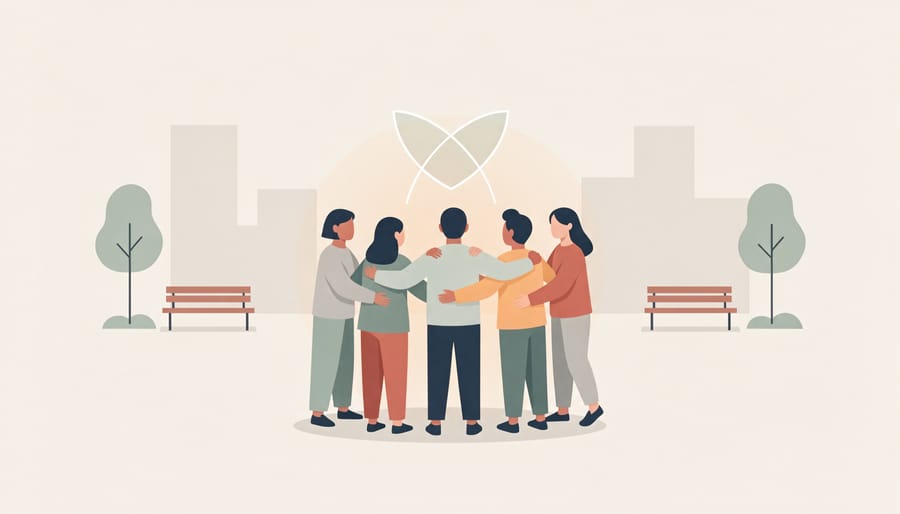 Community members come together in solidarity, showing that mental health support can be shared and strengthened in everyday public spaces.
Resources and Support for Your Journey
Finding the right support starts with knowing where to look. Whether you’re planning workplace initiatives, seeking personal guidance, or supporting someone else’s mental health journey, these verified resources offer practical tools and information.
The World Health Organization’s official World Mental Health Day campaign page provides global context and annual themes set by the World Federation for Mental Health. For Canadian-specific observances, the Government of Canada’s health promotion calendar confirms October 10 as the designated date. Organizations planning workplace events can reference this planning guide, which outlines concrete steps for meaningful observation. UFCW Canada’s mental health resources webpage offers workplace-specific tools for addressing challenges in professional settings.
- Campaign Information
- WHO and Mental Health UK sites provide official themes, history, and global participation ideas. Best for understanding the day’s broader context and annual focus areas.
- Workplace Planning Tools
- Guides from UFCW Canada and Workplace Options deliver step-by-step frameworks for organizing events. Ideal for HR professionals and team leaders preparing October activities.
- Educational Resources
- Our own materials, including anxiety 101 content and specialized guides like dentist anxiety offer accessible learning for specific mental health concerns. Suited for individuals seeking foundational knowledge or coping strategies.
- Real-Time Support
- Digital and face-to-face services provide immediate assistance for those experiencing mental health challenges. Available for crisis situations or ongoing support needs.
Remember that World Mental Health Day highlights resources that remain available throughout the year. If you’re struggling right now, our real-time support services connect you with help immediately, not just on October 10. Education materials like our foundational guides work alongside community resources to build understanding and reduce isolation. The day itself serves as a reminder that support exists whenever you need it.
World Mental Health Day 2026 is more than a date on the calendar. It’s an invitation to begin or deepen your commitment to mental health, whether that means starting a conversation at work, reaching out for support, or simply acknowledging your own struggles with more compassion.
We recognize that everyone arrives at this day from a different place. Some of you are navigating your own mental health challenges. Others are supporting loved ones who are struggling. Many are working to create healthier environments in your workplaces and communities. Wherever you are in your journey, your participation matters.
The resources, tools, and support options we’ve shared aren’t just for October 10. They’re available whenever you need them. Real-time support, educational materials, and practical workplace guides remain accessible year-round because mental health doesn’t pause between awareness days.
If you’re ready to take a step, whether that’s downloading a workplace planning resource, joining a conversation, or reaching out for help, start where you are. There’s no wrong entry point, and you don’t have to navigate this alone.