Category: Uncategorized

A professional sits at a desk in an office with a composed outward expression, while their tense posture suggests high-functioning anxiety.

High Functioning Anxiety: Why Looking ‘Fine’ on the Outside Doesn’t Mean You Are

You check every item off your to-do list, meet every deadline, and maintain a smile that convinces everyone you’re thriving. Inside, though, your mind races with worst-case scenarios, your chest tightens before meetings, and you lie awake replaying conversations from three days ago. This is high functioning anxiety, and if you’re reading this, you probably recognize yourself in those words.

Unlike the anxiety that keeps people home in bed, high functioning anxiety drives you forward. You’re the colleague who always volunteers for extra projects, the friend who never cancels plans, the person others describe as “having it all together.” But that external success comes at a cost: constant mental exhaustion, perfectionism that feels more like a prison than a strength, and a nagging fear that if you slow down even slightly, everything will fall apart.

Here’s what makes high functioning anxiety so difficult to recognize and address: it’s praised. Your boss calls you reliable. Your family sees you as the responsible one. Society rewards your overachievement while the anxiety fueling it remains invisible. You’ve likely questioned whether your experience even counts as anxiety because you’re still functioning, still succeeding, still showing up.

But functioning doesn’t mean flourishing. The fact that you can push through doesn’t mean you should have to live this way.

If you’re exhausted from maintaining the perfect facade, if the gap between how you appear and how you feel keeps widening, you’re not imagining it. Your experience is real, valid, and surprisingly common among high achievers in 2026. More importantly, there are concrete strategies that can help you find genuine calm without sacrificing your ambition or success. You deserve support that recognizes both your strengths and your struggles.

What High Functioning Anxiety Actually Looks Like

Person adjusting a tie while looking into a mirror in a modern office bathroom, suggesting hidden stress despite a composed appearance.
A professional looks composed on the outside while their reflection and posture suggest inner tension they may not share with others.

The Three Telltale Signs You Can’t Ignore

Recognizing high functioning anxiety isn’t always straightforward. Unlike more visible forms of distress, these patterns often hide behind impressive résumés and packed calendars. Understanding the distinction between normal vs abnormal anxiety helps, but high functioning anxiety occupies a particularly deceptive middle ground where external success masks internal struggle.

**Perfectionism That Drives Overwork**

This isn’t the healthy pursuit of excellence. It’s checking emails at 11 PM because you’re convinced you missed something critical. It’s rewriting a presentation five times when the first version was already strong. You set impossibly high standards, then beat yourself up for not exceeding them. Your colleagues see someone who consistently delivers exceptional work. You experience every project as a tightrope walk where one misstep means catastrophe. The overwork isn’t about ambition; it’s about quieting the voice insisting nothing you do is good enough.

**Constant Fear of Failure Despite Success**

Your performance reviews are excellent. You’ve been promoted. People seek your expertise. Yet you’re convinced you’re moments away from being exposed as incompetent. This fear doesn’t respond to evidence. Each accomplishment feels like you’ve fooled everyone again rather than earned recognition. You attribute success to luck, timing, or other people’s generosity, never your own competence. The anxiety doesn’t decrease with achievement; it escalates. More responsibility means more ways to fail, more people to disappoint.

**Inability to Rest or Disconnect**

Your body forgot how to relax. Vacations feel stressful because work piles up. Weekends mean catching up on tasks you couldn’t finish during the week. Even during downtime, your mind races through tomorrow’s to-do list. You might fall asleep easily from exhaustion but wake at 3 AM mentally solving problems. Rest feels irresponsible when there’s always something more you could be doing. You’ve built an identity around productivity, and stillness triggers guilt rather than restoration.

These three patterns often appear together, creating a cycle where perfectionism fuels overwork, fear of failure prevents rest, and exhaustion intensifies anxiety.

High Functioning Anxiety in the Canadian Workplace

When Your Achievements Become Your Prison

Success doesn’t cure anxiety, it often feeds it. Each promotion, each achievement, each milestone you hit just raises the bar higher in your own mind. Instead of celebrating, you’re already worried about the next performance review, the next project, the next way you might fall short. What looks like ambition from the outside feels like a treadmill you can’t step off.

This is the paradox at the heart of high functioning anxiety: your accomplishments become evidence of how much you have to lose. The better you perform, the more pressure you feel to maintain that standard. One colleague describes it as “building a reputation I’m terrified I can’t live up to.” The achievements that should prove your competence instead become proof of how far you could fall.

For leaders and high-achievers, this creates a sustainability crisis. Recent work addressing the intersection of high functioning anxiety and leadership sustainability highlights how professionals who appear most successful often struggle most with internal pressure. They overwork to maintain their image, say yes to everything, and drive themselves toward burnout while their teams see only confidence and capability.

The workplace anxiety that comes with success-driven pressure compounds over time. You can’t delegate because no one else will do it “right.” You can’t take vacation because things might fall apart without you. You can’t admit struggle because that would contradict the competent persona you’ve built. Your achievements become a prison with invisible bars, ones you’ve constructed yourself, one successful project at a time.

Breaking this cycle requires recognizing that sustainable success doesn’t mean never struggling. It means building systems that allow you to perform well without destroying yourself in the process.

Hands gripping a pen over a notebook next to a glowing phone and closed laptop on a desk in a home office.
The desk scene captures the push-pull of high functioning anxiety, staying productive while the body holds tension and can’t fully detach.

The Remote Work Factor

Remote work has transformed the Canadian workplace landscape, but for those managing high functioning anxiety, the flexibility that promised freedom has often created new forms of pressure. Without physical boundaries between office and home, work expands to fill every available hour. You find yourself checking email at 9 p.m. because your laptop is always within reach. Morning meetings start earlier when there’s no commute. That “quick task” after dinner becomes two hours of work you can’t stop thinking about.

The visibility paradox compounds this pressure. When your team can’t see you physically present, you overcompensate by being hyper-responsive on Slack, joining every optional meeting, and producing more deliverables than necessary to prove you’re working. The fear that colleagues might doubt your productivity drives you to maintain constant availability, even when you’re exhausted. Video calls add another layer, turning each interaction into a performance where you manage not just your work but your environment, appearance, and perceived engagement level.

Isolation from workplace support systems that once offered natural breaks and perspective makes everything harder. The colleague who would notice you seemed stressed isn’t there. The casual hallway conversation that helped you reality-check a worry doesn’t happen. You’re left alone with spiraling thoughts, no external cues to stop working, and the nagging sense that everyone else handles remote work better than you do.

Recognizing High Functioning Anxiety in Daily Life

High functioning anxiety doesn’t clock out when you leave work. It follows you home, shapes how you parent, strains your closest relationships, and makes basic self-care feel impossible. You might excel at meeting everyone else’s needs while your own go ignored, or find yourself unable to enjoy social events because you’re mentally running through tomorrow’s to-do list.

In relationships, high functioning anxiety often shows up as people-pleasing that breeds resentment. You say yes when you mean no, overcommit to avoid disappointing others, and struggle to communicate your actual needs because you fear being seen as difficult or demanding. Partners might describe you as distant or preoccupied even when you’re physically present, because part of your mind is always planning, worrying, or rehearsing conversations that haven’t happened yet. Anxiety at home creates a constant low-grade tension that affects everyone around you, even when you think you’re hiding it well.

For parents, the pressure doubles. You want to model healthy habits while internally spiraling about whether you’re doing enough, doing it right, or permanently damaging your kids through your imperfections. You might over-schedule your children’s activities, micromanage their homework, or lose sleep catastrophizing about their futures. The irony is that while you appear to be the organized, involved parent everyone admires, you’re exhausted and convinced you’re failing.

Social situations become performances. You attend events because you should, then spend the entire time monitoring how others perceive you rather than actually connecting. Canceling plans triggers guilt, but attending drains you completely. You might notice you can’t remember the last time you did something purely for enjoyment without turning it into another task to optimize or accomplish.

Self-care falls to the bottom of an endless list. Exercise becomes another obligation you berate yourself for missing. Relaxation feels wasteful when there’s always something productive you could be doing instead. You tell yourself you’ll rest after this project, this deadline, this milestone, but the finish line keeps moving, and the rest never comes.

Person sitting on a sofa at night with tense posture, warm lamp light on one side, and blurred city lights outside the window.
A calm home setting at night highlights how high functioning anxiety can keep someone alert and unable to truly rest, even when life slows down.

Coping Strategies That Actually Work

Redefining Productivity and Rest

For years, you’ve heard that constant hustle equals success. But that framework ignores a fundamental truth: your brain needs downtime to function optimally. Rest isn’t the opposite of productivity; it’s what makes sustainable productivity possible.

Start by tracking your actual energy levels rather than hours worked. Notice when you’re genuinely focused versus when you’re spinning your wheels out of anxiety. That distinction matters more than any productivity hack.

Set boundaries that protect your capacity, not just your calendar. This means turning off Slack after 7 PM, taking real lunch breaks away from your screen, and scheduling non-negotiable recovery time the same way you schedule meetings. High achievers often resist this, viewing boundaries as weakness. They’re actually what prevent burnout.

Reframe rest as active maintenance, not passive laziness. Elite athletes understand that recovery days build strength. Your mind works the same way. A Sunday afternoon reading or a weeknight without your laptop isn’t lost productivity; it’s necessary for Monday’s performance.

Practice saying no to good opportunities that don’t serve your priorities. This feels impossible when anxiety tells you every request is urgent and every opportunity is your last. It’s not. Protecting your bandwidth lets you excel at what truly matters instead of burning out across twenty mediocre commitments.

The goal isn’t perfect balance. It’s building rhythms where achievement and recovery coexist, where you can succeed without sacrificing your wellbeing on the altar of perpetual motion.

Professional Support Options

Reaching out for professional support isn’t admitting defeat, it’s recognizing that managing high functioning anxiety effectively often requires expert guidance. Therapy offers several evidence-based approaches that work particularly well for high achievers. Cognitive Behavioral Therapy (CBT) helps identify and reframe the perfectionistic thought patterns driving your anxiety, while Acceptance and Commitment Therapy (ACT) teaches you to pursue meaningful goals without being controlled by anxiety. Many Canadians also find success with specialized coaching that addresses workplace performance anxiety and boundary-setting.

Knowing when self-help strategies aren’t enough is crucial. If your anxiety interferes with sleep, relationships, or physical health despite your coping efforts, professional support becomes essential. The same applies if you’re experiencing burnout, relying on substances to manage stress, or finding that achievement no longer brings satisfaction.

Accessing support in Canada has become more straightforward in 2026, with many therapists offering virtual sessions covered by employee assistance programs or extended health benefits. Mental health stigma continues to decrease as more professionals openly discuss their own experiences with therapy and coaching. You can start by asking your family doctor for referrals, checking your workplace benefits for covered services, or exploring directories of registered psychologists and therapists in your province. Many practitioners now specialize in high functioning anxiety and understand the unique challenges facing ambitious, successful individuals who struggle internally.

Resources and Support for Canadians

Finding support for high functioning anxiety doesn’t mean you’ve failed at managing it alone. It means you’re ready to build a sustainable path forward. Canada offers a growing network of resources designed for people who’ve mastered appearing capable while struggling internally.

Several national organizations provide tailored support for high functioning anxiety. The Anxiety Disorders Association of Canada offers virtual peer support groups where high achievers discuss the unique pressures of maintaining external success while managing internal distress. Many provincial health services now include online cognitive behavioral therapy programs specifically addressing perfectionism and overwork patterns common in high functioning anxiety.

Local community resources are expanding across Canada to meet this need:

  • Free English-language workshops on high functioning anxiety and hustle culture, accessible to all Canadians
  • In-person and virtual therapy options through provincial mental health programs
  • Workplace Employee Assistance Programs (EAPs) offering confidential counseling for career-related anxiety
  • Digital mental health platforms providing 24/7 access to guided exercises and self-assessment tools
  • Community mental health centers in major cities offering sliding-scale therapy fees

For those in the Greater Toronto Area, in-person workshops scheduled for September 2026 will address the intersection of high functioning anxiety and professional sustainability. Virtual attendance options ensure Canadians nationwide can participate regardless of location.

Professional development resources are also recognizing this issue. A recent April 2026 publication explores how leaders can sustain their careers while managing high functioning anxiety, offering frameworks for balancing achievement with mental wellness.

Crisis support remains available any time through Canada’s Crisis Services network at 1-833-456-4566, offering immediate text or phone support when anxiety becomes overwhelming. Remember that reaching out for help demonstrates the same problem-solving skills you apply elsewhere in your life.

Hands placing a small stone into a glass jar under soft studio lighting, symbolizing release and grounding.
A symbolic “release” moment shows how easing pressure and boundaries can create room to breathe, even for high achievers.

Your achievements are real. Your struggles are real too. They can both be true at the same time.

If you’ve recognized yourself in these pages, you’re not alone. Thousands of Canadians are navigating the same tension between outward success and internal overwhelm. The fact that you’re high-performing doesn’t mean your anxiety is less valid, and seeking support isn’t a sign that you’re failing. It’s actually the opposite: choosing to address what’s happening beneath the surface takes courage and self-awareness.

High functioning anxiety doesn’t have to be a life sentence. With the right strategies, professional guidance when needed, and a community that understands, you can maintain your drive without burning out. You can achieve your goals while also taking care of yourself. The two aren’t mutually exclusive.

You don’t have to figure this out alone. Mental Health Support offers resources specifically designed for people like you who are managing anxiety while staying engaged with work and life. Whether you need immediate support during a difficult moment or want to explore longer-term strategies, help is available.

If you’re struggling right now, our real-time support options connect you with someone who can listen without judgment. You’ve spent enough time looking fine on the outside. It’s time to feel better on the inside too.

A calm adult kneels beside a seated person showing distress while another person stands nearby in a supportive, crisis-intervention setting.

Why Mental Health First Aid Canada Is Changing How We Respond to Crisis

When someone you care about shows signs of a mental health crisis, knowing what to say or do in those first critical moments can mean everything. Mental Health First Aid Canada gives ordinary people the skills to recognize when someone is struggling, respond with confidence instead of panic, and connect them to professional help before a situation escalates.

Since 2006, this national program has trained over 500,000 Canadians to support friends, family members, coworkers, and strangers facing mental health challenges or substance use concerns. Unlike standard first aid, which prepares you to handle physical emergencies, this training focuses on psychological crises: severe anxiety attacks, suicidal thinking, psychosis, substance overdoses, and trauma responses.

The program was developed by the Mental Health Commission of Canada, the same organization that created national workplace standards and anti-stigma campaigns. It’s evidence-based, continuously updated, and recognized by employers, schools, and healthcare organizations across the country.

Sarah, a high school teacher from Halifax, describes the moment her training clicked: “A student came to me having a panic attack, and instead of freezing or saying the wrong thing, I actually knew how to help. I recognized the signs, stayed calm, and used the exact steps I’d learned. That student later told me I was the first person who made them feel safe enough to ask for help.”

The certification isn’t just for professionals. Parents learn to spot early warning signs in their teenagers. Managers discover how to start difficult conversations with struggling employees. Friends gain the language to check in without making things worse.

If you’ve ever felt helpless watching someone suffer, or worried you’d say the wrong thing during a crisis, this training addresses exactly that gap. You’ll learn practical intervention techniques that work in real situations, not theoretical concepts that sound good on paper.

Person sitting beside a distressed person on a couch in a calm, supportive living room setting
A quiet moment of support shows how staying present can help someone feel less alone during a mental health crisis.

What Mental Health First Aid Canada Actually Is

Mental Health First Aid Canada is a national program designed to teach everyday people how to recognize and respond to mental health challenges in their communities. Established in 2006 through a partnership with the Mental Health Commission of Canada, it’s built on a simple but powerful idea: just as we learn CPR to help during a physical health emergency, we can learn skills to support someone experiencing a mental health crisis or developing a mental health problem.

Here’s what it isn’t: MHFA Canada doesn’t train you to become a therapist or diagnose conditions. You won’t leave certified to provide ongoing treatment. Instead, think of it as the mental health equivalent of physical first aid, you’re learning to be the person who steps in during those crucial early moments, offering support until professional help takes over.

The program teaches you to spot warning signs that someone might be struggling, whether that’s a colleague showing signs of burnout, a family member experiencing depression, or a friend in acute distress. You learn practical skills for approaching someone with empathy, listening without judgment, and guiding them toward appropriate professional resources. It’s about bridging that gap between when someone first shows signs of struggle and when they access formal care.

One common misconception is that you need a medical or counseling background to take the training. You don’t. MHFA courses are designed for adults 18 and older who interact with other adults in any setting, workplaces, schools, community groups, or just everyday life. The program now offers official certification, giving participants recognized credentials that demonstrate their commitment to mental health literacy.

What makes this training particularly valuable in 2026 is how it normalizes mental health conversations and reduces stigma. You’re not just learning skills; you’re becoming part of a movement that treats mental health with the same seriousness and compassion we extend to physical health.

The Three Ways You Can Get Certified

When you decide to get trained in Mental Health First Aid, you’ll choose from three distinct course types, each tailored to different needs and circumstances. All three programs lead to official certification, marking a significant shift in how mental health education is recognized across Canada.

The basic Adult Mental Health First Aid course forms the foundation. It’s designed for adults interacting with other adults aged 18 and older, teaching you to recognize signs of mental health challenges in your peers, colleagues, family members, and community. This course covers a broad spectrum of situations, from supporting someone experiencing dentist anxiety that escalates into panic to recognizing early warning signs of depression or substance use concerns. You’ll learn the ALGEE action plan and gain confidence in providing that crucial initial support before professional help arrives.

Course Type Who It’s For Format Options Certification
Adult MHFA Adults helping adults 18+ In-person, virtual, blended Official certification available
Youth-Focused MHFA Adults working with young people In-person, virtual, blended Official certification available
Specialized Workplace MHFA Employers, managers, HR professionals In-person, virtual, blended Official certification available

The second option focuses on youth mental health, equipping adults who work with or care for young people. Teachers, coaches, youth leaders, and parents often choose this course because it addresses the unique ways mental health challenges present in adolescents and young adults. The training acknowledges that signs of distress look different in a 15-year-old than in a 45-year-old.

Finally, specialized workplace courses adapt the core MHFA principles to professional settings. These programs help managers and colleagues create mentally healthier work environments, recognize burnout and stress in team members, and respond effectively without overstepping boundaries or making assumptions about someone’s private struggles.

Each course now offers multiple delivery formats in 2026. You can attend in person for the full immersive experience, join virtual sessions that fit your schedule, or opt for blended learning that combines self-paced online modules with live interactive components. The certification you earn is the same regardless of format, officially recognized through the Mental Health Commission of Canada’s partnership with MHFA Canada, which has been developing these programs since 2006.

Diverse group attending a mental health training session in a community room
This training-room scene reflects how Mental Health First Aid Canada helps everyday people build readiness and confidence.

Real Stories: When Mental Health First Aid Made the Difference

Sara had noticed her 16-year-old son pulling away for months. He’d stopped going to basketball practice, barely touched his dinner, and spent hours alone in his room. She’d chalked it up to typical teenage moodiness until the MHFA course taught her to recognize the pattern: persistent withdrawal, changes in eating habits, loss of interest in activities he once loved. These weren’t just phases. They were warning signs.

“The training gave me permission to have that conversation I’d been avoiding,” Sara says. “I approached him without judgment, told him what I’d noticed, and just listened. Really listened, without trying to fix everything immediately.” Her son opened up about feeling worthless and exhausted all the time. Instead of panicking or dismissing his feelings, Sara used what she’d learned. She validated his experience, helped him understand he wasn’t alone, and together they reached out to their family doctor the next day. “MHFA didn’t make me a therapist. It made me a parent who knew how to be present in the scariest moment of my life.”

Marcus never expected he’d need mental health skills at his accounting firm. Then his colleague James started missing deadlines, snapping at teammates, and looking visibly shaken during meetings. Most people avoided him. Marcus recognized anxiety at home from his own family’s experience, but workplace anxiety looked different. After his MHFA training, he felt equipped to check in.

He caught James after work one day. “Hey, I’ve noticed you seem stressed lately. Want to grab coffee?” That simple opening led to James sharing that he’d been having panic attacks and didn’t know what to do. Marcus didn’t try to counsel him, but he did listen, share information about the employee assistance program, and follow up the next week. James got help. Their team got stronger. “I didn’t save his life,” Marcus says. “I just showed up when it mattered.”

These moments happen quietly, in living rooms and office hallways, because someone learned to recognize pain and respond with confidence instead of fear. That’s the real difference MHFA makes.

What You’ll Actually Learn in the Course

The Mental Health First Aid course isn’t about diagnosing mental illness or replacing professional therapists. Think of it more like learning CPR for the mind, practical skills that help you support someone in distress until they can access appropriate care.

At the heart of the training is the ALGEE action plan, a five-step framework that makes responding to mental health situations feel less overwhelming. ALGEE stands for: Approach the person and assess their needs, Listen without judgment, Give support and information, Encourage professional help, and Encourage self-help strategies. You’ll practice each step through realistic scenarios, learning how to have difficult conversations with confidence rather than fear.

Before you can offer help, though, you need to spot the signs. The course teaches you to recognize early warning signals across a range of mental health challenges, depression, anxiety disorders, psychosis, substance use issues, and trauma responses. You’ll learn to distinguish between normal vs abnormal reactions to stress, and when someone might need immediate support.

Crisis situations get dedicated attention. You’ll learn specific protocols for supporting someone experiencing suicidal thoughts, panic attacks, or acute psychotic episodes. These sections are taught with sensitivity and practical guidance, preparing you to stay calm and helpful when someone’s safety is at stake.

The training covers skills like:

  • Recognize early signs that someone’s mental health may be declining
  • Start supportive conversations without making assumptions or offering quick fixes
  • Provide reassurance and practical information about resources
  • Guide someone toward professional help without forcing or shaming them
  • Respond safely and effectively in crisis situations
  • Maintain appropriate boundaries while offering support

What surprised many past participants is how much time the course spends on understanding stigma, both the external kind that stops people from seeking help, and the internalized shame that can make mental health challenges feel isolating. You’ll examine your own beliefs and learn language that supports rather than marginalizes.

Finally, the course emphasizes self-care for helpers. Supporting someone through mental health struggles can be emotionally demanding. You’ll learn to recognize your own limits, manage secondary stress, and protect your wellbeing while showing up for others. This isn’t selfish, it’s essential for sustainable support.

Hands offering a warm glow symbolizing compassionate support during a mental health crisis
The glowing light symbolizes compassionate, immediate support, bridging the gap until professional help arrives.

Who Should Consider Taking This Training

You don’t need a psychology degree or healthcare background to learn these skills. The training is designed for any adult over 18 who wants to be better prepared to support someone in emotional pain. It’s for the people already in positions of care and influence, and for those who simply want to show up differently when it matters.

Parents find this training especially valuable. When your teenager withdraws to their room for days or your young adult child mentions feeling hopeless, recognizing these signs early can change the outcome. The same applies to teachers who notice a shift in a student’s behaviour or engagement, giving them concrete ways to approach difficult conversations without crossing professional boundaries.

Workplace leaders and managers increasingly recognize that supporting team members dealing with workplace anxiety depression, or stress isn’t just compassionate, it’s essential. This training equips them to respond thoughtfully rather than avoiding these situations altogether. Community leaders, faith group facilitators, and volunteers who work with vulnerable populations gain confidence in handling crises they may have previously felt unprepared for.

Healthcare workers, even those outside mental health specialties, benefit from structured approaches to mental health conversations. Front-line staff in emergency services, social work, and education often encounter people in distress but may lack formal training in this specific area.

Here’s the truth: mental health challenges don’t discriminate, and they don’t only appear during office hours or in clinical settings. They show up at family dinners, in locker rooms, during late-night texts from friends. Mental health literacy matters because we all exist in a web of relationships where someone might need us. Being prepared to recognize struggle and respond with compassion isn’t a specialized skill reserved for professionals. It’s a form of care we can all offer.

How to Get Started with MHFA Canada

Getting started is straightforward. Visit the Mental Health Commission of Canada’s official website to explore current course offerings and find instructors in your area. You can search by location, course type, and delivery format, whether you prefer in-person sessions or the flexibility of online learning. Most courses run 12-14 hours total, typically spread across two full days or several evening sessions, making them accessible even with busy schedules.

Tip: Check with your employer, school, or local community organization, many sponsor or subsidize MHFA training for staff, students, or members at reduced or no cost.

Once you complete the training, you’ll receive official certification that demonstrates your competency in mental health first aid principles. The Mental Health Commission of Canada partners with various training providers across the country, so course fees and specific schedules vary by region and instructor. You don’t need any prerequisites or medical background to enroll, just a commitment to learning. If you’re uncertain which course type fits your needs, whether you’ll be working with youth, adults, or specific populations dealing with challenges like Anxiety 101 most providers offer guidance to help you choose. Registration typically happens online through your chosen provider’s portal, and you’ll receive materials before your first session begins.

When someone you care about is struggling, the question isn’t whether you should help. It’s whether you’ll know how. Mental Health First Aid Canada exists because we all deserve to be surrounded by people who can show up with both compassion and confidence when mental health challenges arise.

Taking this training is more than earning a certification. It’s choosing to be the person who notices, who listens without judgment, who stays calm when someone else can’t. It’s an investment in your family, your workplace, and your community. Every person trained creates a ripple effect of support that extends far beyond a single crisis moment.

Whether you’re a parent wanting to better understand your teenager, a manager hoping to create a psychologically safer workplace, or simply someone who wants to be there for the people around you, this training meets you where you are. You don’t need a medical background or special expertise. You just need to care enough to learn.

If you’re ready to take the next step, visit the Mental Health Commission of Canada’s website to explore course options in your area. Share this information with colleagues, friends, or family members who might benefit. Every conversation we start about mental health makes it easier for the next person to ask for help.

And if you or someone you know needs support right now, remember that real-time crisis resources are available 24/7 through organizations across Canada. You’re not alone in this.

Silhouetted person sitting in a parked car outside a therapist’s office, representing fear and hesitation caused by mental health stigma.

What Is Stigma in Mental Health (And Why It Stops People From Getting Help)

The whispers in the waiting room. The job application you didn’t send. The friend who slowly stopped calling after you opened up about your depression.

Mental health stigma isn’t just an abstract concept. It’s the lived experience of millions who face judgment, discrimination, and shame simply because they’re struggling with something as human as anxiety, depression, or bipolar disorder. In 2026, even as conversations about mental health become more visible, stigma remains one of the biggest barriers preventing people from seeking help, staying in treatment, and living fully.

“I remember sitting in my car outside the therapist’s office for 20 minutes, terrified someone I knew would see me walking in,” shares Maya, 34, who was seeking support for postpartum depression. “I felt like I was admitting failure as a mother, as a person.”

Stories like Maya’s happen every day. Research shows that nearly 60% of people with mental health conditions don’t receive treatment, and stigma is a leading reason why. The fear of being labeled, misunderstood, or treated differently keeps countless individuals suffering in silence.

But here’s what you need to know: stigma isn’t inevitable, and it isn’t your fault. It’s a learned response based on outdated beliefs, lack of education, and cultural narratives that paint mental health struggles as character flaws rather than medical conditions deserving of care and compassion.

Understanding what stigma is, how it shows up in your life, and why it persists is the first step toward dismantling its power. Whether you’re personally affected by mental health stigma, supporting someone who is, or working to create change in your community, knowledge becomes a tool for transformation. Because once we can name what’s happening, we can begin to challenge it.

Understanding Stigma: What It Really Means

At its core, stigma is the weight of other people’s judgments landing on your shoulders simply because you’re facing a mental health challenge. Health Canada defines it as negative attitudes and beliefs directed at a group of people because of their situation in life. When it comes to mental health, that means someone sees you differently, treats you differently, or makes assumptions about who you are based solely on your diagnosis or struggles.

Think of stigma as a filter that distorts how people see you. Instead of recognizing the full person you are, they fixate on the mental health issue and let stereotypes fill in the rest. Maybe they assume you’re dangerous, unreliable, or weak. Maybe they think you should just “snap out of it” or that you somehow chose this path. These misconceptions create real barriers that shape how you move through the world.

But stigma isn’t just about what others think. It’s also about what happens when those attitudes get internalized. When you hear enough times that mental illness is shameful, you might start believing it. When society treats seeking help as a sign of failure, you might convince yourself you should handle everything alone. This is why understanding stigma matters so much: it operates on multiple levels, from whispered comments to workplace policies, from media portrayals to the voice inside your own head telling you that you don’t deserve support.

The truth is, stigma thrives in silence and misunderstanding. It loses power when we name it clearly and recognize how it works. Because once you can identify stigma for what it is, whether it’s coming from your neighbor, your employer, or yourself, you can start pushing back against it.

A person hesitating in a quiet hallway near a closed door, symbolizing fear of being judged when seeking help.
A person hesitates to reach out, capturing how stigma can make help feel out of reach.

The Three Faces of Mental Health Stigma

Public Stigma: When Society Labels You

Public stigma lives in the assumptions people make before they know your story. It’s the coworker who jokes about someone being “psycho” after a stressful meeting. It’s the relative who says depression is just laziness, or the friend who distances themselves when you mention anxiety because they’re uncomfortable with anything that doesn’t fit their idea of normal vs abnormal behavior.

These stereotypes get reinforced everywhere. News coverage often links mental illness to violence, even though people with mental health challenges are far more likely to be victims than perpetrators. Social media memes turn serious conditions into punchlines. Even well-meaning people whisper about mental health like it’s shameful, something to hide rather than address.

Common misconceptions fuel this cycle: that mental illness means weakness, that people can just “snap out of it,” that therapy is only for people who are “really sick,” or that medication is a crutch. These beliefs aren’t just wrong, they’re dangerous. They create an environment where seeking help feels like admitting failure, where 60% of people with mental health concerns stay silent rather than risk the label.

Self-Stigma: The Voice Inside Your Head

Self-stigma might be the cruelest form of all because it doesn’t come from strangers or institutions. It comes from you.

When you’ve heard people say “just get over it” or “it’s all in your head” enough times, you start believing them. You begin to see yourself through society’s harsh lens. That voice in your head whispers that you’re weak for struggling, that others handle stress better, that asking for help means you’ve failed somehow.

This internalized shame shows up in subtle ways. You cancel therapy appointments because you tell yourself you’re “not sick enough to need it.” You hide your medication bottles when friends visit. You rehearse explanations for why you’ve been distant, editing out anything that hints at depression or anxiety.

The weight of self-stigma often hurts more than the original mental health challenge. You’re fighting two battles: the condition itself and your own harsh judgment of having it. That internal critic keeps you isolated, convinced that if people really knew what was going on, they’d see you differently.

But here’s what matters: those thoughts aren’t facts. They’re learned responses you absorbed from a world that still misunderstands mental health. And what’s learned can be unlearned.

Person holding their chest in front of a mirror with a discouraged expression, symbolizing internalized shame.
This image represents self-stigma, when negative beliefs begin to feel like they belong to you.

Structural Stigma: When Systems Fail You

Structural stigma lives in the very systems meant to help us. It’s discrimination baked into policies, insurance plans, and healthcare institutions themselves.

Many employers still treat mental health coverage as an afterthought. While physical health conditions receive comprehensive benefits, mental health services often face strict session limits, higher co-pays, or outright exclusions. Some insurance plans cap therapy visits at ten per year, a number that wouldn’t sustain treatment for chronic conditions like anxiety or depression.

Healthcare systems themselves can perpetuate stigma. Emergency departments sometimes lack proper mental health crisis protocols, leaving people in distress waiting hours in hallways without specialized support. Primary care offices may have no mental health screening processes, missing opportunities for early intervention because mental health simply isn’t prioritized like physical health.

Schools and universities create barriers too. Some institutions require students to take medical leave for mental health struggles rather than offering reasonable accommodations they’d provide for physical conditions. Housing policies can discriminate against applicants with documented mental health histories.

These structural failures compound the shame people already feel. When systems signal that mental health doesn’t matter as much as physical health, they reinforce the message that struggling makes you less worthy of support.

People in a clinic waiting room with one person standing at the doorway, suggesting stigmatizing experiences in healthcare.
The scene conveys how stigma can show up through healthcare settings, through distance, discomfort, or unfair treatment.

The Real Cost: How Stigma Keeps People Suffering in Silence

The numbers tell a story that’s hard to ignore. According to the Mental Health Commission of Canada, 60% of people with a mental health problem or illness won’t seek help for fear of being labeled. That’s three out of every five people choosing to suffer alone rather than risk the judgment that comes with asking for support.

Note: 60% of people with mental health concerns won’t seek help due to stigma. With 1 in 5 Canadians affected annually and half experiencing concerns by age 40, that’s millions suffering unnecessarily. Even more troubling, 40% of parents wouldn’t tell anyone, including their family doctor, if their child was struggling.

But here’s what makes these statistics even more devastating. Mental health challenges aren’t rare. One in five people experience a mental health problem or illness each year. By age 40, half of us will have faced a mental health concern. These aren’t small numbers affecting a distant group. This is your coworker who’s been quieter lately, your sister who canceled plans again, your neighbor who seems fine but isn’t sleeping.

Consider what happens when parents stay silent. About 40% say they wouldn’t tell anyone, including their family doctor, if their child was experiencing a mental health problem. Think about that for a moment. A parent notices their child is struggling, sees the signs, feels the worry, and still stays quiet because they fear what others might think or how it might follow their kid through life.

Sarah’s story shows what this silence costs. She spent two years convinced her panic attacks meant she was weak. She’d leave work early, claiming migraines, because admitting anxiety felt like admitting failure. By the time she finally reached out for help, she’d lost a promotion, damaged close relationships, and developed depression on top of the anxiety she’d been hiding.

The gap between needing help and getting it isn’t about resources alone. It’s about fear. Fear of the label. Fear of being seen differently. Fear that admitting struggle means confirming every negative stereotype about mental illness that society has taught us.

This silence compounds itself. When people don’t seek help, their conditions often worsen. Untreated anxiety can lead to depression. Untreated depression can become life-threatening. Meanwhile, because so many suffer in silence, others look around and think they’re alone in their struggle, which makes them less likely to speak up too.

The real cost isn’t just in the statistics. It’s in the years people spend trying to manage alone. The relationships strained by unexplained behavior. The careers derailed by untreated symptoms. The potential never realized because someone believed the stigma more than they believed in their right to feel better.

A cracked ceramic mask on a table next to an open journal, symbolizing how stigma can be broken and replaced with honesty.
A broken mask symbolizes public stigma, how stereotypes can be exposed, shattered, and replaced with authenticity.

Where Stigma Shows Up in Everyday Life

Stigma doesn’t announce itself with a warning label. It shows up in ordinary moments, small comments, and everyday decisions that add up to profound isolation for people struggling with their mental health.

At work, it’s the colleague who jokes about someone being “crazy” in a meeting, or the promotion you don’t apply for because you’re terrified your manager will find out about your depression. It’s taking sick days but lying about having the flu instead of saying you’re dealing with severe anxiety, because you know mental health isn’t treated the same way as physical illness. Some people avoid workplace mental health benefits entirely, worried that using them will create a paper trail that marks them as unstable or unreliable.

In families, stigma wears the face of good intentions gone wrong. Parents tell their adult child to “just think positive” or “snap out of it” when they’re battling clinical depression. Siblings minimize what you’re going through because you don’t “look sick.” Family gatherings become minefields where you rehearse explanations for why you’re on medication or seeing a therapist, preparing for judgment disguised as concern. The 40% of parents who wouldn’t tell anyone, including their family doctor, if their child had mental health concerns aren’t being secretive for no reason. They’re protecting their kids from a world that still treats mental illness as something shameful.

Among friends, it’s the subtle distance that forms after you open up. Invitations slow down. People start treating you as fragile or unpredictable. You notice friends sharing their struggles with each other but not with you anymore, as if your diagnosis has disqualified you from being someone who can support others.

In dating, stigma shows up in the calculations you make about when, whether, and how to disclose your mental health history. You’ve seen the profiles that list “no drama” as a requirement, code for rejecting anyone with emotional complexity. You wonder if you’re obligated to mention your bipolar disorder on a third date or if waiting makes you dishonest.

In healthcare settings, it’s doctors who dismiss your physical symptoms once they see “anxiety” in your chart. It’s insurance companies that cap mental health coverage far below what they’ll pay for physical conditions. It’s emergency rooms where psychiatric patients wait longer and receive less compassionate care.

Online, stigma thrives in comment sections where people with mental illness are called “attention-seeking” or told their struggles aren’t real. Social media becomes another place to curate a version of yourself that hides the truth.

These aren’t abstract examples. They’re the daily reality that keeps people suffering in silence.

Breaking the Silence: What’s Being Done to Fight Stigma

The fight against mental health stigma isn’t just happening in quiet conversations anymore. Across Canada, organizations, communities, and individuals are actively working to change the narrative, and the progress is measurable.

The Mental Health Commission of Canada’s Opening Minds initiative has trained nearly 1 million people in contact-based education as of 2022. These aren’t lectures. They’re face-to-face sessions where people with lived experience of mental health challenges share their stories with groups like healthcare workers, first responders, educators, and journalists. When you hear someone talk about managing workplace anxiety or navigating recovery while raising kids, stereotypes start to crack.

Young people are leading change too. MHCC HEADSTRONG, the national youth anti-stigma campaign launched in 2014, empowers students to become advocates in their schools and communities. They’re the ones challenging damaging language in hallways, creating safe spaces for peers, and proving that this generation won’t quietly accept the shame previous ones inherited.

Healthcare settings are slowly shifting as well. More clinics now integrate mental health screening into routine appointments, treating Anxiety 101 topics with the same seriousness as blood pressure checks. Some employers have added mental health days and peer support programs, recognizing that addressing anxiety at home directly impacts workplace wellbeing.

But honesty matters here. These efforts, while significant, haven’t erased stigma. The same statistics showing 60% of people still won’t seek help because of fear remind us how much ground remains. Anti-stigma work is long, often frustrating, and requires sustained commitment from everyone, not just those already convinced.

What’s different in 2026 is momentum. Stigma isn’t an unchangeable fact anymore. It’s a problem with solutions, and those solutions are being tested, refined, and scaled right now.

How You Can Challenge Stigma (Starting Today)

You don’t need to wait for someone else to lead the charge. Challenging stigma starts with small, deliberate choices in your daily life, and those choices ripple outward in ways you might not immediately see.

  1. Watch your words. Replace “crazy,” “psycho,” or “nuts” with accurate descriptions. Instead of saying someone “is bipolar” when they’re moody, say they’re having mood swings. Language shapes how we think, and these shifts matter more than they seem.
  2. Speak up when you hear stigmatizing comments. You don’t need a confrontation. A simple “I don’t think that’s accurate” or “that language can be hurtful” plants a seed. Most people perpetuate stigma without realizing it.
  3. Share your story when you feel safe doing so. You control the what, when, and how. Talking openly about your experiences gives others permission to do the same, but never at the cost of your own wellbeing or privacy.
  4. Support others without judgment. When someone discloses their struggles, respond with “thank you for trusting me” instead of immediately offering solutions or minimizing their experience. Just listening can be transformative.
  5. Advocate in your sphere of influence. Whether it’s pushing for mental health benefits at work, supporting World Mental Health Day initiatives in your community, or calling out discrimination in healthcare settings, use whatever platform you have.
  6. Practice self-compassion daily. Challenging stigma includes refusing to internalize it yourself. When that critical inner voice starts labeling you as weak or broken, pause and reframe. You wouldn’t speak that way to a friend facing the same challenge.

These actions aren’t grand gestures. They’re consistent, intentional choices that create cultural change one conversation at a time. The parent who talks openly about their child’s anxiety makes it easier for the next parent. The colleague who shares their depression journey gives someone else courage to seek help.

You’re already part of the solution by educating yourself and reading this far. Stigma thrives in silence and ignorance. Every time you choose different words, challenge a harmful comment, or extend compassion to yourself or others, you’re dismantling the barriers that keep people suffering alone. That’s not small work. That’s how movements start.

Here’s the thing about stigma: it isn’t hardwired into human nature. It’s learned, passed down through outdated beliefs and misunderstanding. And anything learned can be unlearned.

If you’ve been sitting with a mental health challenge, delaying that first phone call or convincing yourself you should just push through alone, you’re facing the same fear that stops 60% of people from seeking help. That fear is real, but it doesn’t have to win. The truth is, 1 in 5 people experience a mental health problem or illness each year. By age 40, half of us will have faced a mental health concern. You are not broken. You are not weak. You are part of a massive, diverse community that includes your neighbors, colleagues, and friends who just haven’t said it out loud yet.

Reaching out for support is one of the bravest things you can do. It means you’re choosing yourself over the voice that says you shouldn’t need help.

If you’re ready to take that step, you don’t have to wait. Real-time support is available right now through our crisis lines and chat services, staffed by people who understand what you’re going through and won’t judge you for it. You can also explore our resource directory to find therapists, support groups, and community programs in your area.

The stigma that kept you silent doesn’t get the final word. You do. And the next chapter starts the moment you decide you deserve support, understanding, and healing.

A tense adult sits on the edge of a bed at night in a dimly lit bedroom, looking distressed with one hand on their chest.

PTSD Symptoms That People Miss (And Why They Matter)

You wake at 3 a.m. with your heart racing, drenched in sweat, replaying a moment you’ve tried desperately to forget. Or maybe you find yourself snapping at your partner over something trivial, feeling nothing when you used to feel everything, avoiding places that once brought you joy. These aren’t character flaws or signs of weakness. They’re potential symptoms of post-traumatic stress disorder, a condition that affects millions of people who’ve experienced or witnessed trauma.

PTSD doesn’t always look like the Hollywood version. You don’t need to be a combat veteran or a survivor of a catastrophic event to develop it. The quiet traumas count too: childhood neglect, emotional abuse, a car accident, medical trauma, or ongoing exposure to distressing situations. Your brain’s alarm system gets stuck in overdrive, treating everyday moments as threats.

“I spent two years thinking I was just broken,” shares Maria, a 34-year-old teacher who developed PTSD after a violent home invasion. “I didn’t realize that my irritability, my constant need to check the locks fifteen times, my inability to concentrate at work… these were all connected. I thought I was losing my mind.”

Understanding the symptoms is the first step toward healing. PTSD shows up differently in different people. Some experience vivid flashbacks and nightmares. Others feel emotionally numb, disconnected from loved ones, or hypervigilant about potential dangers. You might notice changes in how you think about yourself and the world, struggle with memory and concentration, or engage in risky behaviors to feel something or nothing at all.

The good news? PTSD is treatable. Recognition matters because effective, evidence-based treatments exist that can help you reclaim your life. You’re not imagining these symptoms, and you’re definitely not alone.

What PTSD Really Looks Like

PTSD doesn’t announce itself with a single, dramatic moment. It emerges at least one month after someone experiences a traumatic event involving threats to their life or physical safety, but what that emergence looks like varies dramatically from person to person. One survivor might replay their trauma vividly every night, while another quietly stops going places or seeing people without realizing why.

The common image of PTSD centres on flashbacks: that sudden, overwhelming sense of being back in the traumatic moment. But PTSD includes more than flashbacks. It shows up in how you think, how you feel, how you react to everyday situations, and what you avoid without consciously deciding to. Someone might struggle with persistent anger, feel emotionally numb around loved ones, or jump at sounds that never bothered them before. These patterns don’t always connect back to the trauma in obvious ways, which is exactly why they’re so often missed.

Because symptoms manifest so differently, two people with PTSD can have completely different daily experiences. One might battle intrusive thoughts while maintaining their routine; another might seem fine emotionally but develop hypervigilance that exhausts them. Some people notice Anxiety 101 symptoms first, physical tension, racing thoughts, worry, before recognizing the deeper trauma response beneath. Understanding that PTSD develops after one month helps explain why symptoms don’t always appear immediately after the event, and why they can look so different across individuals facing similar traumas.

The Four Core Symptom Categories You Need to Know

Person sitting alone at night in a dim bedroom with a tense, withdrawn posture.
A solitary moment at night highlights how PTSD-related distress can feel isolating and constant, even when no one else sees it.

Intrusive Thoughts and Memories

Intrusive memories arrive uninvited, often when you least expect them. Sarah, a paramedic who responded to a fatal collision in 2024, describes it this way: “I’ll be washing dishes, and suddenly I’m back at the accident scene. I can smell the gasoline, hear the sirens, feel my hands shaking. It’s not a memory I’m choosing to think about, it’s happening to me all over again.”

These flashbacks are among the most recognizable intrusive symptoms, yet they vary widely in intensity. Some people experience full sensory re-experiencing episodes where they lose touch with present surroundings. Others notice brief flashes, a split-second image or sensation that jolts them out of whatever they’re doing. Both are normal vs abnormal in the sense that while anyone might occasionally recall a distressing event, PTSD flashbacks feel overwhelmingly real and immediate rather than like distant recollections.

Nightmares present another common intrusion. You might dream directly about the trauma or experience variations on the theme, feeling trapped, endangered, or helpless in scenarios that mirror the original threat. These dreams often disrupt sleep so severely that you dread bedtime altogether.

Physical reactions matter too. Your heart might race when you encounter reminders of the trauma, a smell, a sound, even a particular time of day. Marcus, who survived a workplace assault, breaks into a cold sweat whenever he enters similar buildings. His body remembers the danger even when his conscious mind tries to rationalize that he’s safe now.

These intrusive symptoms aren’t signs of weakness. They’re your nervous system’s attempt to process an overwhelming experience, signaling that you need support to heal.

Glass jar containing swirling dark smoke-like particles symbolizing intrusive thoughts.
The swirling particles inside a glass jar symbolize intrusive thoughts that feel hard to control or escape.
Commuter on a subway platform turning away and holding a backpack strap tightly while the crowd blurs behind them.
Avoidance can show up in everyday settings, where someone turns away from places or crowds that feel too activating.

Avoidance Behaviors That Hide in Plain Sight

Avoidance shows up in everyday choices that seem perfectly reasonable on the surface. Someone who survived a car accident might suddenly prefer working from home, not because they dislike the office, but because the commute triggers anxiety they can’t name. A veteran might skip family gatherings, citing work obligations, when the real issue is that crowded rooms feel threatening.

These behaviors protect us from emotional pain, but they also shrink our lives. You might notice yourself gravitating toward certain routes, declining invitations, or changing the subject when particular topics arise. A woman who experienced assault might throw herself into work to avoid being alone with her thoughts. Someone who lost a loved one might clear their home of photographs, not out of acceptance but to dodge the memories that surface when they see a familiar face.

The trouble with avoidance is how logical it feels. Why wouldn’t you skip the movie that reminds you of that night? Why wouldn’t you stay busy to keep your mind occupied? These choices feel like self-care when they’re actually reinforcing the trauma’s grip.

Physical avoidance is easier to spot: steering clear of specific neighborhoods, refusing to drive, avoiding hospitals. Emotional avoidance is sneakier. Numbing yourself with alcohol, staying perpetually distracted, pushing away people who care about you, these all serve the same purpose. They keep the trauma at arm’s length, but they also keep healing out of reach.

When avoidance starts dictating your choices, it’s worth examining what you’re really protecting yourself from.

Changes in Thoughts and Mood

After trauma, the world can feel fundamentally different. Many people with PTSD develop persistent negative beliefs, thinking “I can’t trust anyone,” “The world is completely dangerous,” or “I’m permanently broken.” These aren’t just occasional doubts; they’re core convictions that colour every interaction and decision.

Sarah, who survived a car accident, stopped believing she deserved good things. When friends invited her out, she’d decline, thinking, “Why would they want me there?” She couldn’t pinpoint when this shift happened, only that her old confidence had vanished.

Emotional numbness often accompanies these beliefs. You might feel disconnected from people you once felt close to, as if you’re watching your life through glass. Positive emotions, joy, love, excitement, seem unreachable, replaced by a constant undercurrent of fear, shame, or anger that never quite lifts.

Some people describe feeling like a stranger in their own life, going through motions without truly participating. Others lose chunks of memory related to the trauma, not just of the event itself but also surrounding details that should be clear.

These cognitive and emotional changes aren’t character flaws or signs of weakness. They’re your brain’s attempt to protect you after overwhelming threat. The problem is that these protective mechanisms can trap you in isolation and hopelessness, making it hard to remember that connection and meaning are still possible. Recognizing these patterns as symptoms rather than permanent truths opens the door to reclaiming your sense of self.

Arousal and Reactivity Symptoms

Your body’s alarm system stays switched on long after danger has passed. This constant state of high alert affects everything from how you sleep to how you react when someone accidentally drops a glass.

Sarah describes it this way: “I’d snap at my kids over nothing. A door slamming would send my heart racing. I felt wired all the time, like I was waiting for something terrible to happen.”

Irritability often shows up as a short fuse you can’t seem to lengthen. Small frustrations trigger disproportionate anger. You might lash out at people you love, then feel terrible about it later. Some people engage in reckless driving, substance use, or other high-risk behaviors they wouldn’t have considered before their trauma.

Hypervigilance means constantly scanning for threats. You check exits in every room. You monitor who’s around you. Your shoulders stay tense because you can’t let your guard down. This exhausting vigilance drains your energy even when nothing threatening is actually happening.

The exaggerated startle response catches people off guard. Sudden noises or movements make you jump out of your skin. Your partner reaches to touch your shoulder and you flinch violently. It’s not a choice; your nervous system reacts before your brain catches up.

Concentration becomes nearly impossible when part of your mind stays on constant alert. You read the same paragraph three times without absorbing it. Work tasks that used to be simple now feel overwhelming.

Sleep disturbances create a vicious cycle. You struggle to fall asleep because your mind races or your body stays tense. When you do sleep, nightmares wake you. Some people wake frequently, checking locks or looking out windows. This chronic exhaustion makes every other symptom harder to manage.

Headlight beam through fog seen from inside a car, symbolizing hypervigilance.
A piercing headlight beam in fog represents hypervigilance, staying “on alert” as if danger could appear at any moment.

Why Some PTSD Symptoms Go Unrecognized

Understanding why PTSD symptoms often slip through the cracks starts with recognizing a fundamental misconception: many people still believe PTSD only affects combat veterans. This narrow view leaves countless trauma survivors unaware that their struggles have a name and a path to treatment. When someone experiences symptoms after a car accident, childhood abuse, or medical trauma, they might dismiss their reactions as personal weakness rather than recognizing them as PTSD.

Cultural factors play a significant role in this gap. In many communities, openly discussing mental health challenges remains taboo. People learn to mask their symptoms, putting on a brave face while struggling internally. Some cultures emphasize resilience in ways that discourage seeking help, framing it as bringing shame to the family or admitting defeat. Others lack the language to describe psychological distress, making it harder to recognize and name what’s happening.

The overlap with other conditions creates additional confusion. PTSD symptoms can look remarkably similar to depression, anxiety disorders, or even physical health problems. Sleep disturbances might be attributed to stress. Irritability and angry outbursts might be dismissed as personality traits. Memory and concentration difficulties could be mistaken for ADHD or aging. Without understanding the connection to trauma, healthcare providers might treat individual symptoms without addressing the underlying PTSD.

Stigma remains a powerful barrier. Despite growing mental health awareness in 2026, admitting to experiencing flashbacks or feeling constantly on edge can feel vulnerable. People worry about being labeled as broken or unstable. They fear judgment from employers, friends, or family members who might not understand.

The statistics tell a troubling story. About 8% have moderate to severe PTSD symptoms yet many remain undiagnosed because they don’t fit the stereotypical image of PTSD or because their symptoms have been normalized or misattributed. Recognizing these barriers helps us understand why reaching out for proper assessment matters so deeply.

Getting Help: Current Treatment Approaches That Work

Here’s the truth: recovery from PTSD is possible. The treatments available in 2026 aren’t experimental or unproven, they’re backed by decades of research and the 2025 APA guidelines that establish clear, evidence-based pathways to healing. While everyone’s journey looks different, knowing what actually works can be the difference between suffering in silence and reclaiming your life.

The gold standard remains trauma-focused cognitive behavioral therapy. This isn’t about endlessly rehashing your trauma. Instead, you’ll work with a trained therapist to process what happened in a safe, controlled environment. The approach helps you reframe the experience, reduce avoidance, and develop coping strategies that actually hold up under pressure. Many people notice meaningful changes within 12 to 16 sessions, though your timeline might differ.

For some, therapy combined with medication offers the most complete relief. SSRIs, specifically fluoxetine, paroxetine, and sertraline, treat the core symptoms of PTSD by regulating serotonin levels in your brain. The SNRI venlafaxine works similarly but targets both serotonin and norepinephrine. These aren’t quick fixes. They typically take four to six weeks before you’ll notice improvement, but they can significantly reduce intrusive thoughts, ease hypervigilance, and lift the persistent negative mood that makes daily life feel impossible.

Treatment Type Primary Focus What to Expect
Trauma-Focused CBT Processing trauma, reducing avoidance 12-16 sessions, gradual exposure techniques
SSRIs (fluoxetine, paroxetine, sertraline) Core PTSD symptoms, mood regulation 4-6 weeks to effect, daily medication
Venlafaxine (SNRI) Intrusive thoughts, emotional numbing 4-6 weeks to effect, daily medication
Prazosin Nightmares, sleep disturbances Taken at bedtime, effects within days to weeks

If nightmares are wrecking your sleep and leaving you exhausted, prazosin specifically targets PTSD-related sleep disturbances. It’s prescribed at bedtime and many people experience relief faster than with other medications, sometimes within days.

Treatment might also include learning practical skills to stop a panic attack when trauma reminders trigger intense physical responses. These techniques work alongside your primary treatment to give you immediate tools when symptoms spike.

What matters most isn’t which specific treatment you start with, it’s that you start. The research is unequivocal: people with PTSD who engage in evidence-based treatment show significant improvement. You’re not stuck with these symptoms forever. With the right support, you can move from merely surviving to actually living again.

When to Seek Support

You don’t have to wait until symptoms become unbearable. If trauma-related symptoms have persisted for more than a month and they’re affecting your work, relationships, or daily functioning, that’s reason enough to reach out. Maybe you’ve noticed yourself pulling away from people you care about, or you can’t shake a constant feeling of being on edge. Perhaps sleep has become a battleground, or you’re struggling to concentrate on tasks that used to come easily.

Starting the conversation with a healthcare provider can feel daunting, but you don’t need to have everything figured out. You might begin with something simple: “I went through something difficult, and I’m not feeling like myself.” Your doctor will likely ask about the traumatic event, when symptoms started, and how they’re impacting your life. They may use screening tools to assess symptom severity and determine if your experience aligns with conditions like SMI and SPMI which can inform treatment planning.

The initial assessment typically covers all four symptom categories: intrusive thoughts, avoidance patterns, changes in mood and thinking, and arousal symptoms. Be honest about what you’re experiencing. There’s no “right” level of suffering required to deserve help.

If waiting for an appointment feels impossible, you have options now. Many organizations offer real-time support through crisis lines, text services, and online chat. Some provide immediate access to trained counselors who understand trauma. Additionally, mental health programs offer structured support while you wait for longer-term treatment.

Recovery starts with one conversation. Whether that’s with your family doctor, a counselor, or a crisis support line, reaching out is the most important step you can take.

Recognizing the symptoms we’ve explored today is truly the first step toward healing. You don’t have to carry the weight of PTSD alone. Recovery is not just possible, it’s happening every day for people who reach out and access evidence-based support. Whether you choose digital resources, face-to-face counseling, or connect with others through social media communities, help is available right now.

If what you’ve read today resonates with your experience, or if you’re concerned about someone you care about, consider taking that next step. Talk to a healthcare provider about what you’re experiencing. Your symptoms are real, your struggle matters, and you deserve support.

You’ve already shown courage by seeking to understand PTSD symptoms. Now, let that understanding guide you toward the healing you deserve. Reach out today, because your journey toward recovery can begin right now.

“Person sitting in a quiet living room with a hand over their chest and a glass of water, looking calmer and steadier in soft natural light.”

How to Stop a Panic Attack in Its Tracks (And What to Do Next)

Your heart is racing. Your chest feels tight. You can’t catch your breath, and you’re certain something terrible is happening to your body. If you’ve experienced these moments of overwhelming fear, you’re not alone. Panic attacks affect millions of people each year, and here’s what matters most right now: they are highly treatable, and you can learn to manage them.

A panic attack is your body’s alarm system misfiring. It triggers the same physical response you’d have facing real danger, except there’s no actual threat. The symptoms peak within minutes and include rapid heartbeat, sweating, trembling, shortness of breath, and intense fear of losing control or dying. These episodes can feel absolutely terrifying, but they cannot physically harm you, even though your body insists otherwise.

“I thought I was having a heart attack the first time it happened,” says Maya, a 32-year-old teacher who’s been managing panic disorder for three years. “Learning that what I felt was anxiety, not a medical emergency, was the first step toward getting better. Now I have tools that actually work.”

Treatment for panic attacks falls into two categories: immediate techniques you can use during an episode, and longer-term approaches that reduce their frequency and intensity. Both matter. You need strategies to get through the attack happening right now, and you need professional support to address the underlying patterns.

The good news? Cognitive behavioral therapy shows remarkable success rates, often helping people significantly reduce or eliminate panic attacks within 12 to 16 weeks. Medication can provide relief while you develop coping skills. And simple breathing techniques can short-circuit the panic response when you catch it early.

Let’s explore what actually works, backed by current research and real experiences from people who’ve found their way through.

What’s Actually Happening During a Panic Attack

Your heart pounds so hard it might burst through your chest. Your hands tremble. You can’t catch your breath, and a wave of dizziness makes you certain something catastrophic is happening. Your mind races with terrifying thoughts: heart attack, stroke, complete loss of control.

Here’s what’s actually going on: your body has activated an ancient survival system that’s working exactly as designed, just at the wrong time.

A panic attack is your nervous system’s alarm response firing when there’s no actual danger. Think of it as a false alarm, not a malfunction. Your amygdala, the brain’s threat-detection center, perceives danger and triggers the fight-or-flight response. This floods your body with adrenaline and cortisol, preparing you to face a predator or run from a fire. Your heart rate spikes to pump blood to your muscles. You breathe faster to take in more oxygen. Blood flow redirects away from your digestive system, causing nausea. Your pupils dilate. You sweat.

These are the exact same reactions that would save your life in genuine danger. The problem isn’t that your body is broken, it’s that the alarm system is oversensitive, responding to internal sensations or stressors as if they were mortal threats.

Understanding normal vs abnormal anxiety responses helps here. The physical symptoms of panic feel extreme because they are extreme, your body is preparing for maximum exertion. But panic attacks are not dangerous even when they feel life-threatening. Your racing heart won’t give out. You won’t stop breathing. You won’t lose your mind or lose control, though the fear tells you otherwise.

The symptoms typically peak within ten minutes, then gradually subside. Your body can’t maintain that level of arousal indefinitely, the adrenaline burns off, and your system returns to baseline.

This isn’t weakness or imagination. For a deeper dive into how anxiety manifests, check out Anxiety 101. Panic attacks are a recognized medical condition with clear biological mechanisms, and understanding what’s happening can be the first step toward treatment that works.

Person sitting on the edge of a bed holding a cup of water with a calm, trying-to-regulate expression
A quiet moment of self-care shows how grounding during a panic attack can feel safer and more manageable.

Immediate Strategies: What to Do When Panic Strikes

The 5-4-3-2-1 Grounding Technique

When panic floods your body, your mind races ahead to catastrophe while your senses shut down. The 5-4-3-2-1 technique reverses this by anchoring you firmly in the present moment through your five senses.

Here’s how it works: Start by looking around and naming five things you can see. Be specific. Not just “a chair,” but “the scratched wooden arm of the brown chair” or “the dust floating in the sunlight near the window.” Then identify four things you can physically touch, the coolness of the wall, the texture of your jeans, your phone’s smooth screen, the ridges on your water bottle. Next, notice three things you can hear. Maybe it’s traffic outside, the hum of the refrigerator, or your own breathing. Then two things you can smell, even if it’s just the faint scent of laundry detergent on your shirt or the air itself. Finally, one thing you can taste, whether it’s mint from earlier or just the inside of your mouth.

Sarah, who’s used this technique for three years, describes it like this: “The first time, I barely got through naming three things I could see before my heart rate started dropping. Now it’s automatic. The moment I feel panic building, I start counting what’s around me, and it stops the spiral before it takes over.”

Breathing Methods That Actually Work

When panic hijacks your breathing, it’s not just in your head, hyperventilation floods your body with oxygen while reducing carbon dioxide, which intensifies the physical symptoms. Controlled breathing reverses this pattern and signals your nervous system to stand down.

Box breathing gives you something concrete to focus on: breathe in for four counts, hold for four, exhale for four, hold for four. Repeat. The equal intervals create a rhythm that steadies your heart rate. I’ve used this in grocery store aisles and during work presentations, it works because the counting occupies your mind while the pattern rebalances your blood gases.

Diaphragmatic breathing (belly breathing) engages your parasympathetic nervous system, the body’s natural brake system. Place one hand on your chest, one on your belly. Breathe in slowly through your nose, letting only your belly rise while your chest stays relatively still. Exhale slowly through pursed lips. This deep, slow breathing contradicts the shallow, rapid pattern of panic and tells your brain the emergency is over.

These aren’t just calming tricks. They’re recognized components of effective panic attack treatment, supported by clinical panic disorder treatment guidelines because they directly address the physiological cascade of panic.

Close-up of a person’s hands resting on chest and abdomen to suggest calming breathing
Close-up comfort cues illustrate how breathing and body awareness can help steady the nervous system during a panic surge.

Quick Cognitive Reframes

When panic hijacks your thoughts, it convinces you that the worst-case scenario is happening right now. Cognitive reframes are simple mental shifts that challenge that catastrophic thinking without requiring you to believe everything is fine. They create just enough distance from the panic to let your rational mind back in.

Try these reframes that real people use in the moment:

“This is uncomfortable, but it’s not dangerous.” Sarah, who’s managed panic attacks for three years, repeats this when her heart races. It acknowledges what she’s feeling without feeding the fear that something terrible is about to happen.

“I’ve survived every panic attack I’ve ever had.” This factual statement reminds you of your track record. Your body knows how to come down from panic, even when your mind forgets.

“This feeling has a peak, and I’m already riding it.” Panic attacks typically peak within 10 minutes. Reminding yourself that the intensity won’t last forever helps you tolerate the discomfort rather than fighting it.

“My body is protecting me from a threat that isn’t really there.” This reframe transforms panic from an enemy into a misguided protector. Marcus finds this especially helpful because it removes self-blame while explaining why his symptoms feel so real.

You don’t need to master these perfectly. Even one reframe, repeated like a mantra, can interrupt the spiral long enough for other coping strategies to work.

Person walking slowly on a calm outdoor path under an overcast sky
A steady walk through nature symbolizes moving through panic symptoms and building resilience over time.

Evidence-Based Treatment Approaches for Lasting Relief

Cognitive Behavioral Therapy (CBT) and Exposure Therapy

Cognitive Behavioral Therapy stands out as the gold standard treatment for panic attacks because it tackles the problem at its root, the patterns of thinking and behavior that fuel the panic cycle. Instead of just managing symptoms, CBT teaches you to recognize the catastrophic thoughts that turn physical sensations into full-blown panic. You learn that racing heart doesn’t mean you’re dying, and that the terrifying feelings will pass.

Exposure therapy, a key component of CBT, works by gradually and safely exposing you to the physical sensations of panic in a controlled setting. Your therapist might have you deliberately trigger mild symptoms, spinning in a chair to create dizziness, breathing through a straw to feel breathless, so you can practice staying calm when these sensations arise. It sounds counterintuitive, but this approach teaches your brain that these sensations aren’t dangerous. Canadian guidelines for panic disorder rate CBT and exposure techniques highly based on decades of clinical evidence.

“My therapist had me confront the grocery store I’d been avoiding for months,” shares Maya, who completed a 12-week CBT program. “We started with just sitting in the parking lot. Eventually, I could shop during peak hours without panic. It felt impossible at first, but facing my fear in small steps actually worked.”

The growing emphasis on exposure therapy training, including professional workshops offered throughout 2026, reflects how central this approach has become to effective panic treatment.
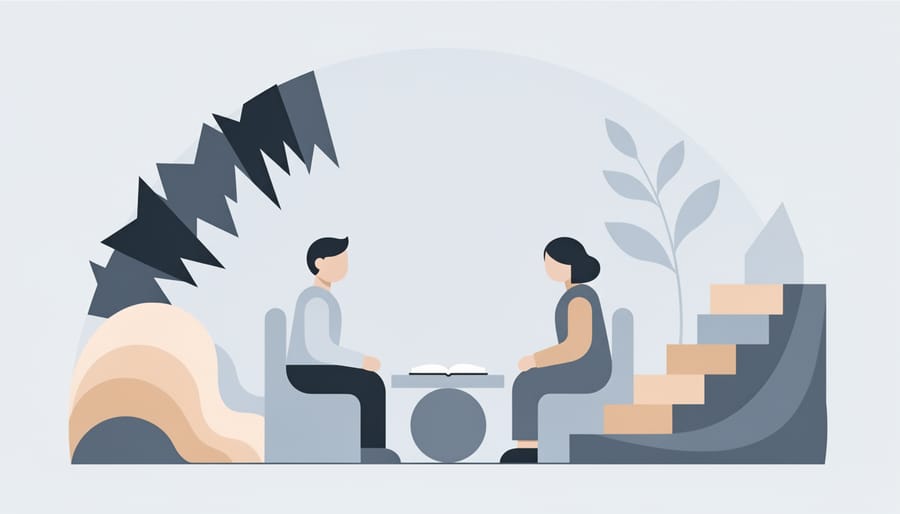
Open notebook on a desk with a warm mug in a therapist’s office, with a softly blurred seated silhouette in the background
A calm, supportive therapy space visually represents treatment planning and collaboration for lasting relief from panic.

When Medication Makes Sense

Medication isn’t for everyone, and that’s okay. But for some people dealing with frequent panic attacks, it becomes a valuable part of their recovery toolkit, especially when panic is severe enough to interfere with daily life or when therapy alone hasn’t provided sufficient relief.

Anti-anxiety medications and certain antidepressants can reduce the frequency and intensity of panic attacks, creating enough breathing room for therapy to take hold. Your doctor might suggest medication if you’re experiencing multiple panic attacks weekly, avoiding important activities due to fear, or struggling with co-occurring depression. SSRIs and SNRIs typically take several weeks to show their full effect, while benzodiazepines work quickly but are usually recommended for short-term use due to dependency concerns.

Here’s what matters most: medication works best alongside therapy, not as a replacement. Think of it as creating a foundation stable enough to practice the coping skills you’re learning. Some people use medication temporarily while building their anxiety management toolkit through CBT. Others find longer-term medication helpful for sustained management.

Finding the right medication often involves some trial and adjustment. What works brilliantly for one person might not suit another, and dosages need individualizing. Be honest with your healthcare provider about side effects, concerns, and how you’re actually feeling, not how you think you should feel. They can adjust your treatment plan based on your real experience.

Your treatment decisions belong to you and your care team. There’s no one-size-fits-all answer, only what works for your specific situation.

Newer and Complementary Approaches

While CBT and medication form the core of evidence-based panic attack treatment, several complementary approaches can enhance your recovery toolkit. Mindfulness-based interventions, for example, teach you to observe panic sensations without judgment, which can reduce the fear-of-fear cycle that fuels future attacks. Some people find that yoga, progressive muscle relaxation, or acupuncture help manage the overall anxiety that makes panic attacks more likely.

These strategies work best alongside, not instead of, professional treatment. Think of them as supporting players rather than solo acts. For instance, someone dealing with dentist anxiety that triggers panic might use mindfulness techniques before appointments while also working with a therapist on exposure exercises.

The key is finding what genuinely helps you feel grounded. One person I spoke with swears by her morning meditation practice, while another finds structured breathing exercises more effective. Your mental health provider can help you identify which complementary approaches might strengthen your treatment plan without distracting from the interventions with the strongest research backing.

Finding the Right Treatment Path for You

Starting therapy for panic attacks doesn’t have to feel overwhelming, even though it might seem that way right now. Your first step is simpler than you think: talk to your family doctor or a walk-in clinic physician. They can assess whether your symptoms align with panic disorder, rule out other causes, and refer you to appropriate treatment. Many family doctors now provide initial treatment themselves or connect you with mental health specialists.

When looking for a therapist, prioritize someone with specific experience treating panic disorder or anxiety conditions. Psychologists, clinical social workers, and registered psychotherapists can all provide evidence-based treatment. Ask potential providers directly: “What’s your experience treating panic attacks?” and “What approach do you use?” You want to hear about cognitive behavioral therapy or exposure-based methods, not vague promises about “talking things through.”

Here are questions that cut through the uncertainty:

How many sessions do you typically recommend before seeing improvement? (Most evidence-based treatments show progress within 8-12 sessions, though everyone’s timeline differs.)

Do you assign practice between sessions? (Effective panic treatment involves applying skills in real life, not just talking once a week.)

What happens if this approach isn’t working for me? (A good provider has backup plans and will adjust.)

Cost creates real barriers. If you have employee benefits, check your coverage limits and whether you need a referral. Many therapists offer sliding scale fees. Community mental health centers provide free or low-cost services, though waitlists exist. University training clinics often charge reduced rates. Don’t let finances stop you from asking about options.

Treatment works differently for everyone. You might need to try more than one provider or adjust your approach. That’s normal, not failure. Some people manage panic attacks through therapy alone, while others benefit from combining therapy with medication, particularly if they also experience generalized anxiety or depression. Your path is yours.

Give treatment a fair chance, typically at least six sessions, before deciding it’s not working. Recovery isn’t linear. You’ll have setbacks, and that doesn’t mean you’re doing it wrong.

Building Your Personal Prevention Toolkit

You’ve learned the immediate techniques and treatment options. Now it’s time to build habits that support your nervous system before panic strikes.

Think of prevention as strengthening your mental scaffolding. Regular sleep patterns matter more than most people realize, when you’re chronically under-rested, your stress response becomes hypervigilant, mistaking ordinary stressors for emergencies. Aim for consistent sleep and wake times, even on weekends. Your brain thrives on predictability.

Movement changes your body’s relationship with adrenaline. When you exercise regularly, you’re teaching your system that elevated heart rate and rapid breathing aren’t dangerous, they’re normal. You don’t need intense workouts. A 20-minute walk, gentle yoga, or swimming can shift your baseline anxiety levels. Pick something you’ll actually do, not something that adds another layer of stress to your day.

Identifying your triggers gives you a roadmap. Keep a simple log for a few weeks: when did panic show up, what happened beforehand, what were you thinking about? Patterns emerge. Maybe it’s crowded spaces, conflict with specific people, or late-afternoon blood sugar crashes. You can’t avoid every trigger, but knowing them helps you prepare.

Tip: Create a one-page panic action plan listing three grounding techniques that work for you, two trusted people to text, and your therapist’s contact information, keep it in your phone and share it with someone close to you.

Daily stress management isn’t about being calm all the time. It’s about processing stress as it comes rather than letting it accumulate. That might be five minutes of breathing exercises before bed, journaling when something bothers you, or setting boundaries that protect your energy. Small, consistent practices prevent the pressure buildup that fuels panic.

Here’s what matters: these prevention strategies support your recovery, but they’re not a substitute for professional treatment if you’re experiencing frequent panic attacks. Think of lifestyle changes as working alongside therapy and medication, not replacing them. You’re building resilience while getting the specialized help that addresses panic at its roots.

You Don’t Have to Face This Alone

I know how heavy everything can feel when you’re in the thick of panic attacks. Some days, just reading this article might have taken courage. But here’s what I want you to hold onto: treatment works, and you don’t have to figure this out alone.

Sarah, who struggled with panic attacks for three years before seeking help, told me: “I thought I’d just have to live with this forever. Finding the right therapist and learning I wasn’t broken changed everything. I still get anxious sometimes, but panic attacks don’t control my life anymore.”

Her story isn’t unique. Thousands of people recover or find significant relief through treatment each year. Whether you start with your family doctor, connect with a therapist, or explore mental health programs in your community, taking that first step matters more than taking the perfect step.

If you’re in crisis right now, please reach out. Call 988 for the Suicide Crisis Helpline, text CONNECT to 686868 for Kids Help Phone, or go to your nearest emergency department. These resources exist because you matter, and because help is available when you need it most.

You’ve already shown strength by seeking information. The next part of your journey, whatever treatment path makes sense for you, is waiting when you’re ready.

Diverse coworkers in a modern office break area sharing a supportive, welcoming moment with soft natural light and calm, hopeful atmosphere.

How World Mental Health Day 2026 Can Transform Your Workplace and Community

Every year on October 10th, millions of people around the world pause to recognize World Mental Health Day. In 2026, this global awareness campaign returns with renewed urgency as mental health challenges continue to touch nearly every family, workplace, and community.

If you’ve been struggling lately, you’re not alone. One in four people will experience a mental health condition at some point in their lives. Sarah, a teacher from Ohio, shared her experience: “I spent years thinking I had to handle everything myself. When I finally reached out for help during World Mental Health Day, I realized that asking for support wasn’t weakness. It was strength.”

World Mental Health Day offers something powerful: permission to start the conversation. Whether you’re experiencing anxiety, depression, or simply feeling overwhelmed by daily pressures, this day creates space to acknowledge what you’re going through without judgment.

This year presents an opportunity to take meaningful action. You might join a community event, start a conversation with someone you trust, or finally schedule that appointment you’ve been putting off. Organizations worldwide will offer free resources, workplace initiatives will spotlight mental wellness, and support networks will extend their reach to connect with those who need help most.

The theme for 2026 will be announced by the World Federation for Mental Health, but the core message remains constant: mental health is health. You deserve care, compassion, and access to resources that help you thrive. This October 10th, you can be part of a global movement that’s changing how we talk about, treat, and understand mental wellness.

What Makes World Mental Health Day 2026 Special

World Mental Health Day falls on Saturday, 10 October 2026 which makes this year particularly significant. Because it lands on a weekend, more people can participate without juggling work schedules or rushing through lunchtime events. Families can attend community activities together. Organizations have the flexibility to host longer, more meaningful gatherings.

Since 1992, this day has served as a global platform for mental health advocacy, education, and awareness. Each year, the official theme set by WFMH (the World Federation for Mental Health) shapes how communities, workplaces, and health organizations frame their efforts. The theme guides conversations from boardrooms in Toronto to support groups in rural communities, creating a shared language around mental health challenges and solutions.

What started as a single-day initiative has grown into a catalyst for year-round mental health work. Countries across six continents now recognize October 10 as a touchpoint for policy discussions, public education campaigns, and grassroots support efforts. In Canada, the Government of Canada officially recognizes the day in its calendar of health promotion activities, reflecting its importance in national health conversations.

The weekend timing in 2026 offers something else too: space. Space to reflect without pressure. Space for honest conversations that might feel rushed on a workday. Space for people managing their own mental health challenges to participate at their own pace, whether that means attending an event, sharing their story online, or simply taking time for self-care. This accessibility matters, especially for those who find traditional weekday programming difficult to access.

Planning Your Organization’s World Mental Health Day Activities

Diverse coworkers sitting together in an office lounge during a supportive mental health discussion
A calm, inclusive workplace setting where colleagues connect through supportive conversation and shared learning.

Getting Started with Workplace Mental Health Resources

Starting with workplace mental health initiatives doesn’t require a massive budget or specialized expertise. Many organizations already have access to tools they haven’t fully explored. The UFCW Canada mental health resources webpage offers practical materials designed specifically for addressing mental health in the workplace, a solid starting point for unions and employers alike.

Begin by identifying what you already have. Does your organization offer an employee assistance program? Do managers receive mental health training? Audit your current supports before October arrives. This prevents duplication and reveals genuine gaps.

Next, assemble a small planning team representing different departments and levels. Frontline workers often have insights leadership misses about what would genuinely help versus what looks good on paper. Include someone with lived experience if they’re willing to participate.

Download free planning guides to structure your approach. Workplace Options provides a booklet outlining concrete steps for observing World Mental Health Day, covering everything from securing leadership buy-in to scheduling activities that accommodate various shifts and work arrangements.

The most effective workplace initiatives start small and sustainable. A single lunch-and-learn session with genuine dialogue beats an elaborate one-day event that exhausts your team and disappears without follow-up. Focus on building something you can maintain beyond October 10.

Creating Inclusive and Safe Spaces for Conversation

Creating a space where colleagues feel comfortable discussing mental health requires intentional effort and a foundation of trust. Start by acknowledging that these conversations can feel vulnerable, particularly when people are managing workplace anxiety or other mental health challenges they haven’t previously disclosed.

Frame conversations around shared human experience rather than treating mental health as an “other people” issue. When leaders share authentically about their own challenges or learning moments, it signals that honesty won’t be penalized. This doesn’t mean oversharing, it means modeling that mental health is part of everyone’s story.

Language matters profoundly. Avoid casual use of clinical terms like “I’m so OCD” or “that’s crazy,” which trivializes real conditions. Replace “suffers from depression” with “experiences depression” or “living with anxiety.” These shifts acknowledge the person first, not the diagnosis. Skip workplace jargon about resilience or toughness that implies struggling is a weakness.

Create structured opportunities for conversation beyond impromptu hallway chats. Facilitated small group discussions with clear guidelines give people a predictable format. Establish ground rules together: confidentiality, no unsolicited advice, permission to pass, respect for different experiences. These boundaries let people engage at their comfort level.

Pay attention to who’s missing from the conversation. If your sessions only attract certain demographics or seniority levels, examine whether the format or messaging feels genuinely inclusive. People from marginalized communities often face additional barriers to workplace vulnerability.

Remember that psychological safety isn’t built in a single event. It emerges when leaders consistently demonstrate that disclosure won’t damage someone’s career, when policies match the supportive rhetoric, and when people see concrete follow-through on commitments made during these conversations.

How Individuals Can Participate and Make an Impact

You don’t need to wait for an organized event to make World Mental Health Day 2026 meaningful. Whether you’re navigating your own mental health journey, supporting someone you care about, or simply want to contribute to breaking down stigma, there are genuine ways to participate that match where you are right now.

Start where you feel comfortable. If you’re managing anxiety at home or dealing with other mental health challenges, observing this day might mean practicing self-compassion rather than pushing yourself to do more. Sharing your story, even privately with one trusted person, counts as participation. So does seeking support, educating yourself about your condition, or simply acknowledging that your mental health matters.

For those supporting a loved one, October 10 offers a natural opening to check in. A simple “I’ve been thinking about you, how are you really doing?” can create space for honest conversation. You might share a resource you’ve found helpful, or just listen without trying to fix anything. The day also provides an opportunity to learn more about what your friend or family member is experiencing, which strengthens your ability to offer meaningful support.

  • Share a personal reflection or supportive message on social media using hashtags connected to World Mental Health Day
  • Reach out to someone you know is struggling with a genuine offer of support
  • Attend a local or virtual event focused on mental health awareness
  • Donate to or volunteer with organizations providing mental health services
  • Educate yourself about a mental health condition you don’t fully understand
  • Start a conversation with friends, family, or colleagues about mental health

Digital participation extends your impact beyond your immediate circle. Sharing accurate information about mental health, amplifying voices of people with lived experience, or simply commenting supportively on someone else’s post contributes to a larger cultural shift. Just remember that performative posts don’t help as much as authentic engagement.

Community participation might look like joining a local walk, attending a workshop, or volunteering your skills. Some people find meaning in fundraising for mental health organizations. Others prefer quieter acts, wearing green ribbon, the international symbol of mental health awareness, or having one meaningful conversation with a neighbor.

The most powerful participation is whatever feels genuine to you and respects your current capacity. World Mental Health Day doesn’t demand grand gestures. It asks us to acknowledge that mental health is part of being human, and that every action toward awareness, understanding, and support matters.

Person practicing self-soothing at home with a phone set aside in a calm, quiet setting
A quiet moment of self-care that reflects how individuals can pause, reach out, and prioritize wellbeing.

Mental Health Education: Beyond One Day

World Mental Health Day 2026 offers a powerful starting point, but real change happens when awareness becomes embedded in our daily lives. Think of October 10 as a doorway rather than a destination. The conversations started, the resources discovered, and the commitments made on that Saturday can shape how we approach mental health throughout the entire year.

Sustained mental health education transforms workplaces and communities in ways a single day cannot. When organizations integrate mental health literacy into regular training, team meetings, and leadership development, they create cultures where people feel safe discussing struggles before they reach crisis points. Employees begin recognizing early warning signs in themselves and colleagues. Managers learn to respond with empathy instead of avoidance. This ongoing learning dismantles stigma more effectively than any awareness campaign because it normalizes mental health as part of overall wellbeing.

The momentum from World Mental Health Day can fuel quarterly check-ins, monthly lunch-and-learn sessions, or peer support networks that meet regularly. These sustained efforts signal that mental health matters every day, not just when it appears on the calendar. Organizations committed to this approach often see improved retention, reduced absenteeism, and stronger team cohesion because people feel genuinely supported.

For individuals, continuing education might mean subscribing to mental health newsletters, joining support groups, or exploring what programs offer in terms of structured support and treatment options. It could involve practicing skills learned on World Mental Health Day, whether that is boundary-setting, stress management techniques, or simply checking in with loved ones more intentionally.

Year-round commitment also means staying engaged with evolving research, emerging therapies, and shifting cultural conversations around mental health. The landscape changes as we learn more about trauma, resilience, and effective interventions. Keeping pace with this knowledge helps everyone become better advocates, whether for themselves, their teams, or their communities. Real transformation happens in the space between awareness days, in the daily choices to prioritize mental health with the same seriousness we give physical health.

People in a supportive community circle outdoors with linked hands and no readable text on a banner
Community members come together in solidarity, showing that mental health support can be shared and strengthened in everyday public spaces.

Resources and Support for Your Journey

Finding the right support starts with knowing where to look. Whether you’re planning workplace initiatives, seeking personal guidance, or supporting someone else’s mental health journey, these verified resources offer practical tools and information.

The World Health Organization’s official World Mental Health Day campaign page provides global context and annual themes set by the World Federation for Mental Health. For Canadian-specific observances, the Government of Canada’s health promotion calendar confirms October 10 as the designated date. Organizations planning workplace events can reference this planning guide, which outlines concrete steps for meaningful observation. UFCW Canada’s mental health resources webpage offers workplace-specific tools for addressing challenges in professional settings.

Campaign Information
WHO and Mental Health UK sites provide official themes, history, and global participation ideas. Best for understanding the day’s broader context and annual focus areas.
Workplace Planning Tools
Guides from UFCW Canada and Workplace Options deliver step-by-step frameworks for organizing events. Ideal for HR professionals and team leaders preparing October activities.
Educational Resources
Our own materials, including anxiety 101 content and specialized guides like dentist anxiety offer accessible learning for specific mental health concerns. Suited for individuals seeking foundational knowledge or coping strategies.
Real-Time Support
Digital and face-to-face services provide immediate assistance for those experiencing mental health challenges. Available for crisis situations or ongoing support needs.

Remember that World Mental Health Day highlights resources that remain available throughout the year. If you’re struggling right now, our real-time support services connect you with help immediately, not just on October 10. Education materials like our foundational guides work alongside community resources to build understanding and reduce isolation. The day itself serves as a reminder that support exists whenever you need it.

World Mental Health Day 2026 is more than a date on the calendar. It’s an invitation to begin or deepen your commitment to mental health, whether that means starting a conversation at work, reaching out for support, or simply acknowledging your own struggles with more compassion.

We recognize that everyone arrives at this day from a different place. Some of you are navigating your own mental health challenges. Others are supporting loved ones who are struggling. Many are working to create healthier environments in your workplaces and communities. Wherever you are in your journey, your participation matters.

The resources, tools, and support options we’ve shared aren’t just for October 10. They’re available whenever you need them. Real-time support, educational materials, and practical workplace guides remain accessible year-round because mental health doesn’t pause between awareness days.

If you’re ready to take a step, whether that’s downloading a workplace planning resource, joining a conversation, or reaching out for help, start where you are. There’s no wrong entry point, and you don’t have to navigate this alone.