Common mental health disorders are conditions that affect how you think, feel, and cope with daily life, and they’re far more widespread than most people realize. Anxiety, depression, and similar conditions touch families, workplaces, and friendships everywhere. In any given year, 1 in 5 Canadians experiences a mental illness. If you’re one of them, or you love someone who is, you’re in very good company.
Understanding these conditions matters because naming what’s happening is often the first step toward feeling better. It can ease the isolation, cut through the confusion, and make it easier to ask for help without shame.
Mental health also isn’t simply the absence of illness. In 2012, the Canadian Community Health Survey sorted people into flourishing, moderate, or languishing mental health, and 76.9 percent were flourishing, 21.6 percent were moderate, and 1.5 percent were languishing. Struggling and thriving can exist side by side, and many people move between the two over time.
This article walks through what common mental health disorders are, how they show up in everyday life, the main types, and how that understanding helps in practice. Many people find it comforting to see their own experience described in plain words, and that’s exactly what we’re aiming for here. Help is available, and reaching out is a sign of strength, not weakness.
Key Takeaway: Common mental health disorders are widespread, treatable and nothing to be ashamed of. Understanding them is the first step toward getting support for yourself or offering it to someone you care about.
What Common Mental Health Disorders Mean in Plain Language
 A quiet outdoor moment captures what it can feel like to be coping while still reaching for support.
A mental health disorder is a health condition that affects how a person thinks, feels, or behaves, often enough and strongly enough to disrupt daily life. It is not a weakness, a character flaw, or something you could simply “snap out of.” If you’re struggling, that says nothing about your strength. It means something real is happening, and it deserves care. If you’re wondering what counts as a mental illness a qualified health professional is the right person to help you sort that out.
It also helps to know that mental health and mental illness are related, but they aren’t the same thing. One is about overall well-being. The other is about a diagnosable condition. A person can live with a mental illness and still have good days, meaningful relationships, and a full life.
One way researchers describe this is the Mental Health Continuum, which sorts mental health into three categories. Here are the key terms in plain language:
- Mental health
- Your overall emotional and psychological well-being, including how you cope, connect, and function day to day.
- Mental illness
- A diagnosable condition that affects thoughts, mood, or behaviour and can interfere with daily life.
- Flourishing
- Feeling well and doing well, with a strong sense of purpose, connection, and satisfaction.
- Moderate mental health
- Somewhere in the middle, neither thriving nor struggling, with room to grow.
- Languishing
- Feeling flat, disconnected, or stuck, without necessarily having a diagnosed illness.
- Complete mental health
- Both flourishing and being free of mental illness.
Notice that these ideas overlap rather than stack neatly. Someone with a diagnosed condition can still be flourishing, and someone with no diagnosis can still be languishing. Your well-being isn’t a single score, and it can shift over time. Understanding that can take some of the shame out of the conversation, and it’s a good foundation for everything that follows.
How Common Are Mental Health Disorders? What the Canadian Data Shows
 New growth in a pot symbolizes mental health flourishing and the idea that people can grow even when they’ve struggled.
If you’ve ever wondered whether you’re the only one struggling, the numbers say otherwise. According to the Centre for Addiction and Mental Health, in any given year 1 in 5 Canadians experiences a mental illness. That’s a lot of neighbours, classmates, coworkers and family members, and many of them are quietly coping with the same worries you might have.
A closer look comes from the 2012 Canadian Community Health Survey, Mental Health. Based on that survey, an estimated 17% of Canadians aged 15 or older reported having a mental health-related concern (Estimated 17% in 2012). It’s worth being clear that this is 2012 data, not a current-year figure, so it’s best read as a snapshot of how common these experiences have been rather than a count for today.
The same survey also looked at mental health more broadly, using three categories. In 2012, 76.9% flourishing, 1.5% languishing were the figures at either end, with 21.6% falling in the moderate category. Complete mental health means both flourishing and being free of mental illness, and about 72.5% of Canadians aged 15 or older (19.8 million people) were categorized that way. You can explore how those results differed across groups under Complete mental health by subgroup.
None of this is meant to alarm you. A number like 1 in 5 isn’t a warning; it’s a reminder that these conditions are common, that they’re a normal part of the human experience for many people, and that reaching out for support is something a great many people have done before you.
Who Is Most Affected? Understanding Risk and Protective Factors
Mental health challenges can touch anyone. Age, background, income, family life, none of it offers a guarantee either way. So when people ask who is most affected, the honest first answer is: anyone can be.
Survey data does show some patterns, though, and they’re worth understanding. In the 2012 Canadian Community Health Survey, Mental Health, researchers looked at who was in complete mental health, meaning flourishing and free of mental illness. They found that people living in urban environments were less likely (72 percent) than rural residents (77 percent) to be in complete mental health. They also found that people who reported strong spirituality were more likely (76 percent versus 66 percent) than those who didn’t to be in complete mental health.
It helps to read these numbers carefully. They describe groups of people across a large survey, not any one person. Living in a city doesn’t mean your mental health will struggle, and living in a rural area doesn’t protect anyone from hard times. Likewise, having a spiritual life isn’t a requirement for wellbeing, and not having one isn’t a flaw. Plenty of people thrive without it, and plenty of spiritual people still face real challenges.
What these findings can do is gently remind us that our surroundings and sources of meaning matter. Connection, belonging and a sense of purpose may all play a part in how we feel. If you’re finding things hard right now, that says nothing about your strength. It means you’re human, and support is worth reaching for.
How Common Mental Health Disorders Show Up in Everyday Life
Common mental health disorders rarely announce themselves in obvious ways. More often, they show up in small, ordinary moments: how you think, how you feel, how your body responds to a regular Tuesday. They can touch sleep, energy, concentration, appetite, relationships, school and work, sometimes all at once and sometimes just one at a time.
Here are a few everyday signs people may notice in themselves or someone they love. They aren’t a diagnosis, just signals that a conversation might be worthwhile:
- Mood that feels flat, irritable or unusually heavy for weeks
- Trouble falling asleep, staying asleep or getting out of bed
- Low energy that rest doesn’t seem to fix
- Difficulty concentrating or making simple decisions
- Pulling away from friends, family or things once enjoyed
- A body that feels tense, restless or on edge, which is among the common anxiety warning signs
Experiences vary widely, and symptoms can come and go. A good month doesn’t mean the struggle was imagined, and a hard week doesn’t mean someone is failing. There’s rarely one single cause, either. Genes, life events, stress, health, and the environment around a person usually all play a part.
Consider a composite story, not a real person. Maya, a university student, noticed she was lying awake most nights and dreading classes she used to enjoy. She stopped replying to friends’ messages and told herself she was just tired. After a few weeks, a roommate gently asked how she was really doing. That small question made it easier to say it out loud. Maya booked an appointment with her doctor, and talking to someone was the first step toward feeling like herself again.
Noticing a change and reaching out is not an overreaction. It’s often exactly how support begins.
Types of Common Mental Health Disorders: Anxiety, Depression and More
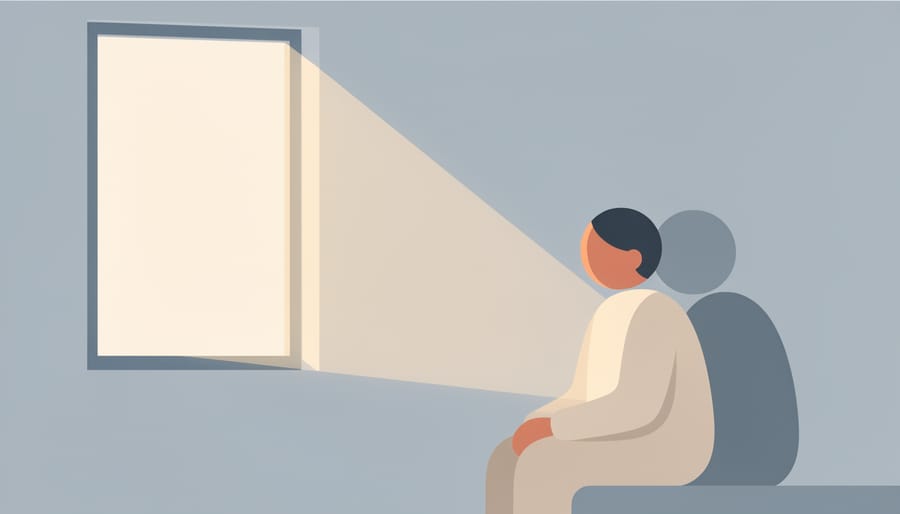 Quiet light through a window suggests support and connection during difficult moments, without needing words.
Anxiety: More Than Everyday Worry
Everyone worries. A big presentation, a medical test, a tight month for money. Anxiety is something different. It’s when worry won’t switch off, even when nothing is wrong, and it starts to crowd out sleep, focus and the things you enjoy. You might notice a racing heart, a tight chest, restless nights, or a constant sense that something bad is about to happen.
This is a central focus of Mental Health Support’s programs, because so many people quietly carry it. If you want a gentler starting point, Anxiety 101 walks through the basics.
Here’s how one person, whose story is a composite shared to illustrate the experience, described the change: “I used to think I just had to push through. Once I had support and a few tools, the worry stopped running the show. It didn’t vanish, but I could breathe again.”
Depression and Other Mood Challenges
Depression often shows up as a low mood that lingers for weeks rather than passing in a day or two. You might lose interest in things you used to enjoy, feel drained even after a full night’s sleep, or find that simple tasks take far more effort than they should. Some people also notice changes in appetite, concentration or how they see themselves.
None of this is a character flaw or a sign of weakness. Depression is a health condition, and it responds to care. Many people find that support from a qualified professional, along with the understanding of people close to them, helps them feel like themselves again. If this sounds familiar, you deserve that support.
Other Conditions Worth Knowing About
Beyond anxiety and depression, there are other conditions people often ask about, including trauma-related struggles, eating concerns, and difficulties with alcohol or other substances. Each one looks different from person to person, and none of them says anything about your character or strength.
If something here sounds familiar, try not to label yourself. Symptoms overlap, and what feels like one thing can be another. A family doctor or qualified mental health professional can offer an individual assessment, and that’s a kind, practical first step.
How Understanding These Conditions Helps: Support, Awareness and Action
Knowing what common mental health disorders look like is useful because it turns a vague sense that “something’s off” into something you can name and act on. If you’ve noticed changes in your sleep, mood, energy or ability to cope, that understanding can help you decide it’s time to reach out, whether that’s to a doctor, a counsellor or someone you trust. A mental health evaluation is one way to get clarity from a qualified professional rather than guessing or self-diagnosing.
For families, understanding makes it easier to respond with patience instead of frustration. When you know that anxiety and depression are health conditions, not character flaws, you’re more likely to listen, ask gently how someone is doing, and stay alongside them. For health professionals and communities, shared knowledge helps cut through stigma, which is often what keeps people quiet for far too long.
Mental Health Support is here to help turn that understanding into action. In general terms, we offer educational resources, advocacy, psychological services, and ways to connect both online and in person, including through our social media community, where you can find encouragement and know you’re not on your own.
If you or someone you know is in immediate danger or crisis, please contact your local emergency services or a local crisis line right away. You deserve support, and reaching out is a strong and caring thing to do.
Frequently Asked Questions About Common Mental Health Disorders
What are the most common mental disorders?
Anxiety and depression are among the conditions people ask about most often, along with trauma-related, eating, and substance-use concerns. Only a qualified health professional can tell you what is going on for you, and many people live with more than one condition at once.
Who is most affected by mental illness in Canada?
In any given year, 1 in 5 Canadians experiences a mental illness, so anyone can be affected. In the 2012 survey, urban residents were less likely (72%) than rural residents (77%) to be in complete mental health, and people with strong spirituality were more likely (76% versus 66%) to be in complete mental health. These are patterns in survey data, not predictions about any one person.
What is complete mental health?
Complete mental health means both flourishing and being free of mental illness. Based on the same 2012 survey, an estimated 72.5% of Canadians aged 15 and older fell into this group.
What support is available for mental health crises in Canada?
If you or someone you love is in immediate danger, contact local emergency services or a local crisis line right away. You can also reach out to a family doctor or another trusted professional, and Mental Health Support offers resources and connection to help you take the next step.
If you are supporting someone who is struggling, learning the basics of mental health first aid can help you respond with calm and compassion. You don’t need to have all the answers. Listening without judgment, taking their experience seriously, and gently encouraging them toward professional help can make a real difference, and you deserve support too.
If you’ve read this far, here is the main thing to carry with you: common mental health disorders are common. In any given year, 1 in 5 Canadians experiences a mental illness, so struggling doesn’t make you weak, and it isn’t a personal failing. It’s a health challenge, and health challenges deserve care.
Recovery and support are possible. Some days will be harder than others, and that’s okay. Many people find their way toward better days by taking one small step, whether that’s naming what they’re feeling, talking with someone they trust, or asking a professional for guidance.
If you’d like company along the way, we’re here. You can reach out through Mental Health Support’s digital or face-to-face connections, or turn to a trusted professional in your own community. And if something you’ve read here helped, consider sharing it with someone who might need it. Every honest conversation chips away at stigma.
Go at your own pace. There’s no deadline, and no wrong time to ask for help.