A mental illness is a diagnosable mental health condition, one that affects how a person thinks, feels, or behaves in ways that disrupt daily life. That’s the short answer. The longer one is that definitions shift depending on who you ask, which is part of why this question feels so hard to pin down.
Clinicians in many countries rely on the DSM-5, the Diagnostic and Statistical Manual of Mental Disorders, to name and describe conditions. Other sources frame mental health and mental illness a little differently, so you may see slightly different wording from one trusted organization to the next. None of that changes the core idea. Mental illnesses are real, recognized health conditions, not character flaws, and they’re not something anyone has to push through alone.
If you’re asking because of your own experience, or because you’re worried about someone you love, you’re in good company. People often search this question late at night, wondering whether what they’re feeling “counts.” You don’t need to have it all figured out before you reach out. A diagnosis comes from an assessment with a qualified professional, and wanting one is reason enough to ask.
This guide explains what the term means in plain language, how assessment works, what your rights are, and where to find support. In Canada, you can search mental health and substance use services through HelpStartsHere, which lists more than 2600 options. Many services also offer real-time support by phone or chat, so help can start today.
What Is a Mental Illness? A Plain-Language Definition
 A quiet moment at home shows someone pausing to reach for understanding and support when emotions feel overwhelming.
Why Definitions Differ (and Why That’s Okay)
If you’ve ever searched for a clear answer and ended up with three slightly different ones, you’re not imagining things. The definitions of mental health and mental illness really do vary depending on who you ask. A health authority might frame things in terms of public well-being, a clinician in terms of symptoms and daily functioning, a researcher in terms of patterns across large groups of people, and someone with lived experience in terms of what it actually feels like to get through the day.
None of these views is wrong. They’re simply looking at the same human experience from different angles, and each serves a different purpose. The common thread is that mental illnesses are diagnosable mental health conditions, and a qualified professional is the one who makes that call.
Still, the differences can feel confusing, especially when you’re already worried. Language also shapes how safe it feels to talk about any of this. If you’ve wondered what is mental health stigma and how it connects to the words we use, that’s a good thread to follow, because careful, kind language can make it easier for people to ask for help.
One reader described it this way: “I kept reading different definitions and thought I must be missing something. It felt like I needed the ‘right’ words before I was allowed to ask for help. Once someone told me the wording varies and my experience still counts, I could finally breathe.”
So if the terms don’t line up perfectly, that’s okay. Different wording doesn’t change your right to understanding, respect, and care. You don’t need the perfect definition to take a first step.
How to Apply or Complete the Process
Getting a mental illness assessed doesn’t follow one official application, and the exact steps depend on your region and the service you choose. Here is a general order that many people find helpful.
1. Notice and jot down what you’re experiencing: changes in mood, sleep, focus, or daily life.
2. Pick a first contact, such as a family doctor, local clinic, counsellor, or support line.
3. Book an appointment and, if it helps, bring a trusted person with you.
4. Share your story as honestly as you can. A diagnosis is made by a qualified professional, often using established criteria like the DSM-5 (the Diagnostic and Statistical Manual of Mental Disorders).
5. Ask what the next steps are, including any care plan, and follow up.
If you’re unsure where to begin, HelpStartsHere lets you search more than 2600 Canadian mental health and substance use listings. Confirm each service’s own requirements directly, since they vary.
How Mental Illness Is Diagnosed: Criteria, Clinicians, and Common Questions
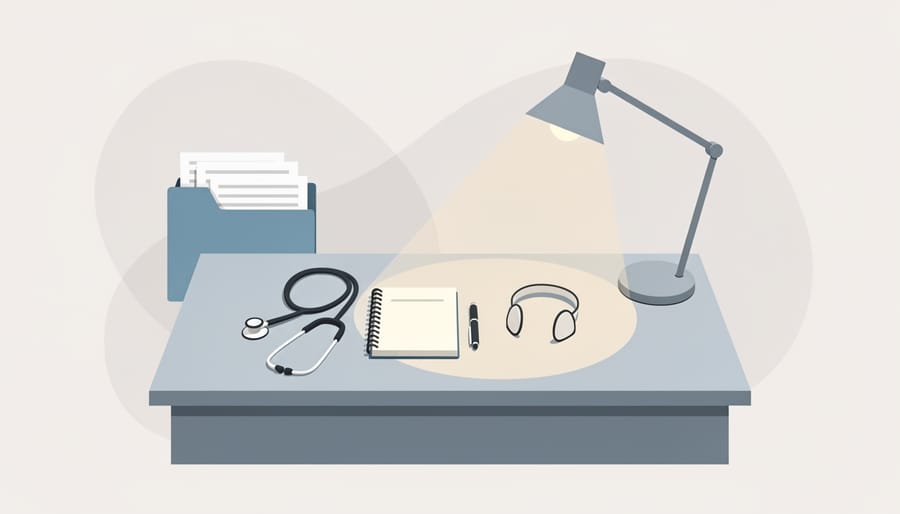 An assessment setting is suggested through a clinician’s desk tools, emphasizing privacy and careful listening in getting help.
Key Terms You May Hear
When you start learning about mental health, a few words come up again and again. Knowing what they mean can make the whole process feel less overwhelming.
A diagnosis is the name a qualified professional gives to a set of experiences after an assessment. It’s a starting point for understanding what’s going on and what might help, not a label that defines who you are.
Symptoms are the things you notice in your thoughts, feelings, body, or behaviour, like trouble sleeping or feeling constantly on edge. They’re how a condition shows up in your daily life.
A disorder or a condition are terms clinicians use for a diagnosable pattern of symptoms. You’ll see “disorder” in formal sources like the DSM-5, the Diagnostic and Statistical Manual of Mental Disorders. Many people prefer “condition” because it sounds less harsh, and that’s a perfectly valid choice.
Mental illness is the term for diagnosable mental health conditions, though how it’s defined can vary depending on who you ask.
A mental health challenge is a broader, gentler phrase. It covers difficulties that may or may not meet the threshold for a diagnosis but still deserve care and attention.
Whichever words feel right to you, they’re yours to use. The language you choose to describe your own experience matters, and no one else gets to decide it for you.
Who Can Seek an Assessment? Eligibility and Getting Started
You don’t have to be in crisis, or “sick enough,” to ask for an assessment. If you’re worried about your thoughts, your feelings, or how you’re managing day to day, that is reason enough to start a conversation. The same goes if you’re concerned about someone you love. Wondering whether something is wrong is a perfectly valid place to begin.
Plenty of people can help you take that first step. A family doctor is often an easy starting point, and they can talk through what you’re noticing and point you to the right next person. Clinicians and other mental health professionals can carry out an assessment and, where it fits, explain whether what you’re experiencing may be a diagnosable mental health condition. You don’t need to arrive with answers. Describing what’s been happening in your own words is plenty.
It may be time to reach out if you notice things like:
- Your sleep or appetite has shifted in ways that feel hard to shake.
- Worry keeps showing up and won’t ease, even when you try to settle it.
- You’re pulling away from people or activities you usually enjoy.
- Everyday tasks feel harder to manage than they used to.
- Something simply feels off, even if you can’t put a name to it.
You don’t need to tick every box, and you don’t need to explain it perfectly. A feeling that things could be easier is worth taking seriously.
One practical note: eligibility for specific services can vary by provider and by region. Some programs have their own intake steps or requirements, so it’s worth checking directly with the service you’re considering. A quick call or visit to their website can save you time and help you find the right fit. Asking is always allowed, and reaching out is a strong, caring thing to do for yourself or for someone who matters to you.
How to Get Assessed and Start the Process: Step by Step
Preparing for Your Appointment
A first appointment doesn’t need to be polished. It just needs to be honest, and a little preparation can make it feel much less daunting.
Start by jotting down what you’ve noticed: changes in sleep, mood, energy, appetite, or concentration, and when they began. A few simple notes on your phone are plenty. It also helps to bring a list of any medications or supplements you take, plus anything relevant from your health history, such as past diagnoses or care you’ve received before.
Tip: You don’t need perfect words. “I haven’t been feeling like myself” is a valid and sufficient place to start.
Questions are welcome, too. You might ask what the assessment will involve, how the professional approaches diagnosis, what the possible next steps look like, and how long things might take. If something is explained in a way that feels confusing, it’s completely fine to ask them to say it again in plainer terms. Remember that diagnoses are made by a qualified professional, so this conversation is the beginning of understanding, not a test you can fail.
If it would help, bring someone you trust. A family member or friend can sit with you in the waiting room, help you remember what was said, or fill in details you might forget when nerves kick in. They can also gently remind you of the questions you wanted to ask. And if you’d rather go alone, that’s okay as well. Do whatever makes it easier to speak openly.
Your Rights and Responsibilities When Seeking Care
Seeking care is a two-way relationship, and knowing what to expect can make the first step feel less daunting. While details differ, most people can reasonably hope for respectful, stigma-free treatment, plain-language explanations of what’s happening, privacy and confidentiality, and a real say in decisions about their care. You can also ask questions, take time to think things over, or seek a second opinion if something doesn’t feel right.
Care works best when both sides play a part. Here’s how the two fit together:
| What you can reasonably expect |
What helps the process work |
| Respectful, stigma-free care |
Sharing your experiences as openly as you can |
| Clear explanations in everyday language |
Asking questions when something is unclear |
| Privacy and confidentiality |
Telling your provider what you’re comfortable sharing, and what you aren’t |
| A voice in decisions about your care |
Letting your care team know when plans need adjusting |
| The option to seek a second opinion |
Following up on agreed next steps |
Honesty matters here, but it doesn’t have to be perfect. Even a rough, imperfect account of how you’ve been feeling gives a professional something to work with, especially during a mental health evaluation. If a treatment, a medication, or even a particular provider isn’t working for you, say so. That feedback isn’t a complaint, it’s useful information, and a good clinician will want to hear it.
One important note: specific rights, privacy rules, and processes vary by region and by service. Because definitions of mental health and mental illness themselves vary depending on who you ask, it’s no surprise that the details of care can differ too. So rather than assuming, ask your provider directly how your information is handled and what your options are. You can also check with your local or provincial health body for the specifics that apply where you live.
Where to Get Help and Support Right Now
 A supportive community gathering conveys that mental health concerns can be discussed respectfully with others who understand.
Supporting a Loved One Who May Be Struggling
Watching someone you love struggle can leave you feeling helpless, but you don’t need perfect words to make a difference. Often, simply showing up is the most powerful thing you can do.
Start with a quiet, private moment and a gentle opening, like “I’ve noticed you seem to be carrying a lot lately, and I care about you.” Skip the diagnosis. You aren’t there to label what’s happening, only to open a door. If you’re worried about what comes next, it can help to understand how a mental health disability is recognized and what support may be available, so you can share information without pressure.
Then listen. Really listen. Resist the urge to fix, compare, or reassure too quickly. Phrases like “That sounds really hard” and “Thank you for telling me” go a long way. If your loved one feels unsure or anxious about the process, it may also reassure them to learn about mental health act rights so they know they’re not powerless.
When they’re ready, offer small, practical help: finding a family doctor, writing down symptoms together, sitting with them during a call, or searching HelpStartsHere, which lists more than 2600 Canadian mental health and substance use services.
One family member shared: “I used to think I had to have all the answers. What helped most was sitting beside my sister and saying, ‘We’ll figure out the first step together.’ That was enough.”
Be patient, too. Some people need time before they’re ready to take a first step.
A mental illness is a diagnosable mental health condition. The exact wording may shift depending on who you ask, but that variation never makes your experience, or your worry for someone you love, any less valid. Support is always a fair thing to ask for, whether you’re sure what you’re feeling has a name or not.
Understanding the terms is a real step toward care. Once you know what a diagnosis is, what it isn’t, and who can help you explore it, the whole process feels less like a wall and more like a path.
You don’t have to take that path all at once. Pick one small step: write down what you’ve been noticing, book a conversation with your doctor, or reach out to someone you trust. If you already have a diagnosis in mind and want to move toward treatment, you can learn how to find the right therapy at a pace that suits you.
And when you want company along the way, our community and programs at Mental Health Support are here, online and face to face.
Clear, kind language is how awareness begins, and awareness is how people feel safe enough to ask for help. You’ve already started.
 Layered colors in a jar symbolize changing mental states while suggesting stability, care, and the possibility of improvement.